



When to Use and Avoid the ECA Module in Drupal

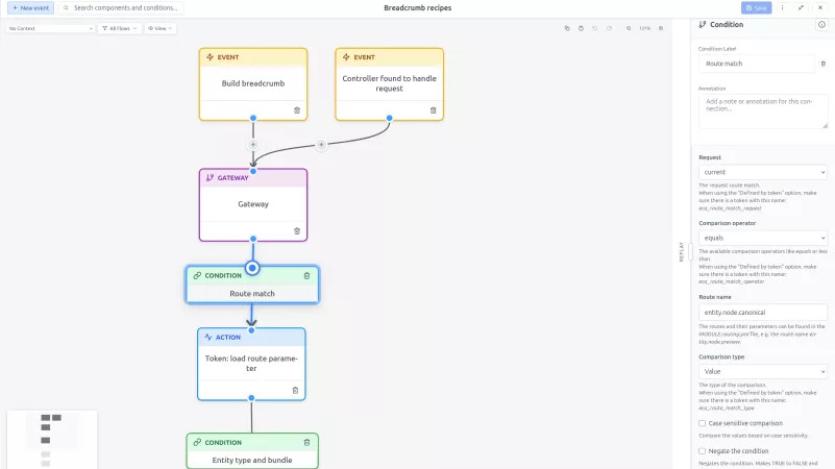
The ECA (Event–Condition–Action) module in Drupal is presented as a powerful no-code tool that allows site behaviour to be defined without writing PHP. It operates by reacting to events, evaluating conditions, and triggering actions, enabling broad control over Drupal functionality. In his analysis, Fabien Clement notes that recent interface improvements, including a React-based modeler, improve usability but do not eliminate the module’s underlying conceptual complexity.
The article outlines several limitations when ECA is used beyond narrowly scoped use cases. These include a steep learning curve, low-level abstraction that exposes Drupal internals, and reduced clarity when combined with custom code. CLÉMENT also highlights challenges in configuration management, lack of unit testing, performance overhead, and the risk of hidden behaviour overrides, illustrated through a real-world example where an ECA rule altered default system behaviour.
The module is positioned as effective in specific contexts, particularly when enabling non-developers to manage simple, well-defined rules that remain fully within the ECA system. CLÉMENT recommends avoiding it in complex projects requiring maintainability, testing, and performance, where traditional PHP-based development remains more suitable. The analysis frames ECA as a tool that requires careful, context-driven use rather than a general substitute for code.
ASK: Drupal Community Needs Your Support
View all →
Disclosure: This content is produced with the assistance of AI.
Disclaimer: The opinions expressed in this story do not necessarily represent that of TheDropTimes. We regularly share third-party blog posts that feature Drupal in good faith. TDT recommends Reader's discretion while consuming such content, as the veracity/authenticity of the story depends on the blogger and their motives.
Note: The vision of this web portal is to help promote news and stories around the Drupal community and promote and celebrate the people and organizations in the community. We strive to create and distribute our content based on these content policy. If you see any omission/variation on this please reach out to us at #thedroptimes channel on Drupal Slack and we will try to address the issue as best we can.

Related Organizations

Related People


You may also like