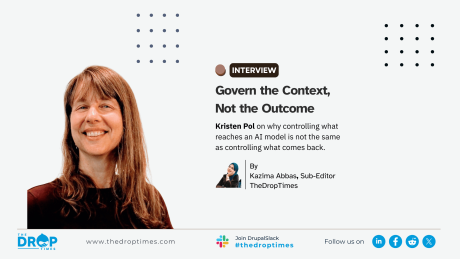
A page can make perfect sense to a person while leaving an AI system uncertain about what is current, authoritative, or safe to use. Will Huggins argues that Drupal's structured content and access controls can narrow that gap.
Maintainers of patch-heavy Drupal sites can spend significant time checking module compatibility and whether existing fixes still apply. Drupal-Code-Query now exposes several of those checks to LLM agents and direct API clients.
A portable SKILL.md file does not guarantee portable installation. Drupal now has Composer-aware skill aggregation, while its maintainers are debating how much distribution logic belongs in Drupal rather than the wider Agent Skills ecosystem.
...more
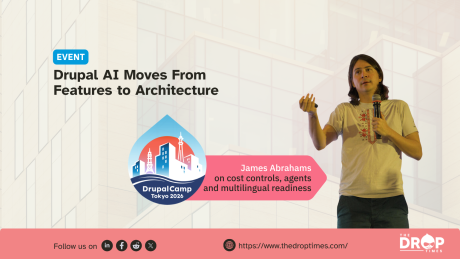
For multilingual Drupal teams, the key safeguard is control over what AI may refresh. Human-authored or human-edited translations stay untouched unless an overwrite is explicitly requested.
...more
A documentation problem with complex Drupal forms led to a broader idea: keep operational knowledge within the site, then reuse it wherever it is needed.
...more
The experiment points to a possible workflow for modules with limited video documentation, but it does not yet establish accuracy, cost, accessibility, or maintenance performance.
...more
Working code does not necessarily leave developers with an understanding of how it was designed. Decodie records the explanations that can disappear when an agent conversation ends.
...more
Existing Drupal AI project lists can become incomplete or outdated. An automated pipeline now provides a sortable and filterable view of modules and recipes that directly depend on the AI module.
...more