



Rybbit Analytics Maintainer Explores Embedded Dashboards and No-Code Event Tracking for Drupal

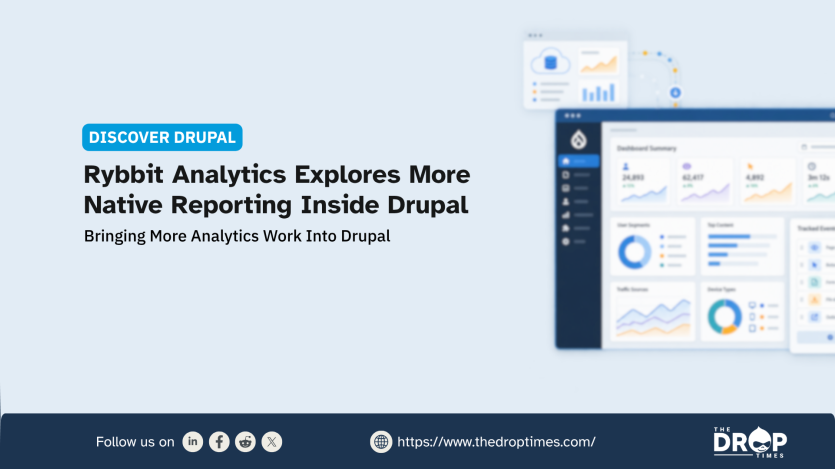
Websites using the Rybbit Analytics module could gain embedded dashboards and no-code event tracking through submodules that maintainer Allie Micka would like to develop. In written responses to The DropTimes, Allie said the dashboard work could bring Rybbit statistics into Drupal's administration interface or expose summary widgets through Drupal blocks. She also said the next module release will be ready for Drupal 12 after an automated compatibility update applied in August.
Rybbit is an open-source analytics platform available as a hosted service or through self-hosting, with features including funnels, user journeys, session replay, Web Vitals and error tracking alongside conventional traffic metrics. Drupal.org currently lists version 1.0.0, released 17 May 2026 for Drupal 10.3 and 11, as the module's stable release. Allie described the Drupal module as a relatively thin integration layer because most analytics development happens upstream in Rybbit. Its main role, she said, is to load the JavaScript needed to connect a Drupal site to the analytics platform. Drupal can then add site-specific context by passing information about authenticated users to Rybbit for segmentation.
Allie said she created the integration because analytics tools serve different audiences, describing Rybbit as a "solid middle ground" between Matomo and lighter dashboards such as Umami and Plausible. She attributed that position partly to Rybbit's use of ClickHouse, which she said gives it better scalability than Umami while supporting features such as user journeys, session replay and Web Vitals. She also described Rybbit as lighter than Matomo and having a lower barrier to entry. Self-hosting was another part of her rationale, with Allie pointing to advanced features included in Rybbit's self-hosted installation and contrasting them with advanced Matomo capabilities available through paid plugins.
For Drupal sites with authenticated users, Allie highlighted user-level segmentation as a particularly useful capability. She said the module can send any user attribute represented by a Drupal token, including role, job title, total purchased amount or other information already associated with a user. That can support reporting on journeys and activity using Drupal-held context rather than anonymous traffic alone. Rybbit's user-identification documentation notes that identified-user tracking processes personal data and advises implementers to establish an appropriate lawful basis, disclose the tracking and limit the traits they collect.
The two proposed submodules build on capabilities that Rybbit already provides. Allie said embedded statistics could help smaller teams without dedicated marketing or analytics staff monitor site performance without leaving Drupal. For event tracking, she noted that Rybbit already captures interactions such as form activity and button clicks automatically, while developers can fine-tune events with JavaScript or data attributes. Her idea is to make that configuration available without code so reporting can be set up without developer help. Allie said she hopes to help more people understand what self-hosted tools can do "without relying on big tech."
 Allen JasonAllen without organs


ASK: Drupal Community Needs Your Support
View all →
Disclosure: This content is produced with the assistance of AI.
Note: The vision of this web portal is to help promote news and stories around the Drupal community and promote and celebrate the people and organizations in the community. We strive to create and distribute our content based on these content policy. If you see any omission/variation on this please reach out to us at #thedroptimes channel on Drupal Slack and we will try to address the issue as best we can.

Related People


You may also like