



CISA Lists Check Point Root Flaw Exploited in PHP2Shell Attacks

Officials at the US Cybersecurity and Infrastructure Security Agency (CISA) added a Check Point Gaia privilege-escalation vulnerability, CVE-2026-123039, to its Known Exploited Vulnerabilities (KEV) catalogue on 13 November 2026. The KEV record gives 16 November as its remediation due date; this date should not be read as a blanket legal deadline for private-sector operators. Check Point Research reports that attackers used the flaw to gain root privileges on security gateways after obtaining initial access through separate PHP2Shell vulnerabilities.
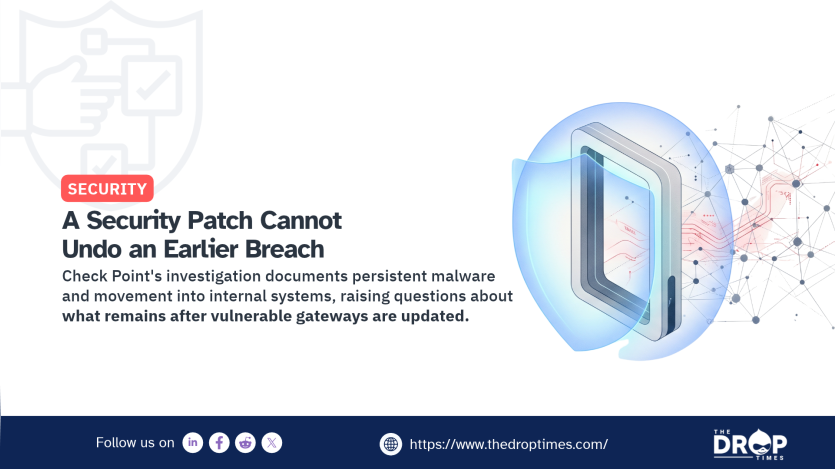
A Check Point Research investigation published on 12 November traces the attacks to 30 October. Attackers exploited vulnerable Mobile Access portals before using the separate DynamicCLI flaw to elevate their privileges. The researchers documented persistence mechanisms and access to internal systems, with destructive activity observed in some cases. Check Point's security advisory reports that approximately two dozen unpatched systems in a single region were compromised.
How the Attack Reached Root
The attackers first exploited two PHP vulnerabilities, CVE-2026-109618 and CVE-2026-109619, collectively known as PHP2Shell. These flaws allow unauthenticated remote code execution through affected Check Point firewall web interfaces, including the Mobile Access portal. According to Check Point Research, the attackers obtained code execution under the portal's service account before exploiting a separate weakness in the Gaia operating system.
The second vulnerability, CVE-2026-123039, affects the DynamicCLI service, which provides command-line functionality within Gaia. Check Point's technical documentation describes a local control socket with overly permissive access that allowed commands to reach a service running with root privileges. An attacker with existing local code execution could exploit that weakness to gain elevated permissions. The flaw carries a CVSS score of 7.8, compared with 9.2 for each PHP2Shell vulnerability.
DynamicCLI is a local privilege-escalation vulnerability, not a separately demonstrated unauthenticated remote entry point. PHP2Shell supplied the initial access, while the DynamicCLI weakness allowed attackers to take greater control of the compromised gateway. The combined exploitation gave them privileges beyond those available to the portal service account.
Backdoors, Internal Access and Destructive Activity
Following privilege escalation, the attackers installed PHP webshells in the Mobile Access portal's template directory. Check Point Research also identified a persistent backdoor named TSGA and an associated networking component called TSProxy. According to the researchers, TSGA supports encrypted remote access, configuration theft, process injection and interference with firewall logs. TSProxy allows encrypted proxy connections through compromised appliance processes, enabling attackers to route communications through the gateway.
The investigation also documents movement into internal infrastructure. Attackers used network-scanning tools before connecting over SSH to a VMware ESXi host. They deployed a Linux wiper named destroy_v6, which deleted files and left a politically themed note rejecting ransom negotiations. Destructive activity occurred in a limited number of cases and should not be described as confirmed ransomware activity. CISA's KEV record lists known ransomware use for CVE-2026-123039 as unknown.
Check Point Research dates the first observed wave to 30 October, when Israeli organisations with exposed Mobile Access portals were targeted. A second wave on 2 November involved broader scanning across several countries and sectors, but the researchers did not establish how many additional targets were compromised. Although some malware components resemble tools previously associated with China-linked activity, the researchers said the available evidence does not support a high-confidence attribution.
October PHP2Shell Fixes and November DynamicCLI Updates
Check Point had already made an initial PHP2Shell hotfix available on 23 October, before the first observed gateway attacks. Its PHP2Shell support advisory records subsequent updates for individual releases. The October hotfix addressed the internet-facing PHP vulnerabilities, while the confirmed November Jumbo Hotfix releases also included the separate DynamicCLI privilege-escalation correction.
Official Check Point release notes confirm that four Jumbo Hotfix takes released on 12 November 2026 resolve CVE-2026-123039 alongside the PHP2Shell vulnerabilities. They are R82.20 Take 14, R82.10 Take 52, R82 Take 132 and R81.20 Take 174. The release records establish the availability of these cumulative fixes on that date but do not conclusively rule out earlier standalone DynamicCLI hotfixes.
The affected infrastructure extends beyond gateways exposing the Mobile Access portal. The KEV description also identifies Check Point management and scalable platforms among affected products. Check Point's public advisory lists R81.20, R82, R82.10 and R82.20 for the DynamicCLI vulnerability, while its PHP2Shell advisory covers a broader set of gateway releases. Administrators responsible for older or specialised deployments should consult Check Point's DynamicCLI support bulletin for product-specific fixes and mitigations rather than treating the four verified Jumbo Hotfix takes as an exhaustive list.
Why Patching Must Be Followed by Compromise Checks
Installing the relevant fixes addresses the known vulnerabilities but does not establish whether attackers accessed an appliance before remediation. Check Point Research has published indicators of compromise and technical investigation details associated with the observed intrusions. These include PHP session artifacts containing upload_progress_pwn, processes or binaries using the CPconfigdaemon naming pattern, suspicious webshell files and unexplained gaps in firewall traffic logs. The vendor cautions that the absence of a matching indicator does not rule out compromise, while a match requires further investigation.
CISA's KEV entry calls for vendor-provided remediation and forensic triage under Binding Operational Directive 26-04. The KEV record gives 16 November 2026 as the due date. That date has passed, but it must be distinguished from the directive's phased implementation and from the obligations of organisations outside its scope. Issued on 10 June 2026, BOD 26-04 requires covered federal civilian executive branch agencies to begin following its Phase III remediation timelines by 7 December 2026, as explained in a FedRAMP implementation notice. The catalogue date is not a universal compliance deadline for private organisations.
For infrastructure operators, remediation involves closing the vulnerabilities and determining whether earlier exploitation established persistent access. Check Point recommends installing the November Jumbo Hotfix on affected management servers and security gateways as soon as operationally possible. Systems suspected of compromise require additional investigation using the vendor's published indicators and incident-response guidance.
The documented campaign concerns Check Point appliances rather than a vulnerability in Drupal core or contributed modules. However, organisations operating Drupal applications behind affected gateways may need to coordinate patch verification and compromise assessments with their network teams. The DropTimes previously reported CISA's October PHP2Shell KEV listing and examined the public-service continuity consequences of the PHP emergency. The latest Check Point findings document a separate infrastructure attack chain requiring its own security assessment.
References
-
-
PHP2Shell Exploitation on Check Point Gateway (12 November 2026)
-
Security Advisory: Active Exploitation of PHP2Shell and Local Privilege Escalation, Check Point (12 November 2026)
-
-
FedRAMP Response to CISA BOD 26-04 (Prioritizing Security Updates Based on Risk), FedRAMP (16 June 2026)
ASK: Drupal Community Needs Your Support
View all →
Disclosure: This content is produced with the assistance of AI.
Note: The vision of this web portal is to help promote news and stories around the Drupal community and promote and celebrate the people and organizations in the community. We strive to create and distribute our content based on these content policy. If you see any omission/variation on this please reach out to us at #thedroptimes channel on Drupal Slack and we will try to address the issue as best we can.

Related Organizations
You may also like