

Maestro Marks 23 Years with AI-Focused Engine Update

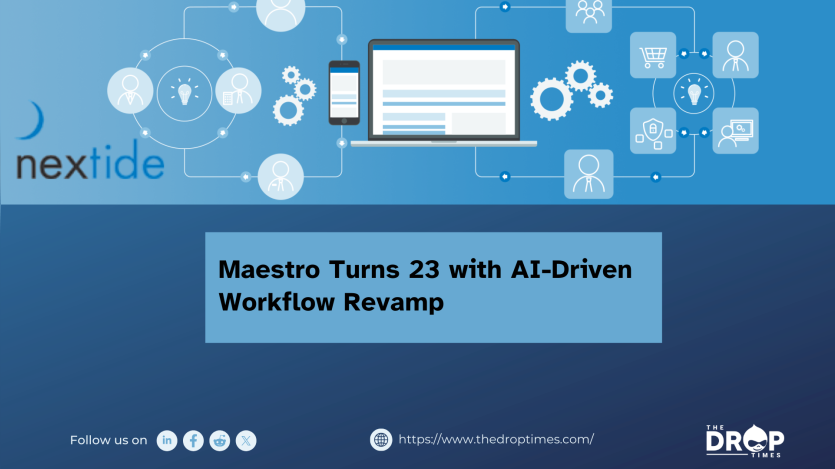
Workflow automation platform Maestro has completed 23 years in operation, accompanied by a January 2026 engine update focused on strengthening support for AI-generated process designs. The update, announced by Nextide, introduces a capability called Deep Ancestor Regeneration, intended to manage complex loop-back scenarios increasingly produced by AI-driven workflow creation.
Deep Ancestor Regeneration allows a workflow to return to earlier points in its execution chain and automatically determine which downstream tasks must be terminated and which may remain active. The feature addresses a structural difference between workflows designed by humans and those generated by AI systems.
In the announcement, Randy Kolenko explains that AI-generated flows may route execution back to steps that precede multiple parallel tasks. In such cases, previously completed or active tasks may need to be re-evaluated or re-executed. The updated engine recalculates these dependencies automatically.
The post contrasts this with traditional, human-designed workflows, which tend to group tasks into parallel branches based on departmental logic. AI systems, by contrast, may enforce stricter upstream dependencies, triggering broader resets when prerequisite conditions fail.
Maestro’s earlier AI integration, released in 2025, introduced an AI Agent capable of generating workflow templates from natural-language descriptions. The January 2026 update appears to focus on making the underlying execution engine resilient to the structural patterns those agents produce.
The announcement positions the update as part of Maestro’s long-term focus on workflow automation across economic cycles, dating back to its early card-based editor introduced in the mid-2000s. While the anniversary milestone provides context, the technical update itself centers on improving how AI-authored workflows behave under complex conditional logic.
ASK: Drupal Community Needs Your Support
View all →
Note: The vision of this web portal is to help promote news and stories around the Drupal community and promote and celebrate the people and organizations in the community. We strive to create and distribute our content based on these content policy. If you see any omission/variation on this please reach out to us at #thedroptimes channel on Drupal Slack and we will try to address the issue as best we can.

Related Organizations
Related People


You may also like