



AI Integration Anxiety Exposes Structural Fault Lines in the CMS Ecosystem

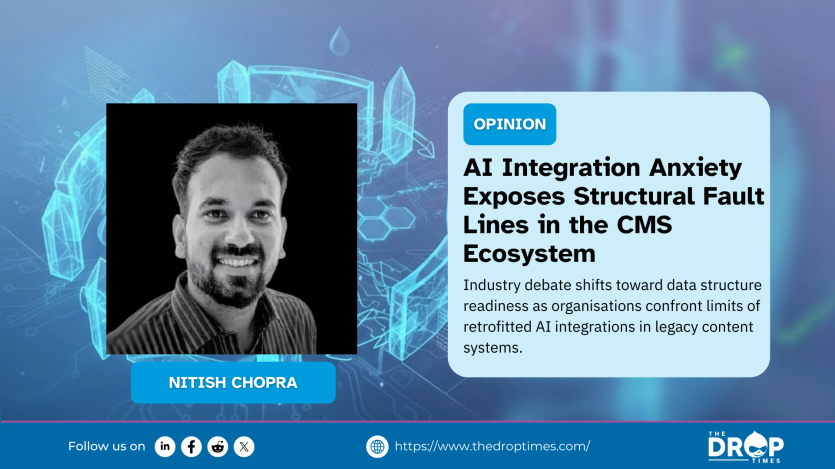
A recent LinkedIn post by Nitish Chopra has sparked discussion around whether current CMS architectures are genuinely prepared for artificial intelligence integration.
Nitish describes what he calls an “AI gold rush” in which organisations rush to integrate large language models into existing tech stacks without revisiting foundational architecture. According to his commentary, many AI initiatives are layered onto systems that were not originally designed with structured data discipline in mind.
He categorises responses across platforms in deliberately sharp terms, contrasting rapid plugin experimentation, enterprise licensing approaches, and locally engineered model experiments with what he frames as structurally prepared architectures. In his view, sustainable AI implementation depends less on feature velocity and more on content modelling, entities, fields, and taxonomies.
The broader implication reflects a growing industry conversation. Large language models depend on consistent and well-defined inputs. Platforms built around structured content may require less retrofitting than systems dominated by loosely governed HTML and metadata.
While the post is opinion-driven rather than data-backed, it captures a strategic tension currently visible across the CMS landscape. As AI moves from experimentation to operational deployment, architectural readiness is becoming a central question rather than an afterthought.

ASK: Drupal Community Needs Your Support
View all →
Disclosure: This content is produced with the assistance of AI.
Disclaimer: The opinions expressed in this story do not necessarily represent that of TheDropTimes. We regularly share third-party blog posts that feature Drupal in good faith. TDT recommends Reader's discretion while consuming such content, as the veracity/authenticity of the story depends on the blogger and their motives.
Note: The vision of this web portal is to help promote news and stories around the Drupal community and promote and celebrate the people and organizations in the community. We strive to create and distribute our content based on these content policy. If you see any omission/variation on this please reach out to us at #thedroptimes channel on Drupal Slack and we will try to address the issue as best we can.

Related People


You may also like