



Understanding Drupal’s Routes and Menu System

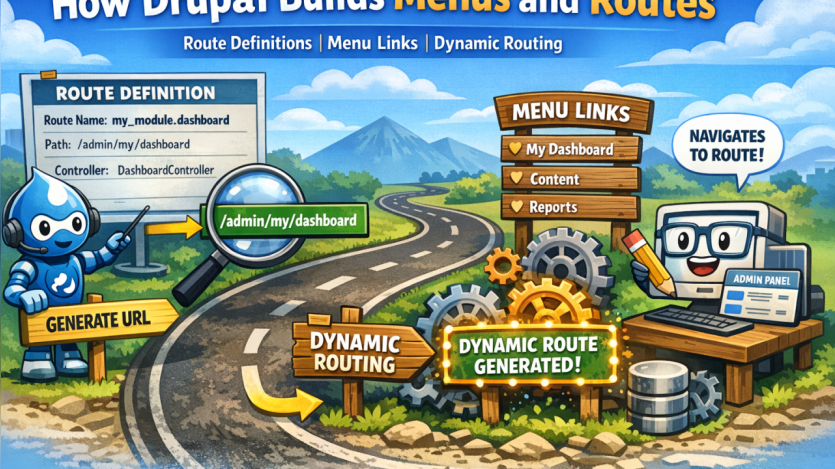
Drupal’s routing and menu systems form the backbone of how requests are handled and navigation is built across sites. In the ninth instalment of his “Behind the Drops” series, Hari Venu explains how these pieces work together to define capability, control access, and generate user-facing links.
Hari describes routes as the source of truth, defined in .routing.yml files with paths, controllers, and permissions. Menus typically reference route names rather than controllers, allowing Drupal to resolve URLs at runtime while applying access checks, language handling, and path aliases. This approach keeps navigation stable even when underlying paths change.
The post also outlines how Drupal builds menus from multiple sources, including static YAML definitions, UI-created menu entities, and dynamic derivatives. Hari highlights dynamic routing and menu generation as key features that support scalable, data-driven navigation, reinforcing the core pattern: routes define capabilities, menus expose them, and link generation connects the two.

ASK: Drupal Community Needs Your Support
View all →
Disclosure: This content is produced with the assistance of AI.
Disclaimer: The opinions expressed in this story do not necessarily represent that of TheDropTimes. We regularly share third-party blog posts that feature Drupal in good faith. TDT recommends Reader's discretion while consuming such content, as the veracity/authenticity of the story depends on the blogger and their motives.
Note: The vision of this web portal is to help promote news and stories around the Drupal community and promote and celebrate the people and organizations in the community. We strive to create and distribute our content based on these content policy. If you see any omission/variation on this please reach out to us at #thedroptimes channel on Drupal Slack and we will try to address the issue as best we can.

Related People


You may also like