



AI Content Translator 1.0.1 Released for Drupal 11.1 and 12

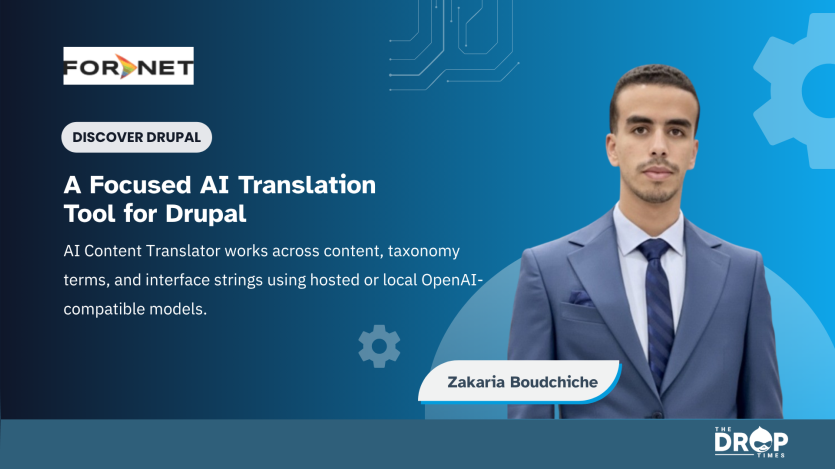
Version 1.0.1 of AI Content Translator is now available as the current stable release of the contributed Drupal module for AI-assisted multilingual content. Drupal developer Zakaria Boudchiche said in a LinkedIn post that the project had been published on Drupal.org and passed its security-advisory coverage review. Drupal.org records the release on 10 August 2026, lists stable releases for the project as covered by the security advisory policy, and declares compatibility with Drupal 11.1 and later Drupal 11 releases as well as Drupal 12.
The module is designed to keep routine AI translation runs from replacing text written or edited by people. It fingerprints translations it generates and refreshes only its own output unless an explicit overwrite is requested for human-authored or human-edited text. It can translate nodes, taxonomy terms, and interface strings, with optional recursion into referenced Paragraphs.
Every enabled language except the site's default language is selected automatically as a target. Editors can start translations from a per-node interface, run them in bulk, or use the AI translation option on a node's Translations tab, while longer operations use Drupal's Batch API. Administrators can configure a prompt template with an @language token and optional per-language glossaries. OpenAI-compatible endpoints can receive optional reasoning_effort, verbosity, and temperature parameters only when those settings are configured, allowing use with OpenAI, Azure OpenAI, and compatible local servers such as Ollama.
Drupal.org's release notes say version 1.0.0 was accidentally built from an early pre-release commit and did not include the reviewed changes intended for that release, and they advise users to upgrade. Version 1.0.1 limits the Translate (AI) link to users with the translate content with ai permission and adds the correct user.permissions cache context. It also adds a configurable API timeout, set to 120 seconds by default, and includes implementation changes for Drupal 11.1 and Drupal 12, including object-oriented hook methods with autowired services and #config_target on the settings form.
The module requires Drupal core's Language, Content Translation, and Interface Translation modules, plus an OpenAI-compatible chat-completions endpoint and API token. Source text is sent to the configured endpoint, so administrators need to assess the provider's data-handling terms or use a local model where appropriate. The API token is stored in Drupal State rather than exported configuration, and a settings.php value can take precedence in production. The project describes AI Content Translator as a focused tool that complements broader translation systems such as TMGMT and the AI module's translation features, and Drupal.org lists FORNET as a supporting organisation.


ASK: Drupal Community Needs Your Support
View all →
Disclosure: This content is produced with the assistance of AI.
Note: The vision of this web portal is to help promote news and stories around the Drupal community and promote and celebrate the people and organizations in the community. We strive to create and distribute our content based on these content policy. If you see any omission/variation on this please reach out to us at #thedroptimes channel on Drupal Slack and we will try to address the issue as best we can.

Related Drupal Initiatives

Related Organizations

Related People


You may also like