




Shortlink Manager 1.1 Beta Adds Analytics, QR Codes, and Automated Health Checks

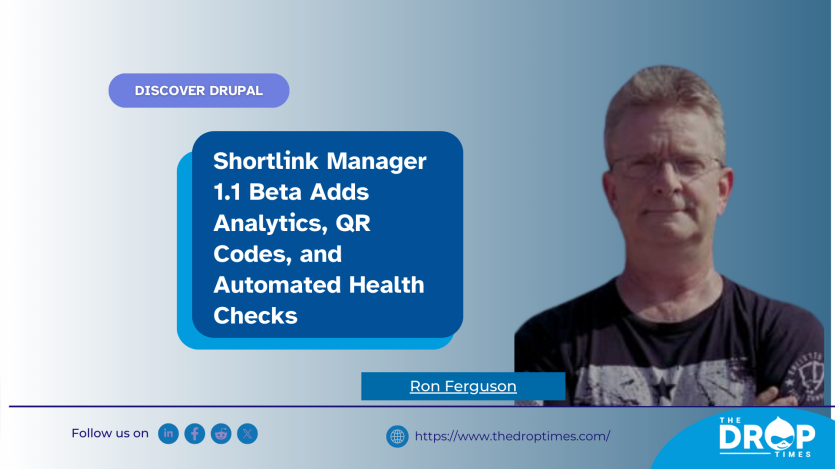
Version 1.1.0-beta of the Shortlink Manager module for Drupal introduces analytics, QR code generation, and automated health checks. Ron Ferguson describes the update as a major architectural expansion of the project.
The release shifts the module beyond basic redirect tracking into a structured management suite. A new click analytics engine replaces simple redirect counts with detailed logging stored in a dedicated shortlink_clicks table. Referrers, user agents, and timestamps are recorded for each interaction, while IP addresses are hashed using SHA-256 to maintain privacy-conscious data handling. A Shortlink Dashboard block surfaces top-performing links and recent activity directly within the Drupal administration interface.
Intelligent expiration logic forms another core addition. Links can now expire based on a specific date and time, after reaching a maximum click threshold, or following a defined period of inactivity. This automation reduces manual oversight and supports time-sensitive marketing and campaign workflows.
To connect offline and online campaigns, the module integrates the endroid/qr-code library. Administrators can generate and download PNG QR codes directly from the shortlink listing view, enabling use across print materials and physical media without relying on external services.
An automated Broken Destination Detection system flags shortlinks that point to deleted or unpublished content, invalid internal paths, broken external URLs, or redirect chains. The beta branch also introduces new Drush commands for bulk shortlink generation and health checks, extending automation support for larger installations.
Ron also shared insights into his workflow, noting that this release marks his first large-scale use of AI-assisted development. Using Claude Code as a high-level pair programmer, he referenced Drupal 10.5.x and Drupal 11.x source code locally to ensure API compatibility. While AI accelerated scaffolding tasks such as database schema updates and Batch API integrations, final review, auditing, and live testing remained under manual control.
The 1.1.0-beta series remains fully backwards compatible with the 1.0.x branch and supports Drupal 10.5+ and 11.2+ environments. Ron has invited community members to test QR generation, cron-based expiration, and Drush health checks ahead of the stable 1.1.0 release. The module’s beta release details and source code are available on GitHub.


ASK: Drupal Community Needs Your Support
View all →
Disclosure: This content is produced with the assistance of AI.
Note: The vision of this web portal is to help promote news and stories around the Drupal community and promote and celebrate the people and organizations in the community. We strive to create and distribute our content based on these content policy. If you see any omission/variation on this please reach out to us at #thedroptimes channel on Drupal Slack and we will try to address the issue as best we can.

Related People


You may also like