



Drupal Contribution Habits That Support Developer Portfolios in 2026

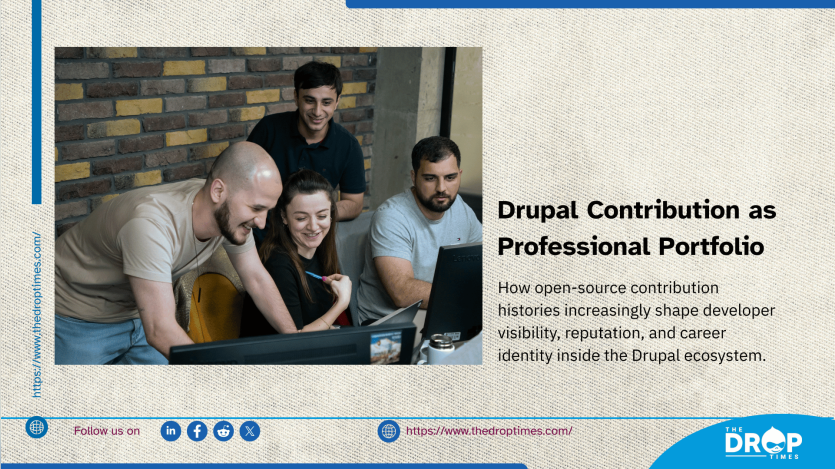
Developers entering the Drupal ecosystem are often encouraged to “start contributing,” but within the community, contribution activity has evolved beyond a simple measure of code output. Across Drupal agencies, enterprise teams and open-source projects, contribution histories increasingly function as visible indicators of collaboration habits, technical engagement and long-term participation in the ecosystem.
Unlike private development environments, Drupal’s open contribution model creates a public record of how contributors interact with technical discussions, review feedback, documentation workflows and community processes. Hiring managers and project maintainers can often evaluate not only what contributors build, but also how they communicate, respond to criticism and support collaborative development efforts.
Smaller Contributions Often Carry Long-Term Value
Within Drupal, recurring smaller contributions frequently hold greater long-term value than isolated large patches. Activities such as reviewing issue queues, testing patches, improving documentation, reporting regressions and assisting with module maintenance can demonstrate consistency and practical problem-solving skills over time.
Many contributors build visibility gradually through sustained engagement rather than headline feature development. Community organisers and technical leads have regularly highlighted that contributors who participate consistently tend to establish stronger professional trust across the ecosystem.
Contribution patterns can also reflect familiarity with Drupal’s collaborative workflows, coding standards, release cycles and peer review practices. These visible habits often become part of how contributors are informally recognised within the community.
Contribution histories increasingly function as visible indicators of collaboration habits, technical engagement and long-term participation in the ecosystem.
Public Collaboration Extends Beyond Code
Drupal contribution activity is highly collaborative and publicly visible. Issue queue discussions, merge request reviews, documentation updates and community conversations frequently provide insight into how contributors approach technical challenges and team-based problem-solving.
For agencies and hiring teams, these interactions can reveal qualities that traditional portfolios may not fully capture. The ability to communicate clearly, review work constructively, maintain professionalism during technical disagreements and help move discussions forward are often viewed as important indicators of long-term project compatibility.
Contribution records may also demonstrate how developers handle maintenance responsibilities, respond to evolving project requirements and support shared open-source goals over extended periods of time.
Non-Code Participation Remains Important
Drupal’s contribution culture has historically extended beyond software development alone. Non-code participation, including event organisation, mentoring, accessibility reviews, translation efforts, documentation support and community outreach, continues to play an important role within the ecosystem.

These activities often demonstrate organisational and communication skills that are increasingly relevant in distributed development environments. Contributors who help support community operations may also develop broader professional networks across agencies, maintainers and enterprise stakeholders.
DrupalCamps, contribution days, local meetups and mentorship initiatives continue to serve as common entry points for newer contributors seeking to build confidence and visibility within the community.
Emerging Technologies Are Creating New Contribution Areas
Contribution opportunities within Drupal are continuing to expand alongside broader technology changes. Artificial intelligence integrations, composable architecture initiatives, governance tooling and enterprise digital experience workflows have introduced new areas for experimentation and technical collaboration.
Developers contributing to newer initiatives may gain early exposure to implementation discussions shaping future Drupal development priorities. Experimental modules, AI-related tooling, workflow documentation and interoperability discussions are increasingly becoming active areas of community contribution.
As enterprise adoption patterns evolve, contributors participating in these discussions may also build specialised expertise aligned with changing industry requirements.
Drupal’s open contribution model creates a public record of how contributors interact with technical discussions, review feedback, documentation workflows and community processes.
Contribution Histories Are Becoming Professional Portfolios
For many developers, sustained Drupal participation now functions as an extension of their professional portfolio. Public contribution records can provide practical examples of collaboration, technical problem-solving, documentation practices and long-term project involvement that are directly observable by employers and community stakeholders.
Rather than relying exclusively on certifications or private work samples, contributors often establish credibility through visible participation across Drupal’s open development ecosystem. For some developers, these contribution histories ultimately become pathways to professional recognition, mentorship opportunities, speaking invitations and future employment across the broader Drupal community.
 Allen JasonAllen without organs
ASK: Drupal Community Needs Your Support
View all →
Disclosure: This content is produced with the assistance of AI.
Note: The vision of this web portal is to help promote news and stories around the Drupal community and promote and celebrate the people and organizations in the community. We strive to create and distribute our content based on these content policy. If you see any omission/variation on this please reach out to us at #thedroptimes channel on Drupal Slack and we will try to address the issue as best we can.

You may also like