

Drupal’s Architectural Model Fits Emerging Agent-Managed Content Systems

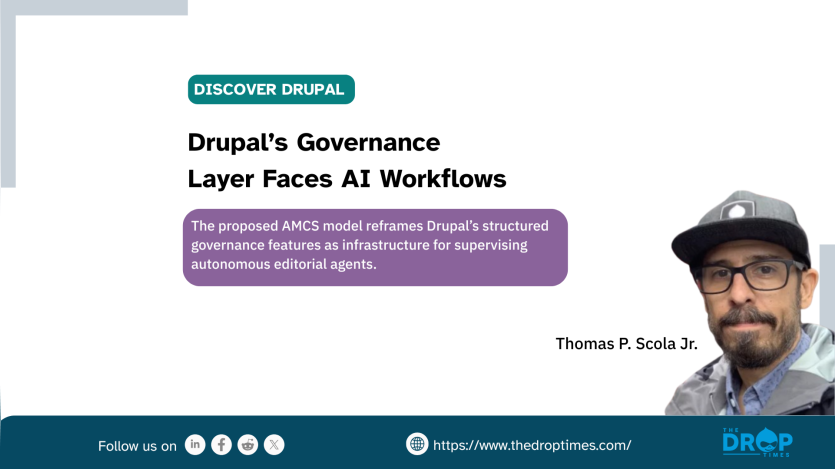
Content management systems were originally designed around the assumption that humans would remain the primary operators of software interfaces. In a LinkedIn article, Thomas P. Scola Jr. argues that this assumption is beginning to shift as AI agents move from assistive tools into operational roles inside editorial and workflow systems. The post introduces the term “Agent-Managed Content System” or AMCS to describe platforms where AI agents operate as governed actors alongside human editors rather than as simple assistant features attached to existing interfaces.
Scola positions Drupal as structurally aligned with that transition because of its emphasis on structured content, entity relationships, permissions, moderation workflows, revision tracking, and machine-readable APIs. The article also references ongoing work around the mcp and mcp_client modules alongside contributed projects including AI Agents, AI Automators, AI Search, and AI Context. According to the post, these systems collectively move Drupal closer to agent-oriented publishing and workflow environments.
The article additionally discusses broader standards activity around AI-agent infrastructure, including the Agent-to-Agent protocol (A2A), the Model Context Protocol (MCP), and AGENTS.md conventions. Scola argues that governance, identity, auditability, and agent-discovery systems remain unresolved layers in the wider ecosystem and references OSSA and DUADP as open-source efforts intended to address those gaps. Many of the long-term standards and architectural claims presented in the article remain speculative and are framed as part of the author’s broader vision rather than independently verified industry consensus.

ASK: Drupal Community Needs Your Support
View all →
Disclosure: This content is produced with the assistance of AI.
Disclaimer: The opinions expressed in this story do not necessarily represent that of TheDropTimes. We regularly share third-party blog posts that feature Drupal in good faith. TDT recommends Reader's discretion while consuming such content, as the veracity/authenticity of the story depends on the blogger and their motives.
Note: The vision of this web portal is to help promote news and stories around the Drupal community and promote and celebrate the people and organizations in the community. We strive to create and distribute our content based on these content policy. If you see any omission/variation on this please reach out to us at #thedroptimes channel on Drupal Slack and we will try to address the issue as best we can.

Related Drupal Initiatives

Related Events



Related Organizations

Related People


You may also like