


European Commission Sets Out Open Source Strategy for Digital Sovereignty

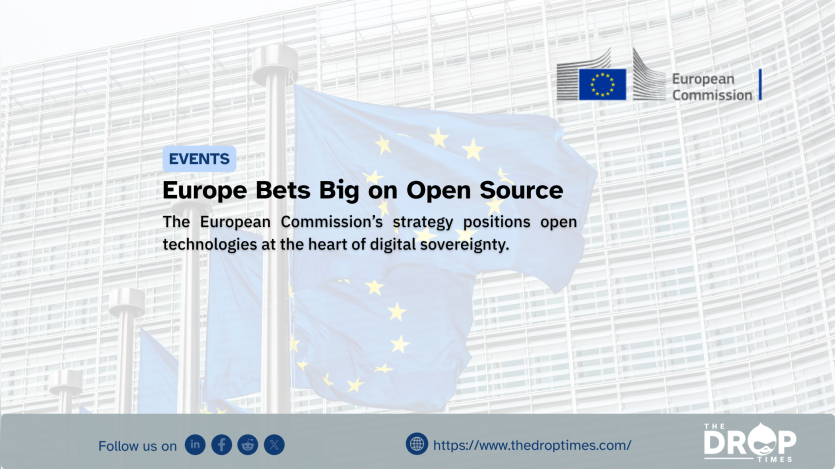
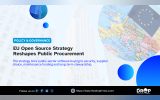
European policymakers have placed open-source technology within the European Union’s digital sovereignty agenda through a new EU Open Source Strategy. The European Commission’s strategy sets out measures to support open alternatives to non-EU proprietary technologies, with a focus on public-sector adoption, procurement, digital infrastructure, long-term maintenance, and critical technology areas.
The strategy is relevant to open-source platforms such as Drupal because it links public digital infrastructure with interoperability, reuse, open standards, reduced vendor lock-in, and transparent governance. The document does not endorse Drupal or any other specific software platform, but its priorities overlap with issues long associated with open-source content management and public-sector digital services.
The Commission frames open source as part of Europe’s broader technological sovereignty effort. The strategy sits within the Communication on European Technological Sovereignty, alongside proposals and roadmaps covering cloud, artificial intelligence, semiconductors, energy digitalisation, and other infrastructure areas.
According to the Commission, open source can help reduce dependence on non-EU technologies and increase control over critical digital infrastructure. The strategy identifies public administrations, businesses, small and medium-sized enterprises, citizens, developers, and innovators as groups that can benefit from a stronger open-source ecosystem.
The document also identifies structural challenges in Europe’s open-source ecosystem. These include limited long-term funding, difficulties maintaining and scaling projects, barriers between innovation and industrial deployment, limited access to public procurement, and dependence on dominant non-EU technology providers.
The strategy adopts a full lifecycle approach covering research, development, market uptake, deployment, maintenance, and governance of open-source technologies. It proposes support for contributors, foundations, companies, users, business models, procurement practices, standardisation, and international cooperation.
Public-sector adoption is a central part of the strategy. The Commission proposes procurement guidance for open standards and fair assessment of open-source bids, stronger Open Source Programme Office networks, reusable public digital assets, and digital investment decisions that include openness and sovereignty considerations.
The strategy also points to open-source use in policy areas such as the European Digital Identity ecosystem, including the European Digital Identity Wallet and the European Business Wallet. It identifies operating systems, cloud and edge infrastructure, artificial intelligence, cybersecurity, software development infrastructure, semiconductors, and future internet architectures as priority areas for open-source support.
Long-term sustainability is another major theme. Planned actions include stewardship support for strategic digital assets, dependency analysis, mirroring capabilities, security baselines for Commission repositories, and an Open Source Maintenance Instrument for critical components.
Drupal community members highlighted the strategy after publication, pointing to its relevance for public-sector open-source platforms. In LinkedIn posts, Hynek Načeradský, Senior Drupal Developer and Architect, and Volkan Jacobsen, Managing Partner at factorial.io, connected the strategy’s emphasis on openness and vendor independence with Drupal’s role in institutional digital services.
Those comments reflect a broader Drupal community interest rather than a formal policy endorsement. For Drupal agencies, contributors, and public-sector teams in Europe, the strategy may shape future discussions around procurement, interoperability, maintenance responsibility, and the long-term governance of open-source digital infrastructure.

ASK: Drupal Community Needs Your Support
View all →
Disclosure: This content is produced with the assistance of AI.
Note: The vision of this web portal is to help promote news and stories around the Drupal community and promote and celebrate the people and organizations in the community. We strive to create and distribute our content based on these content policy. If you see any omission/variation on this please reach out to us at #thedroptimes channel on Drupal Slack and we will try to address the issue as best we can.
Related Organizations

You may also like