




Bowman Cyber Remarks Raise Web Estate Governance Questions for Drupal Teams

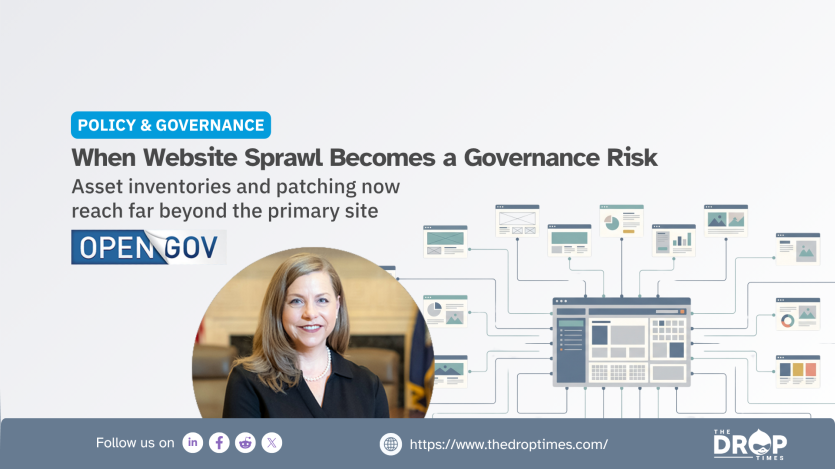
Federal Reserve Vice Chair for Supervision Michelle W. Bowman told a 29 September 2026 Community Bank Cyber Workshop that cyber resilience depends on strong asset inventories, phishing-resistant multifactor authentication, access controls, vulnerability identification, patch management, employee training and tested incident-response plans. She also placed responsibility for cybersecurity with boards and senior management, arguing that investment in people, processes and technology should match an institution's risk and complexity.
Bowman's remarks were directed at community banks, not Drupal teams, and they did not introduce a new Federal Reserve rule or examination requirement. Their relevance to large web estates lies in a narrower operational point: an organisation cannot govern patching, ownership or exposure consistently if it does not have a reliable view of the public-facing systems it still operates.
That problem can become difficult when a financial institution or other large organisation runs corporate websites alongside product sites, recruitment properties, acquired brands, regional portals, investor-relations pages, campaign sites and older public properties. Each may have its own hosting arrangement, software stack, deployment process and maintenance history.
Eight days before Bowman's speech, the Office of the Comptroller of the Currency updated its Cybersecurity Supervision Work Program. The OCC said the September update reorganised the programme and refreshed references around the updated NIST Cybersecurity Framework without adding new procedures or regulatory expectations. Together, the two publications reinforce the importance of maintaining visibility into systems and responsibilities without creating a new Drupal-specific compliance requirement.
For organisations using Drupal, shared-code architectures can reduce the number of independently maintained software environments when deployment, updates and technical controls are deliberately centralised. That does not provide governance automatically, and it does not remove the need to identify who owns each site, who can deploy changes and which properties remain in operation.
Riverside County in California provides one example of that model at scale. A Drupal.org case study describes the county's move across 48 public-service websites to Drupal 10 with centralised management through Acquia Cloud Site Factory.
According to the case study, a shared codebase and common CI/CD pipeline allowed updates, governance and deployments to be handled consistently while individual departments retained responsibility for their own content. Riverside is not a financial-services compliance example, but the implementation illustrates a narrower principle relevant to Bowman's asset-inventory emphasis: distributed publishing does not require every website to operate as an independent software-maintenance environment.
Security maintenance still depends on supported software and clear responsibility for updates. Drupal's coordinated-disclosure process provides security coverage only for supported releases, which makes an accurate inventory of versions and deployments important when an organisation operates multiple sites.
Centralisation can make that work easier to coordinate, but it can also concentrate operational responsibility. A shared platform still requires clear ownership, tested deployment processes and a way to verify that security updates have reached every affected property. Separate installations require the same governance work across more independent environments.
Bowman's remarks therefore sharpen a question that extends beyond a bank's primary website: can the organisation identify every public-facing property it is responsible for, the software each one runs, who maintains it and whether updates are applied consistently? For Drupal teams managing large estates, that is where cyber hygiene becomes a governance issue rather than only a technical maintenance task.
References
-
-
Cybersecurity: Cybersecurity Supervision Work Program, Office of the Comptroller of the Currency (21 September 2026)
-
Modernizing Multisite Government Services For The County Of Riverside, Drupal.org (11 November 2025)
-
 Allen JasonAllen without organs


ASK: Drupal Community Needs Your Support
View all →
Disclosure: This content is produced with the assistance of AI.
Note: The vision of this web portal is to help promote news and stories around the Drupal community and promote and celebrate the people and organizations in the community. We strive to create and distribute our content based on these content policy. If you see any omission/variation on this please reach out to us at #thedroptimes channel on Drupal Slack and we will try to address the issue as best we can.

You may also like