




Understanding Drupal Forms: Why They Work Like State Machines

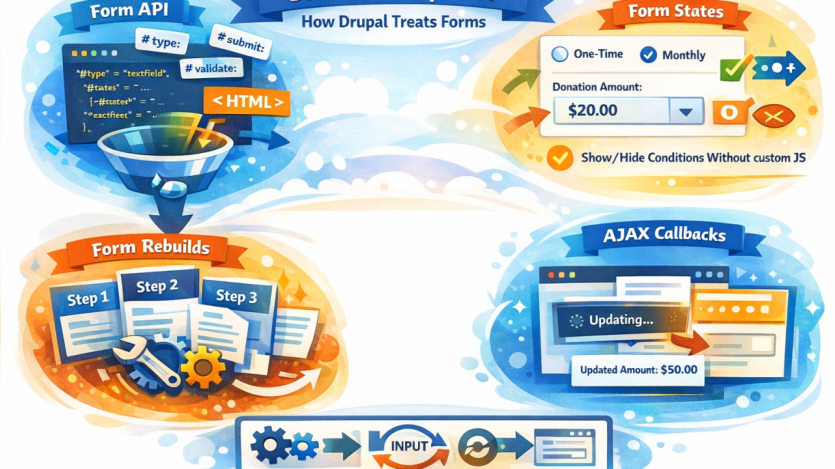
A post by Hari Venu explains how Drupal forms are structured as logic-driven systems rather than simple HTML interfaces, using the Form API (FAPI) to define elements, validation rules, and submission behaviour.
Instead of static markup, forms are built as PHP arrays that Drupal interprets and renders. This allows forms to remain stateful, retaining user input and dynamically adjusting structure and behaviour during interaction. Features such as #states and AJAX enable conditional visibility, validation, and partial updates without requiring custom JavaScript.
The article highlights Drupal’s rebuild model, where forms are not navigated between steps but repeatedly reconstructed through a loop of build, input, validation, submission, and rebuild. This approach supports multi-step workflows and conditional flows within a single form structure.
By framing forms as state machines, the post suggests a shift in how developers approach Drupal development. Treating forms as systems rather than UI components enables more predictable behaviour, reduces implementation complexity, and supports advanced use cases such as dynamic user journeys and multi-step processes.

ASK: Drupal Community Needs Your Support
View all →
Disclosure: This content is produced with the assistance of AI.
Disclaimer: The opinions expressed in this story do not necessarily represent that of TheDropTimes. We regularly share third-party blog posts that feature Drupal in good faith. TDT recommends Reader's discretion while consuming such content, as the veracity/authenticity of the story depends on the blogger and their motives.
Note: The vision of this web portal is to help promote news and stories around the Drupal community and promote and celebrate the people and organizations in the community. We strive to create and distribute our content based on these content policy. If you see any omission/variation on this please reach out to us at #thedroptimes channel on Drupal Slack and we will try to address the issue as best we can.

Related People


You may also like