

Unit 42 Says AI System Found 14,090 Open-Source Vulnerabilities

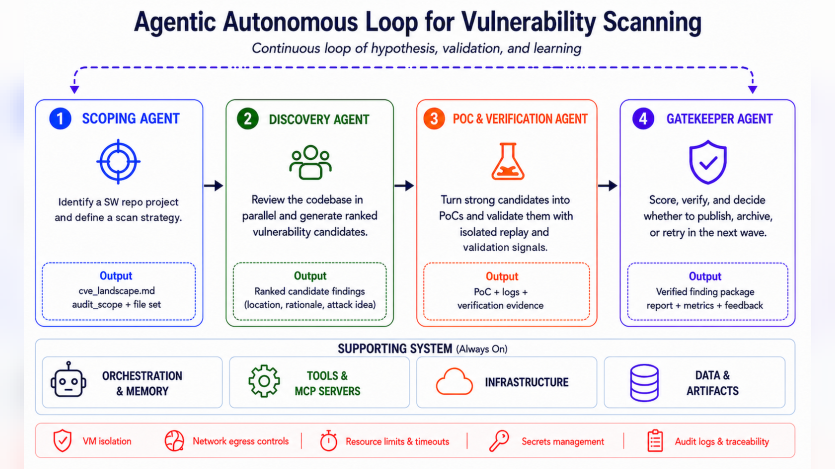
Security researchers at Unit 42 say an autonomous research system found 14,090 vulnerabilities across 3,915 open-source projects during a two-month scanning campaign. Published on 4 August 2026, the report says 99.4% of the findings were not present in public vulnerability records when checked. Under Common Vulnerability Scoring System version 4.0, 5,600 findings, or 39.7%, were classified as high or critical severity.
The system, called Network and Open-Source Vulnerability Analyzer, or NOVA, reviewed project histories and source code, identified vulnerability candidates, generated proofs of concept, replayed findings in clean environments, proposed patches, and prepared disclosure reports. Unit 42 describes the process as autonomous until final human review. The pipeline examined 3,915 projects across six broad language and software ecosystems, including 17 PHP projects that produced 2,740 findings, but the report does not name those projects or publish project-level results.
Unit 42 says the results extend automated security research beyond bug classes traditionally associated with fuzzing. Memory and calculation issues, resource-management flaws, and denial-of-service findings together accounted for 8% of the total, leaving 92% in other categories. Recurring classes included access-control and authorisation failures, path traversal, code injection, prototype pollution, and server-side request forgery.
The research also reports 5,421 supply-chain findings across the package ecosystems examined. These comprised 1,280 flaws in dependency packages and 4,141 downstream exposures where applications could reach vulnerable dependencies through their own code. Unit 42 says NOVA validated exploitability from the downstream application with a working proof of concept in 2,776 of those exposures.
For Drupal teams, the findings provide broader evidence of how autonomous vulnerability discovery could increase the volume and speed of security reports affecting open-source applications and their dependencies. Drupal is a PHP-based platform, but the presence of PHP projects in the dataset does not establish that Drupal core, contributed projects, or software used by Drupal sites was scanned. Unit 42 does not identify Drupal anywhere in its published project results.
Reference: The Frontier AI Vulnerability Burst: Industrializing Autonomous Zero-Day Discovery in Open-Source Software (4 August 2026)

ASK: Drupal Community Needs Your Support
View all →
Disclosure: This content is produced with the assistance of AI.
Disclaimer: The opinions expressed in this story do not necessarily represent that of TheDropTimes. We regularly share third-party blog posts that feature Drupal in good faith. TDT recommends Reader's discretion while consuming such content, as the veracity/authenticity of the story depends on the blogger and their motives.
Note: The vision of this web portal is to help promote news and stories around the Drupal community and promote and celebrate the people and organizations in the community. We strive to create and distribute our content based on these content policy. If you see any omission/variation on this please reach out to us at #thedroptimes channel on Drupal Slack and we will try to address the issue as best we can.

You may also like