


DrupalCon Rotterdam Jobs Board Pairs Vacancies With Community Recommendations

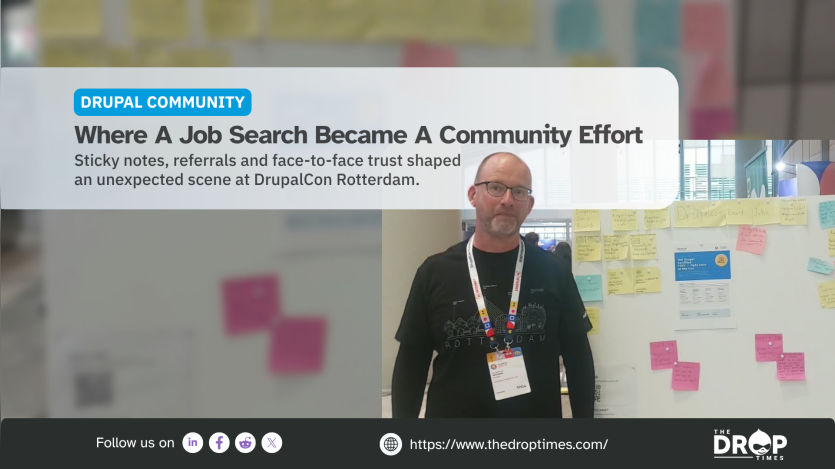
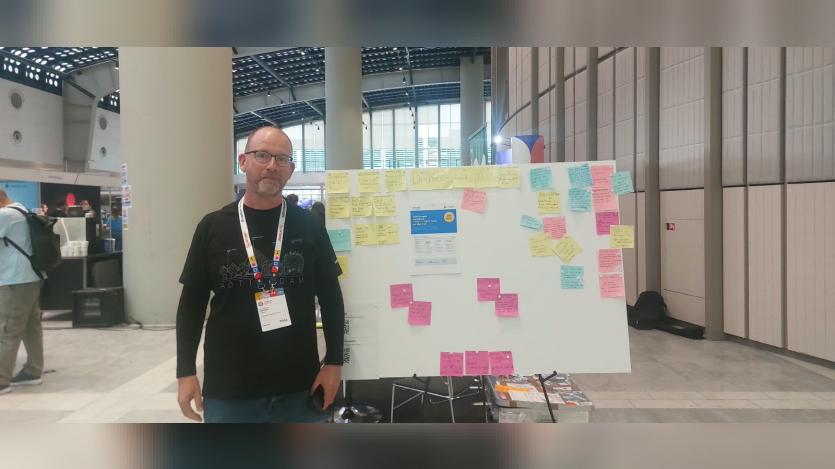
Handwritten cards, QR codes and personal recommendations turned part of DrupalCon Rotterdam into a temporary meeting point for employers and people actively looking for Drupal work. Michael Lenahan created the community-run jobs board after his own experience of finding work through a personal connection at DrupalCon Vienna 2025.
Lenahan told The DropTimes that he attended the Vienna conference shortly after losing his job. The situation changed how he experienced an event that had previously been a place to catch up with friends and enjoy the community.
"Every conversation began with 'I'm looking for work'," Lenahan said, describing the experience as difficult and "a bit of a buzz killer." A friend-of-a-friend connection eventually helped him find a job at the conference.
That experience prompted a broader question for Lenahan: why did DrupalCon and DrupalCamps do so little to help people who were actively looking for work?
The DropTimes also runs a free Drupal jobs board, curating opportunities from across the world for people looking for roles across the Drupal ecosystem. The Rotterdam noticeboard offered a different, in-person layer to that same problem by bringing vacancies, job seekers and community recommendations into one physical space.
How the Jobs Board Worked
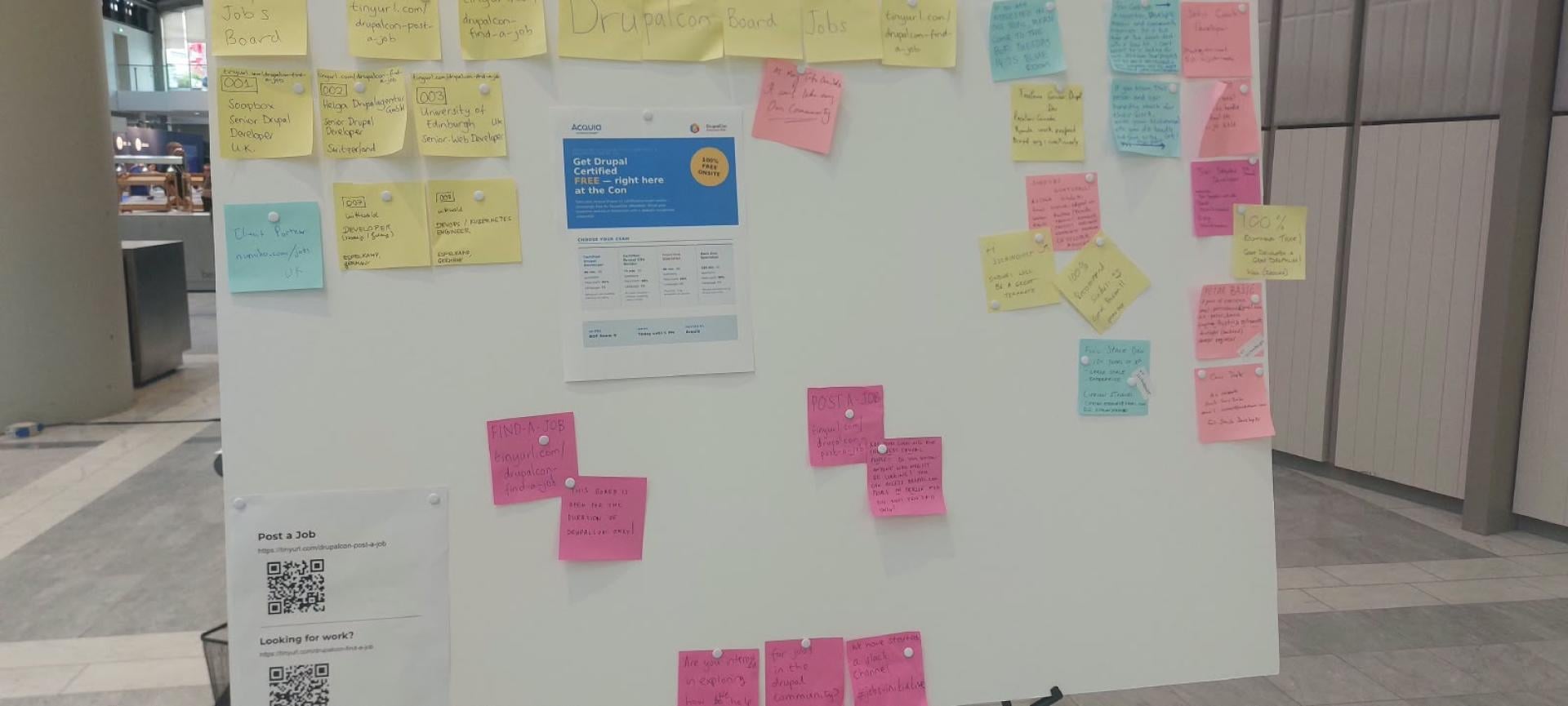
Lenahan described the Rotterdam board as a "one-person community initiative" and an experiment rather than a commercial project. Employers submitted vacancies through a Google Form, with the entries collected in a spreadsheet. Eight jobs were submitted.
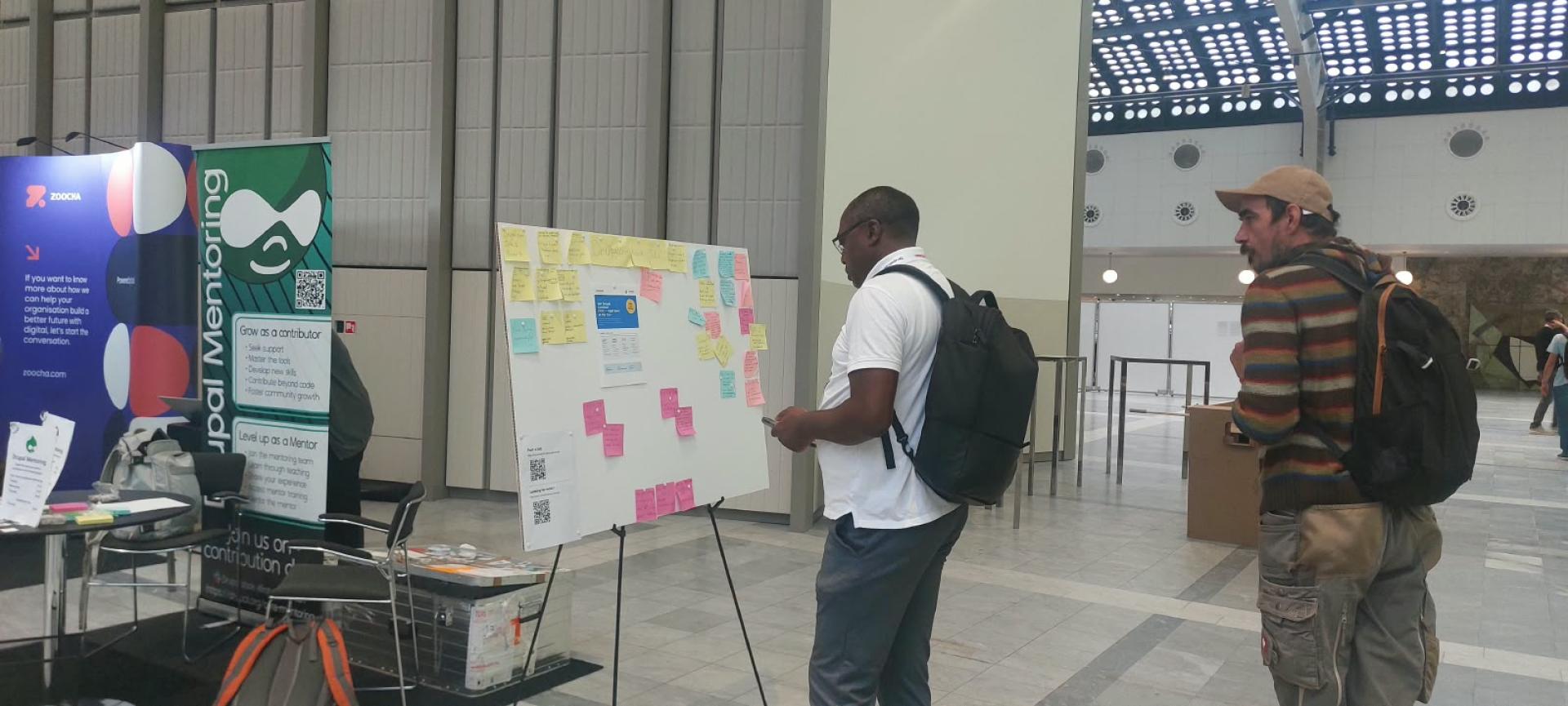
Each vacancy also appeared on the physical board with a reference number linked to the digital listing, where attendees could find the information needed to apply. The board combined handwritten notices with digital access, including printed QR codes for posting a job and for people looking for work. A separate section allowed people looking for work to post their own cards.
Community members could then place recommendations beside those job-seeker cards. Lenahan described this as a real-world equivalent of a LinkedIn recommendation, allowing people who knew someone's work to visibly vouch for them during the conference.
Why the Physical Board Mattered
Rachel Lawson suggested adding the physical board, according to Lenahan. He said the format created a place where conversations about finding work could happen, while the digital component supported those conversations.
The digital board was deliberately temporary. Lenahan said it remained available only for the few days of the event, giving employers a short window to find people who were physically present at DrupalCon.
Lenahan also credited Jeremy Chinquist of Drunomics with helping him clarify why the idea could be useful and how it could work in practice.
Future editions would depend on other people volunteering to organise them. Lenahan said he would like the experiment repeated, but believes local DrupalCamps may have an even greater need for it.
DrupalCon can be expensive to attend, he said, meaning many participants already have jobs and attend with support from their employers. Local camps may be more accessible to people who are genuinely out of work.
From the Board to a Wider Jobs Discussion
The jobs board ran alongside a broader discussion about employment at DrupalCon Rotterdam. Lenahan also led the Birds of a Feather session "Looking for work? Looking to hire someone? Let's talk about the Drupal job market," which he said attracted about 20 participants.
The discussion covered what Lenahan described as a breakdown of trust on digital platforms and the value of recommendations made by people who know one another. Job seekers were encouraged to be open about their situation, including through stickers they could add to conference badges.
Participants were also encouraged to support people they knew were looking for work and to recommend them when they could honestly vouch for their abilities. Lenahan linked that approach to the personal recommendation that had helped him find work in Vienna.
Lenahan thanked Tim Lehnen of the Drupal Association and Valerie Lourie of Dropsolid for supporting the BoF discussion.
The board was intended for people actively looking for work, particularly those who had lost jobs, rather than employees quietly considering a move between Drupal companies. Lenahan said the distinction mattered because an attendee's current employer could see the board.
Lenahan framed the effort partly as a question of community retention, arguing that people who lose Drupal jobs may eventually leave the ecosystem if they cannot find another role.
"If they find a new Drupal job, our community is stronger," Lenahan said. "If they do not, then the community loses some of its strength."
Lenahan did not yet know whether the Rotterdam experiment had produced any job offers. "If one person finds work as a result, I will count it as a success," he said.
Editor's Note: Ben Peter Mathew, Community Manager of The DropTimes, coordinated reporting for this story, with on-the-ground assistance from Anto Jose. Anto helped connect the newsroom with Lenahan, facilitated the questions and responses, and helped obtain photographs from DrupalCon Rotterdam.
 Allen JasonAllen without organs
Image Attribution Disclaimer: At The Drop Times (TDT), we are committed to properly crediting photographers whose images appear in our content. Many of the images we use come from event organizers, interviewees, or publicly shared galleries under CC BY-SA licenses. However, some images may come from personal collections where metadata is lost, making proper attribution challenging.
Our purpose in using these images is to highlight Drupal, its events, and its contributors—not for commercial gain. If you recognize an image on our platform that is uncredited or incorrectly attributed, we encourage you to reach out to us at #thedroptimes channel on Drupal Slack.
We value the work of visual storytellers and appreciate your help in ensuring fair attribution. Thank you for supporting open-source collaboration!

ASK: Drupal Community Needs Your Support
View all →
Disclosure: This content is produced with the assistance of AI.
Note: The vision of this web portal is to help promote news and stories around the Drupal community and promote and celebrate the people and organizations in the community. We strive to create and distribute our content based on these content policy. If you see any omission/variation on this please reach out to us at #thedroptimes channel on Drupal Slack and we will try to address the issue as best we can.
Related Events
DrupalCon Rotterdam, 2026


Rotterdam, Netherlands
Related People


You may also like