



From Pakistan to DrupalCon Rotterdam: Community, AI, Advocacy and the Future of Drupal

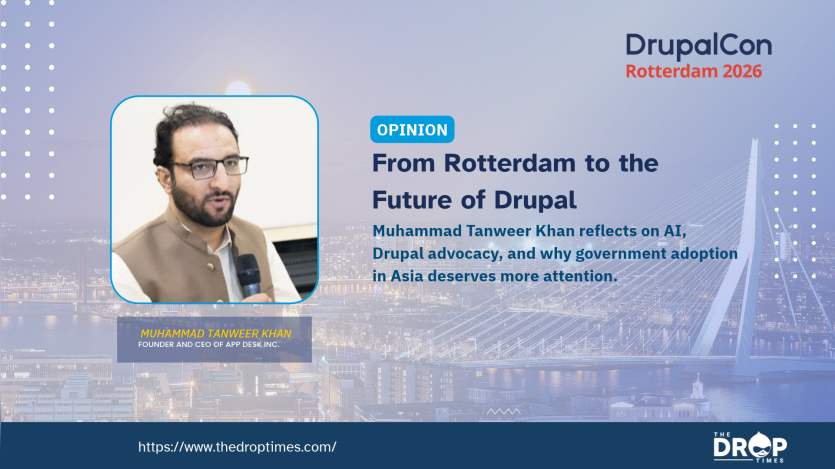
Attending DrupalCon has always been about much more than attending technical sessions for me. It is an opportunity to reconnect with a community I have been part of for many years, exchange experiences with people from around the world, and come back with new ideas about where Drupal, and our own work with Drupal, should go next.
This year, I had the opportunity to attend DrupalCon Europe in Rotterdam with the support of a Drupal4Gov scholarship, and I am extremely grateful to Drupal4Gov for making this experience possible.
What the Drupal4Gov Scholarship Made Possible
For someone travelling internationally from Pakistan, attending a major conference in Europe involves a significant financial commitment. There are flights, accommodation and many other costs associated with international travel.
The support from Drupal4Gov made that decision considerably easier and allowed me to focus on getting the most value possible from DrupalCon.
But I also saw the scholarship as more than financial support. It represented an opportunity to strengthen the connection between the international Drupal community and people working with Drupal in government outside the United States and Europe.
That is particularly important to me because much of my recent work and community contribution has focused on the use of Drupal in government and the public sector.
The Question Everyone Was Asking: What Does AI Mean for Drupal?
One topic was impossible to avoid at DrupalCon Rotterdam: AI.
The question was not simply how we can add AI features to Drupal. There was a bigger question underneath it.
What happens to experienced Drupal developers and agencies when someone with relatively little Drupal experience can use tools such as Codex, Claude and other AI coding assistants to generate modules, integrations and complete pieces of functionality?
For developers and agencies that have spent 10, 15 or 20 years developing Drupal expertise, it is an important question.
My takeaway from the conversations at DrupalCon was that our response should not be to compete against AI. Instead, we need to make Drupal work even better with AI.
There were discussions around improving Drupal's integration with AI tools, providing better context to AI systems, and making it easier for these tools to properly understand Drupal architecture, APIs, conventions and best practices.
AI can generate code very quickly, but decades of experience are not simply about how quickly someone can write code. Experience is knowing what should be built, how systems should be architected, what the security implications are, how they will scale, how they should integrate with other systems, and how they can remain maintainable years later.
I believe AI makes that experience more valuable when we learn how to combine the two effectively.
Drupal Has Another Challenge: Telling Its Story
Another discussion that stood out to me was around Drupal advocacy.
There was broad agreement, including from Dries Buytaert, that Drupal today is an incredibly capable platform. Its strengths in security, flexibility, scalability, enterprise development and community support put it in a very strong position.
But Drupal's reputation and visibility do not always reflect how far the platform has come.
This is why I was particularly encouraged by the discussions around Drupal's advocacy program and the effort to communicate Drupal's strengths more effectively.
We can continue building the best technology, but we also need to make sure decision-makers know it exists and understand why it may be the right choice for their organizations.
Taking the Government Conversation Beyond Europe
Government and public-sector adoption was naturally one of the areas I was most interested in.
At DrupalCon, I learned more about efforts to engage European governments and communicate how Drupal can be used to build secure, flexible and sustainable public-sector digital platforms.
I had an opportunity to discuss this with Dries Buytaert, and I suggested that similar advocacy and engagement should be expanded to governments in Asia.
There is a significant opportunity here.
Governments across Asia are investing heavily in digital transformation. These systems often need exactly the qualities Drupal is strong at providing: security, control and ownership of data, flexibility, scalability, integration capabilities and long-term sustainability.
Having worked on Drupal-based government systems myself, I have seen what this can mean in practice. Drupal can go far beyond being perceived simply as a CMS. It can provide the foundation for complex digital platforms that improve real government processes and public-sector operations.
I would love to see the Drupal community engage governments across Asia more directly, sharing successful implementations, providing guidance and helping decision-makers understand where Drupal fits into their digital strategies.
This is also an area where I hope to contribute more myself.
Bringing the Experience Back Home
One of the most valuable things about attending DrupalCon is that the experience does not end when the conference ends.
I returned with new ideas about AI, Drupal development and how agencies like ours need to evolve. I also came back thinking more about advocacy and how those of us who have worked with Drupal for many years can help communicate its value beyond the existing Drupal community.
For me, that includes continuing to advocate for Drupal in government, particularly in Pakistan and across the wider Asian region.
It also means encouraging developers to embrace the changes happening around AI rather than seeing them purely as a threat.
The tools will change. The way we build software will change. But understanding architecture, security, users, business requirements and the long-term consequences of technical decisions remains extremely important.
Our job is to combine that experience with the new capabilities AI gives us.
More Than a Conference
Of course, DrupalCon is not only about sessions and technology.
Some of the best parts are the conversations between sessions, meeting people you may have known online for years, reconnecting with old friends and discovering that people working thousands of kilometres apart are often trying to solve very similar problems.
That sense of community is one of the reasons I have remained involved with Drupal for so long.
For anyone considering applying for a Drupal4Gov scholarship in the future, particularly someone who might otherwise find international conference travel difficult, I would strongly encourage you to apply.
Go there ready not only to learn, but also to participate. Introduce yourself. Share what you are working on. Ask questions. Speak to people outside your usual circle. And then bring those conversations and ideas back to your own organization and local community.
I am very grateful to Drupal4Gov for supporting my participation in DrupalCon Rotterdam and for investing in connections across the wider Drupal community.
I returned from Rotterdam with new ideas, new connections and renewed excitement about what comes next.
AI is changing how we build Drupal. Our challenge now is to use that change to make Drupal, and the community around it, even stronger.
 Muhammad Tanweer Khan Muhammad Tanweer Khan is the Founder and CEO of App Desk Inc.

ASK: Drupal Community Needs Your Support
View all →
Note: The vision of this web portal is to help promote news and stories around the Drupal community and promote and celebrate the people and organizations in the community. We strive to create and distribute our content based on these content policy. If you see any omission/variation on this please reach out to us at #thedroptimes channel on Drupal Slack and we will try to address the issue as best we can.

Related Events
DrupalCon Rotterdam, 2026
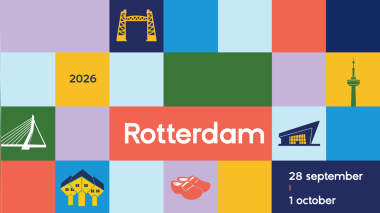


Rotterdam, Netherlands
Related Organizations


Related People


You may also like