



DriesNote Targets Drupal's Reputation Gap With Advocacy Credits and Rosetta Sprint Proposal

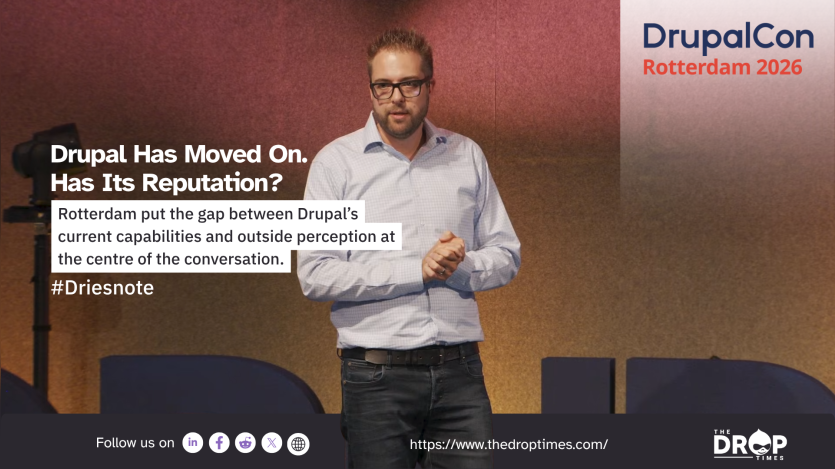
Speaking during the DriesNote at DrupalCon Rotterdam on 29 September 2026, Drupal founder Dries Buytaert launched a Drupal Advocacy Program that will award contribution credit for work that helps people discover and understand Drupal. The program, led by the Drupal Association, opened for submissions during the keynote.
Dries framed the launch around what he called Drupal's “reputation gap”, arguing that the platform's current capabilities have moved faster than perceptions outside the community. People who last encountered Drupal years ago may still judge it by that earlier experience, while AI systems can repeat the same outdated material. The keynote connected that visibility problem to a second proposal, the Rosetta Sprint, intended to explore how Drupal can describe its capabilities more consistently for agents, workflow systems, frontends, and people.
The keynote opened more broadly with European technological sovereignty. Dries said feedback he submitted during European policy work on digital sovereignty was later referenced in recommendations that followed, and he used “Stewarded Open Source” to describe software supported by ongoing maintenance, security releases, and a community that continues to care for it. The European Commission's June 2026 technology sovereignty package separately places an EU Open Source Strategy alongside measures covering cloud, AI, and semiconductors, with reducing technological dependencies among its stated objectives.
From there, Dries turned to changes in Drupal CMS and the question of reaching people who do not already work inside Drupal. A keynote slide condensed that strategy into three routes: multilingual, JavaScript + headless, and AI. His broader argument was that growth depends not only on adding capabilities, but also on meeting users and developers through languages, tools, and interfaces they already use.
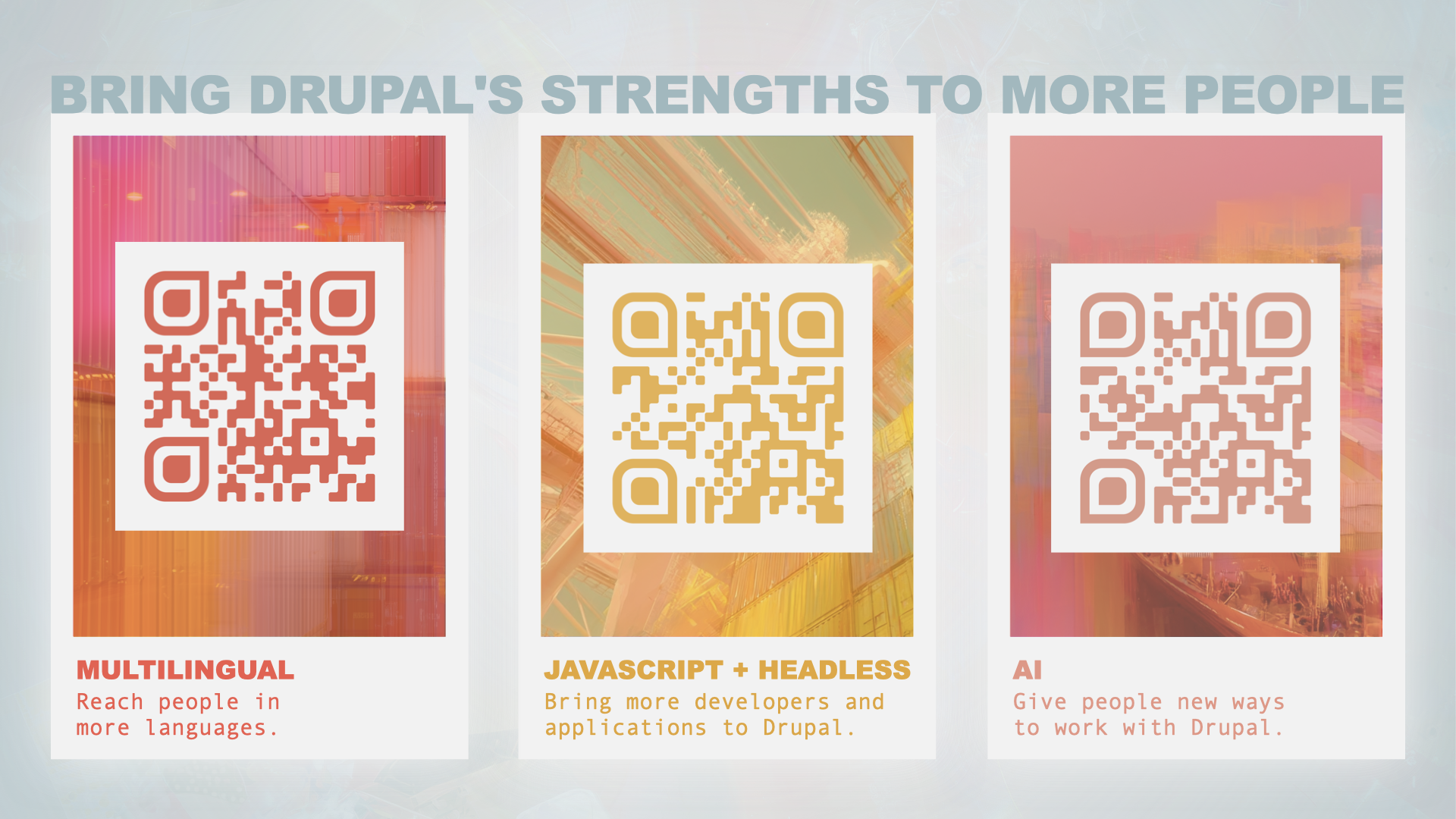
Drupal CMS 2.2 supplied the first example. The multilingual experience shown on stage adds a searchable language selector to the installer and a recommended multilingual feature with a guided checklist and three levels of translation configuration. Canvas now supports visual translation previews and native translation with review workflows and optional AI-assisted translation, while the Dashi Multilingual Food Magazine demo was used to show the capabilities together.
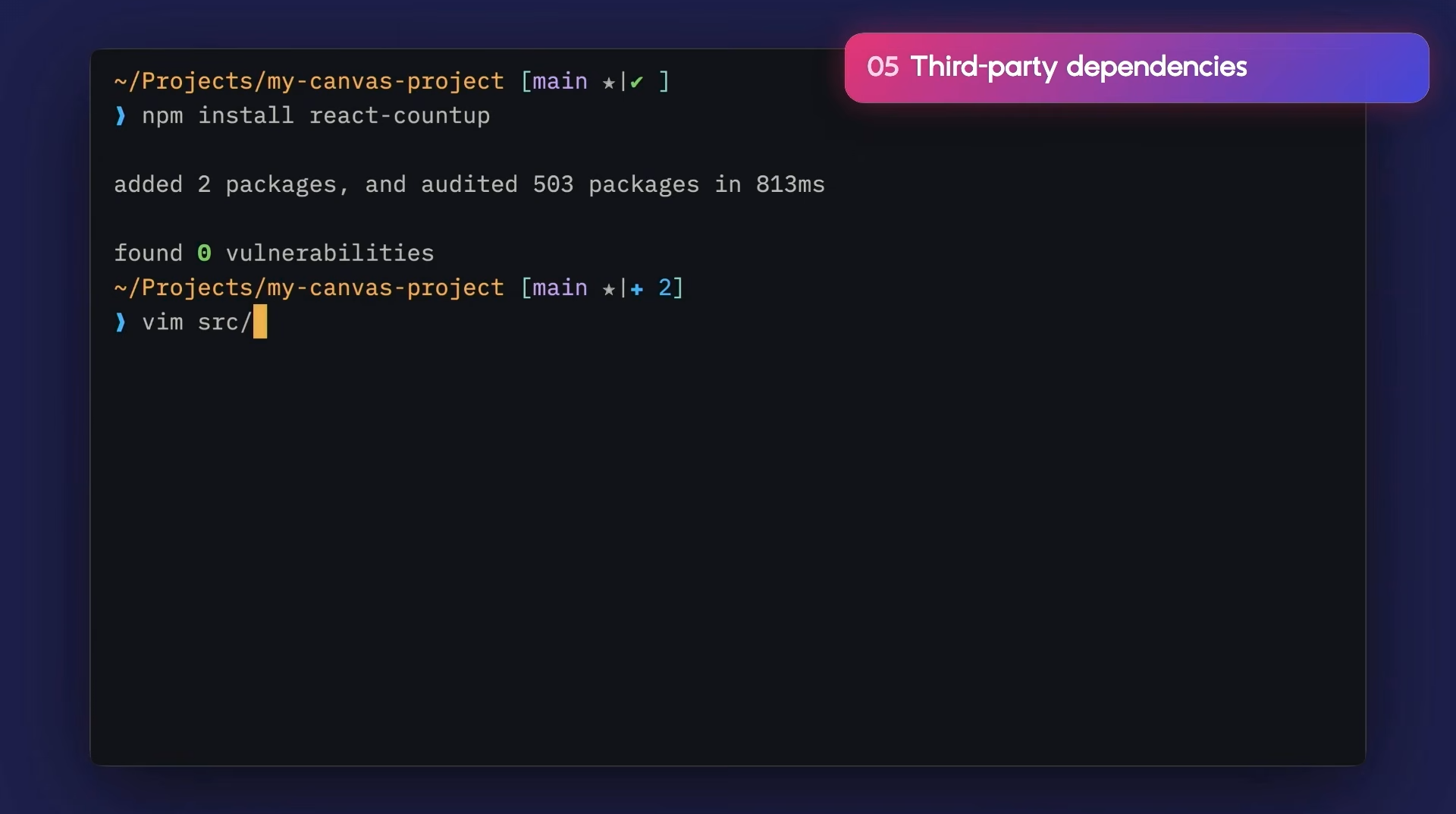
The JavaScript demonstration moved Canvas component development into tools familiar to frontend developers. Canvas Code Components can be scaffolded into a frontend codebase using React, TypeScript, and Tailwind CSS, while Canvas Workbench provides previews for components, pages, and templates without requiring Storybook configuration. Component definitions and page data can then move between local development and Drupal through the Canvas CLI, with developers also able to use packages from the wider NPM ecosystem.
Canvas Headless extended the same approach to decoupled frontends. Dries showed a workflow in which a frontend is connected by configuring its URL, allowing editors to work with a live visual preview while developers retain their preferred frontend technology. The keynote identified Next.js, Astro, Nuxt, 11ty, and newly added Angular among the supported starter options.
The third route was AI. Dries pointed attendees to a preconfigured public Drupal AI demonstration built around a fictional university site, with examples including page-level content review, answers grounded in site content, connections to external assistants, centralised knowledge and guardrails, and interaction logging. He said more than 100 people had contributed to the Drupal AI Initiative during the preceding several months. The DropTimes has separately reported on why the initiative built the full-site demo for Rotterdam, including the decision to test multiple capabilities against the same body of realistic content.
Dries then moved beyond the prepared AI site to demonstrate an editor using ChatGPT for a content operation. The editor asked the assistant to restore previous Dutch versions of two pages while leaving their English versions unchanged. The demonstration showed the Dutch pages restored with new revisions under the editor's account while earlier revisions remained available, leaving Drupal to enforce the underlying permissions, revisions, and governance.
That example supported a distinction Dries returned to several times: AI assistants could become “another interface to Drupal” rather than a replacement for Drupal's existing user interface. The connection demonstrated on stage uses a recipe combining Simple OAuth, the MCP Server module, and the Tool module. Connecting an assistant does not, however, automatically make every Drupal capability available to it because core, contributed, and custom modules still need ways to expose their operations as tools.
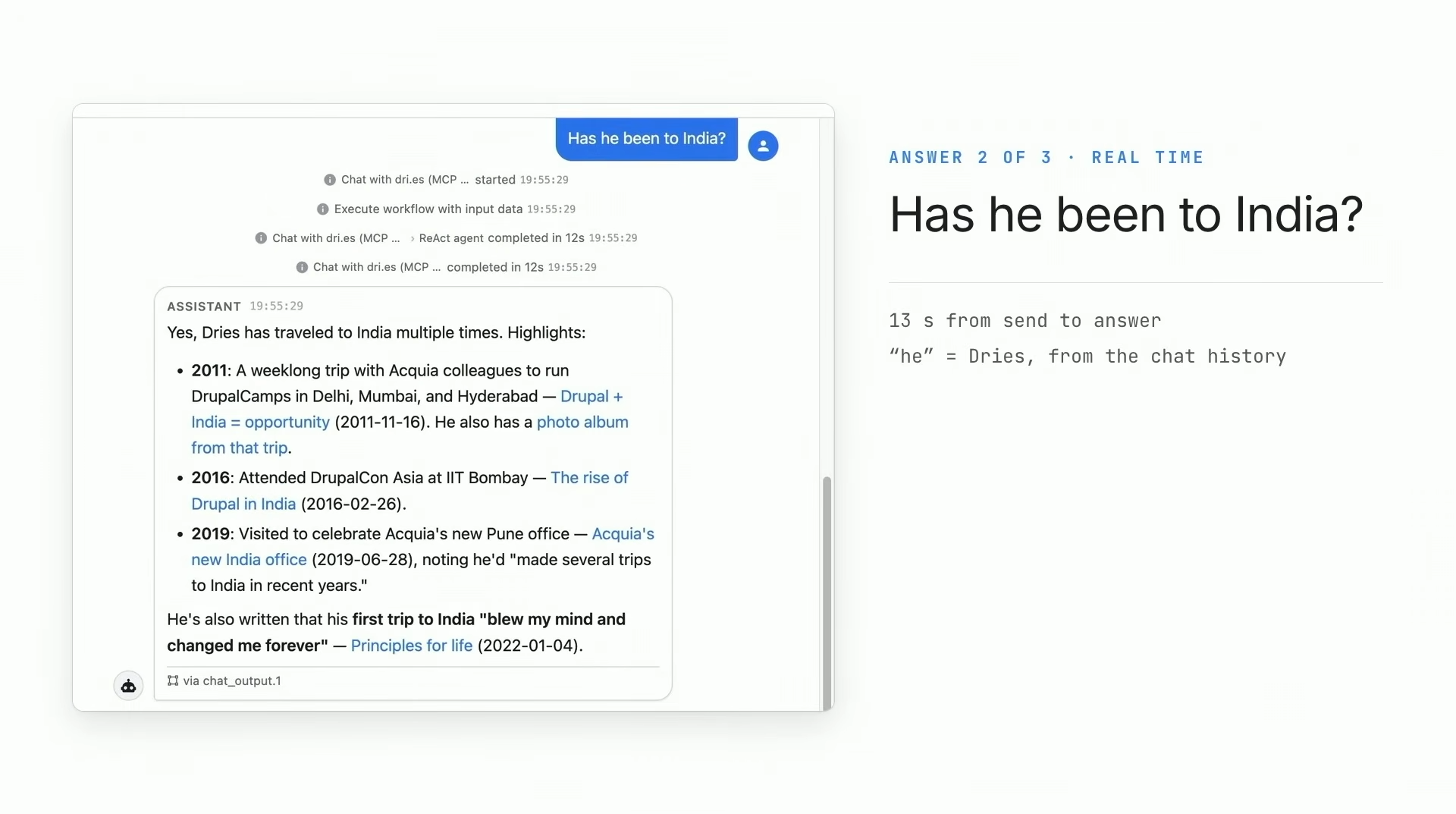
Dries described that missing connection as a “last mile problem”. His own photo-album module became the test case after he considered how an assistant might search more than 10,000 personal photographs for requests such as finding a particular family image. The first tool-enabled implementation took about 1,000 additional lines of code.
A research prototype developed with Matt Glaman, with work around the Tool module also feeding into the experiment, reduced that additional description to roughly 20 PHP attributes. Those attributes could describe what a function does, what its parameters mean, and what kind of structured data it returns. The larger idea was to describe a Drupal capability once and make that description useful to more than one consumer.
A FlowDrop demonstration made the non-AI side of that idea explicit. The same MCP-exposed tools for finding photographs, listing albums, and searching Dries' blog could return structured results through a conventional form without an AI model, while an agent could use the same tools when AI was wanted. The demonstration also noted that workflow systems such as ECA and Maestro could consume the approach, leading Dries to argue that structured capabilities make AI a choice rather than a requirement.
The Rosetta Sprint proposal grew from that architectural problem. Dries said contributors working around Tool, MCP, Typed Data, and related Drupal APIs were often approaching overlapping problems from different directions, and he wanted a focused gathering to align the work, examine technical debt, and consider future roadmaps and Drupal core improvements. The name refers to the Rosetta Stone: one description that different readers and systems can interpret.
Crucially, Dries made clear during the keynote that the sprint had not yet been planned. He said he hoped calendars might allow a gathering before the end of 2026, after which the resulting work could be shared publicly for wider review and feedback. He also encouraged module maintainers to experiment with tool-enabling their own modules in the meantime and record where the process creates friction, while floating a working multilingual translation demonstration at DrupalCon Orlando as a possible future milestone.
The Advocacy Program addresses the other half of the keynote's argument: whether people outside Drupal can find an accurate record of what the project now does. Dries said advocacy contribution should be weighted toward work that reaches beyond existing Drupal circles, using the example of a Drupal presentation at a non-Drupal event receiving greater recognition than one presented at a Drupal event. The official DriesNote recap also says quarterly focus themes will provide source kits and earn double credits.
Submissions opened at drupal.org/advocacy during the conference. Dries described the initial form as basic and said later work could reduce submission friction through automation and APIs. Eligible activity spans original work such as writing, teaching, translating, demonstrations, and podcasts, as well as amplification of material created by other community members.
The keynote closed by turning DrupalCon Rotterdam itself into what Dries called the “Rotterdam Pilot”. Rather than allowing conference presentations to end when speakers leave the stage, he asked attendees to extract useful ideas, produce shorter articles or clips, translate material, and amplify other presenters with attribution. “Drupal doesn't need hype. It needs a better public record,” Dries said.
Taken together, the keynote put two forms of last-mile work into focus. One concerns making Drupal's existing capabilities easier for agents, workflows, frontends, and other interfaces to reach; the other concerns making evidence of those capabilities easier for people outside the Drupal community to discover. The Advocacy Program is already accepting submissions, while the Rosetta Sprint remains a proposal rather than a scheduled event.
The DropTimes thanks Alex Moreno Lopez for providing the event transcript used to review the DriesNote in detail.
Image Attribution Disclaimer: At The Drop Times (TDT), we are committed to properly crediting photographers whose images appear in our content. Many of the images we use come from event organizers, interviewees, or publicly shared galleries under CC BY-SA licenses. However, some images may come from personal collections where metadata is lost, making proper attribution challenging.
Our purpose in using these images is to highlight Drupal, its events, and its contributors—not for commercial gain. If you recognize an image on our platform that is uncredited or incorrectly attributed, we encourage you to reach out to us at #thedroptimes channel on Drupal Slack.
We value the work of visual storytellers and appreciate your help in ensuring fair attribution. Thank you for supporting open-source collaboration!
ASK: Drupal Community Needs Your Support
View all →
Disclosure: This content is produced with the assistance of AI.
Note: The vision of this web portal is to help promote news and stories around the Drupal community and promote and celebrate the people and organizations in the community. We strive to create and distribute our content based on these content policy. If you see any omission/variation on this please reach out to us at #thedroptimes channel on Drupal Slack and we will try to address the issue as best we can.

Related Drupal Initiatives

Related Events
DrupalCon Rotterdam, 2026


Rotterdam, Netherlands
Related People


You may also like