



Outer-Core Beta Revives Drupal Space Game, With New Universe Planned


After a period of dormancy, the Beta environment of Outer-Core has returned with a redesigned command interface and an active development programme. Creator Alessandro Feijóconfirmed the revival in written responses to The DropTimes, explaining how the browser-based space strategy game has been modernised without replacing the Drupal 6 application that has supported it for years.
The revival also brings plans for a new game universe. Alessandro intends to release a stable version developed through the Beta within approximately two to three weeks of his October 2026 responses, while keeping the Beta available for further testing. The game currently operates alongside three established universes, with a future migration to Drupal 12 also planned.
The approach makes Outer-Core an unusual example of long-term application development with Drupal. Rather than rebuilding the entire game on a newer framework, Alessandro has prioritised improving the experience while preserving the systems that govern player empires, fleet movements, research and shared game state.
From a 2008 Experiment to Three Persistent Universes
Outer-Core began as a personal project in 2008. Its first official universe, Argos, opened in August 2009, establishing an environment where players could develop bases, manage resources, research technologies, form alliances and compete for control of territory. The Speed universe followed in February 2010, offering faster progression, while Elite introduced a more demanding competitive environment in September 2012.
Developed and maintained by Mindcore, the game has accumulated more than 100,000 player accounts across its history, according to the project's official website. That figure represents cumulative accounts rather than distinct individuals or a current active-player population.
Alessandro originally selected Drupal because it provided a practical framework for building and operating a persistent online application with the tools available to him. Over time, the project developed into a multiplayer universe where decisions could continue to affect the game long after the player had signed out.
The current Beta is not a completely new game created in 2026. Alessandro explained that a Beta environment had existed for years before becoming dormant. The OC Reskin initiative revived that environment during 2026, introducing a refreshed presentation and targeted improvements without discarding the original game systems.
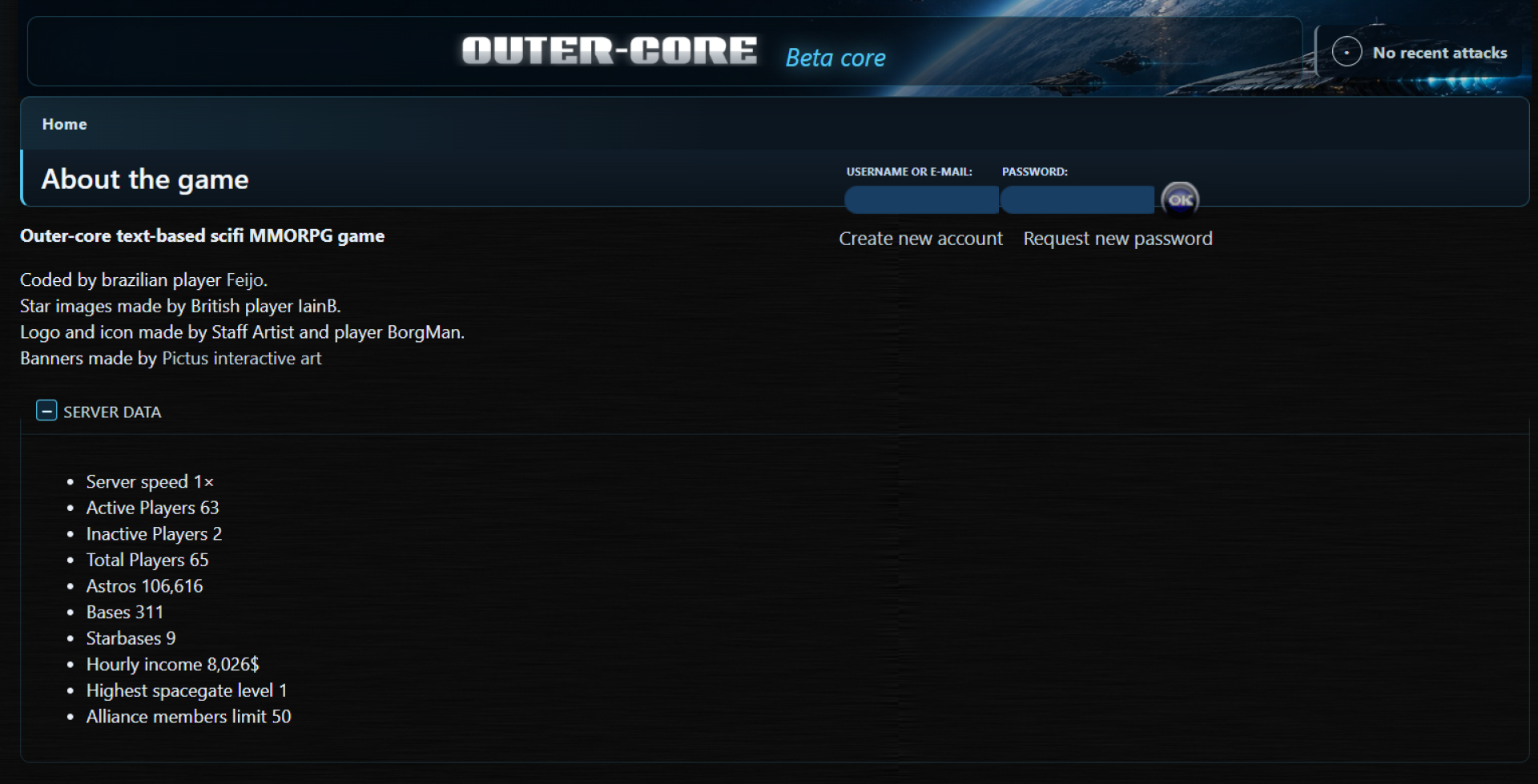
Why the Game Remains on Drupal 6
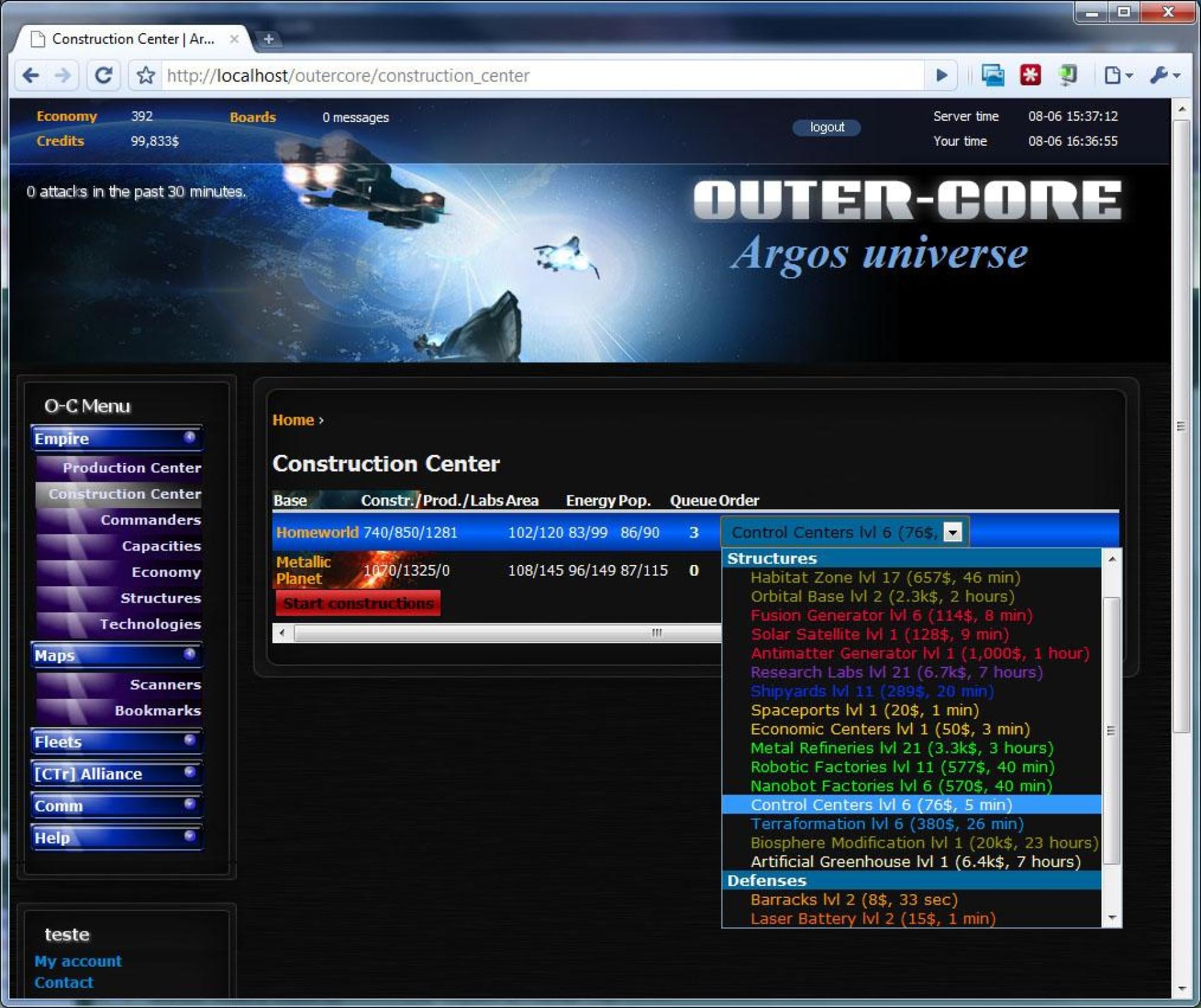
That decision also explains why the two Drupal versions associated with Outer-Core have different responsibilities. The established game continues to run on Drupal 6, while a separate Drupal 11 website serves as the project's public portal.
The Drupal 11 site is a separate portal, not a replacement runtime for the game.
Alessandro made that distinction while explaining why a complete Drupal 11 rebuild was unnecessary for the current revival. Drupal 6 continues to supply the game's underlying application framework and data model. The rules and processing required for gameplay remain within the custom application code developed around that foundation.
The Drupal 11 portal, meanwhile, provides access to the project's history, universe information, guides, news and other public content. Separating the two applications has allowed the public website to evolve without making improvements to the game dependent on a simultaneous framework migration.
The underlying technology also reflects the game's long development history. Outer-Core uses a custom PHP game engine within its Drupal 6 application, with persistent data stored in MySQL or MariaDB. JavaScript supports interactive gameplay, while the open-source Leaflet library provides navigation through galactic maps.
Linux, Nginx and PHP-FPM support the operating environment, alongside caching and network-delivery services. The project describes this infrastructure as evolving according to operational needs rather than following a fixed deployment arrangement.
How Fleet Missions Continue After Players Log Out
For players, the technical architecture becomes especially relevant when an action continues after they leave the game. Fleet missions are one example of the persistence on which Outer-Core depends.
According to Alessandro, submitting a fleet mission begins with validation against the player's current state and the game's rules. Once accepted, the mission is recorded so that it can be resolved at a later time. Its timing and outcome belong to the game's persistent state rather than depending on an active browser session.
Subsequent processing resolves the mission and updates the affected game data. That allows a fleet to continue its journey after the player has logged out, while other commanders continue making decisions in the same universe.
The important design principle is that a player's command creates a durable in-game action; logging out does not cancel it.
The explanation establishes how Outer-Core handles persistent actions conceptually, although Alessandro did not specify the particular scheduling, queue-management or database-locking mechanisms involved. Those implementation details should not be inferred from Drupal's general capabilities.
Persistence introduces another challenge. Multiple players may initiate missions, develop resources, move fleets or engage in conflicts that affect the same shared environment. Those changes must be processed without compromising established rules or producing inconsistent results.
The hardest part is keeping a persistent game coherent as many actions affect shared state over time, especially in a legacy codebase that has been running for years.
Maintaining that consistency has become more complicated as the application has aged. Alessandro said targeted improvements must preserve existing gameplay behaviour and avoid regressions affecting established players. Drupal may provide a durable application foundation, but it does not eliminate the need for carefully designed rules governing missions, combat, resources and shared state.
Modernising the Command Interface Without Rewriting the Game
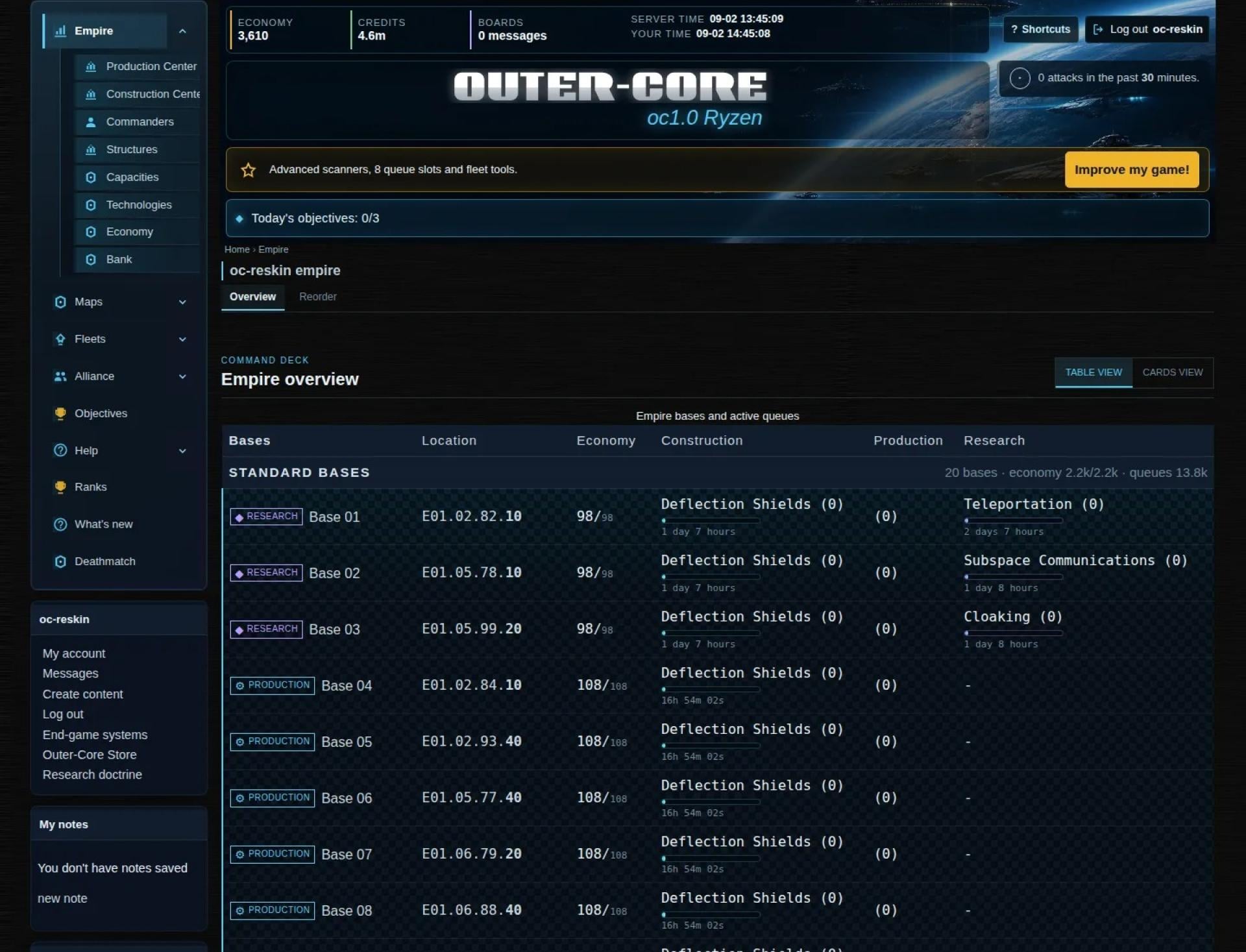
The OC Reskin applies that incremental approach to the game's interface. The updated command experience brings economy, construction, production, research and other management systems into a more organised presentation. Commanders can examine their bases, inspect active queues and follow progress across several parts of their empire.
The redesigned Empire overview, for example, displays bases alongside their locations, economic values and ongoing construction, production and research activity. Separate interfaces provide access to fleet operations, technologies, structures and other strategic systems.
Galactic exploration is another area of continuing development. Interactive maps allow players to navigate the game's fictional universe, while further visual improvements are being developed. The project is also introducing objectives and seeking feedback on features and usability.
Alessandro's approach has been to identify improvements that provide clear benefits without turning a limited modernisation project into a complete application rewrite. Keeping Drupal 6 for the current Beta was therefore a deliberate decision about development scope rather than an indication that the game has already completed a framework transition.
The Drupal 12 Migration and Legacy-Support Challenge
That distinction carries a maintenance consideration. Drupal 6 reached its official end of life on 24 February 2016, meaning the version is no longer covered by Drupal's standard core security-support process. Outer-Core's continued operation on that branch illustrates the challenges associated with maintaining a legacy application, although the available information does not establish whether any particular vulnerability affects the game. Alessandro plans to address the longer-term platform question through a migration to Drupal 12 during 2027. He described that move as the next stage in the project's development, allowing the current game to continue operating while work on its future platform proceeds.
The planned migration concerns Outer-Core's application rather than the release of Drupal 12 itself. Drupal 12 remains in its Beta phase as of October 2026, with a stable core release currently targeted for December. Alessandro has not specified the migration architecture, conversion process or technical compatibility work required to move the existing game application to the newer platform.
A New Universe and the Road Beyond Beta
Before that larger transition, the immediate priority is to establish whether the revived Beta can reliably support players. Alessandro is particularly interested in whether the redesigned experience is understandable, whether existing mechanics behave as expected and whether the service remains stable as more people return. Feedback from actual gameplay will help determine which improvements receive priority. Features and balance may continue changing while testing proceeds, and the project's public Beta information warns that progress and availability may differ from those of its established universes.
A wider release will depend on core gameplay stability, clear player interactions, and the game's operational reliability. Alessandro has therefore described the Beta as both a testing environment and a means of bringing the project back into active use. The next universe is intended to take a stable build from that environment. Once established, the Beta would continue to receive experimental changes, with tested improvements later introduced into newer universes.
Alessandro also plans to allow variation between future game universes. Different settings could alter progression and strategic conditions, giving players reasons to participate in more than one universe without necessarily repeating the same experience.
That model has a precedent in Outer-Core's history. Argos, Speed and Elite already offer different playing conditions, with the original universe emphasising sustained development, Speed providing faster progression and Elite catering to more demanding competitive play. The longer-term roadmap extends beyond interface improvements and new universes. Outer-Core is exploring richer galactic environments, additional celestial classifications, resource systems and opportunities for strategic specialisation. Further ideas include independent factions, dynamic territorial conflicts, more elaborate missions, tournaments and achievement systems.
An even larger concept, Outer-Core 2.0, explores the possibility of connecting gameplay beyond a single galaxy through expanded world generation and spatial visualisation. Those ideas remain research directions rather than confirmed features or scheduled releases. Their scope and timing may change according to technical feasibility and player feedback.
What Outer-Core Shows About Long-Lived Drupal Applications
For the Drupal community, Outer-Core offers a practical example of what happens when a framework supports an application for much longer than its original software generation remains current. The game has retained years of custom logic and persistent player activity, making preservation of behaviour an essential part of modernisation.
The current Beta represents an intermediate stage rather than a completed transformation. Its interfaces are changing, its established mechanics remain in operation, and future development will test how much of the original application can be carried forward into another Drupal generation.
More information about the game's history, existing universes and development plans is available through the official Outer-Core website. Players can explore the revived environment at Outer-Core Beta.
 Kazima AbbasKazima Abbas is a sub-editor at The Drop Times
Image Attribution Disclaimer: At The Drop Times (TDT), we are committed to properly crediting photographers whose images appear in our content. Many of the images we use come from event organizers, interviewees, or publicly shared galleries under CC BY-SA licenses. However, some images may come from personal collections where metadata is lost, making proper attribution challenging.
Our purpose in using these images is to highlight Drupal, its events, and its contributors—not for commercial gain. If you recognize an image on our platform that is uncredited or incorrectly attributed, we encourage you to reach out to us at #thedroptimes channel on Drupal Slack.
We value the work of visual storytellers and appreciate your help in ensuring fair attribution. Thank you for supporting open-source collaboration!


ASK: Drupal Community Needs Your Support
View all →
Disclosure: This content is produced with the assistance of AI.
Note: The vision of this web portal is to help promote news and stories around the Drupal community and promote and celebrate the people and organizations in the community. We strive to create and distribute our content based on these content policy. If you see any omission/variation on this please reach out to us at #thedroptimes channel on Drupal Slack and we will try to address the issue as best we can.

Related Organizations

Related People


You may also like