




Toolkit Adds Guardrails for Claude Code in Drupal Workflows

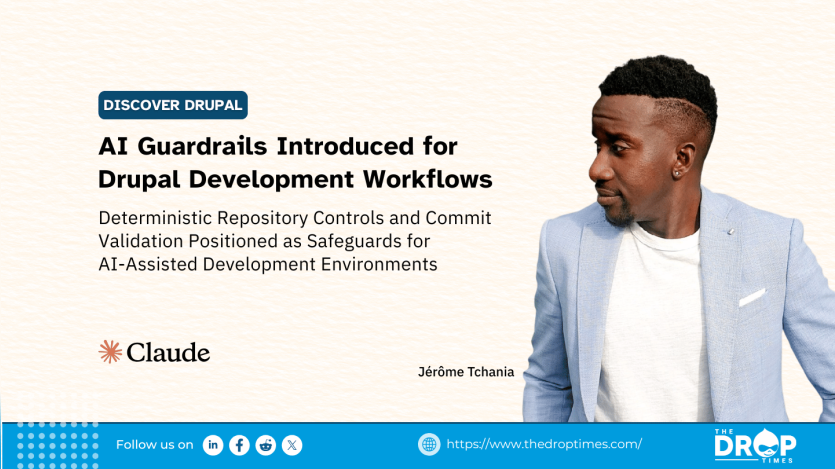
Developers integrating AI coding assistants into Drupal workflows are increasingly adding repository-level safeguards to reduce operational mistakes and unintended changes. A newly released toolkit, drupal-claude-kit, was published by Montreal-based senior Drupal developer Jerome Tchania through his CodeIt Wisely initiative. The project packages Claude Code configuration, commit validation, and security checks into a preconfigured setup for Drupal 10 and 11 projects running with DDEV.
According to the repository documentation, the setup includes pre-commit protections that can block exposed credentials, environment files, SQL dumps, and Drupal coding-standard violations before changes are committed. The toolkit also adds restrictions intended to prevent destructive operations during AI-assisted coding sessions, including direct pushes to the main branch, recursive deletion commands, and access to SSH-related directories.
Installation requires tools such as DDEV, Gitleaks, and Claude Code, while additional PHPCS configuration enables Drupal coding-standard validation within the DDEV environment. Developers can further customise generated configuration files with project-specific module paths, themes, workflow rules, and allowlists for false positives.
The repository describes these protections as deterministic tooling-level guardrails rather than prompt-based instructions. The distinction reflects broader discussions around operational safety and repository governance as AI coding agents gain wider access to repositories, terminal workflows, and project infrastructure.

ASK: Drupal Community Needs Your Support
View all →
Disclosure: This content is produced with the assistance of AI.
Note: The vision of this web portal is to help promote news and stories around the Drupal community and promote and celebrate the people and organizations in the community. We strive to create and distribute our content based on these content policy. If you see any omission/variation on this please reach out to us at #thedroptimes channel on Drupal Slack and we will try to address the issue as best we can.

Related Drupal Initiatives

Related People


You may also like