




Drupal CMS 2.2.4 Fixes Template Dependencies and Limits Telemetry Names

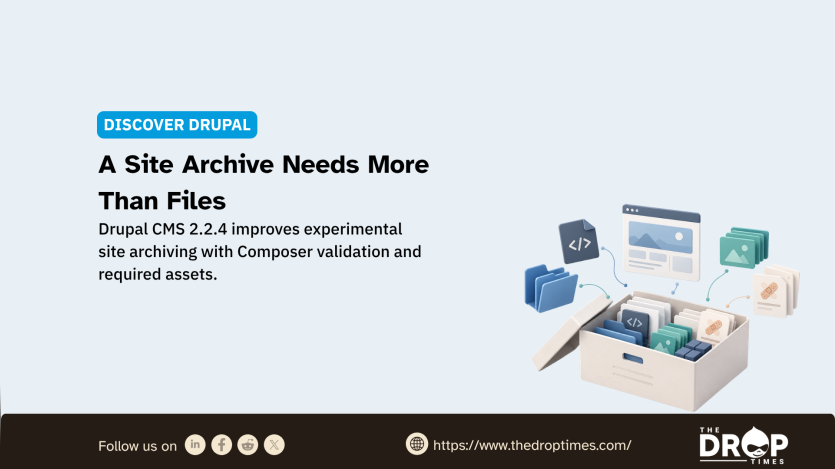
Problems with Composer dependency compatibility prompted fixes in Drupal CMS 2.2.4, released on 12 October 2026. The maintenance release removes several default package dependencies and adds a compatibility check for free third-party site templates. It also changes how opt-in telemetry reports custom extensions and improves the experimental drush site:archive command.
The release removes Starter, Blank and add-on packages from the default dependencies of Drupal CMS and its cPanel variant. It also introduces a continuous integration job to check that free third-party site templates do not conflict with the project's Composer constraints. This tests dependency resolution, not whether every template works correctly after installation. The release notes do not specify how many templates previously failed or identify Tagify as the cause.
Site archiving receives changes intended to preserve more of the information needed to reproduce a project. The experimental command now validates Composer data before creating an archive and copies necessary assets and patch files. It also warns if a project uses Composer path repositories, which may reference local packages unavailable in another environment. These improvements do not establish that every archived site can be restored without additional work.
The telemetry change affects Drupal CMS Helper. The release notes say the updated telemetry hides the names of custom modules and recipes. That change limits exposure of project-specific extension names, but it does not mean all collected data is anonymous or that every privacy concern has been resolved.
For further details, the related telemetry work item documents the issue behind the change. The fix addresses custom extension names specifically, rather than establishing new guarantees about the entire telemetry dataset.
The installer also receives a fix to ensure its Composer subprocess receives environment variables explicitly, addressing certain installation edge cases. Additional changes extend a workaround for a Drupal core bug to configuration imports, document how to rename the Blank theme and correct wording in draft and scheduled-content views.
Drupal CMS is a starting point for creating sites. Updating its project template does not automatically update websites previously built from it; existing installations manage relevant supporting packages through their own dependency and deployment processes.
Further details, including the changelog and release files, are available on the Drupal CMS 2.2.4 release page on Drupal.org.


ASK: Drupal Community Needs Your Support
View all →
Disclosure: This content is produced with the assistance of AI.
Note: The vision of this web portal is to help promote news and stories around the Drupal community and promote and celebrate the people and organizations in the community. We strive to create and distribute our content based on these content policy. If you see any omission/variation on this please reach out to us at #thedroptimes channel on Drupal Slack and we will try to address the issue as best we can.

You may also like