



LocalGov Drupal Recognised as a Digital Public Good

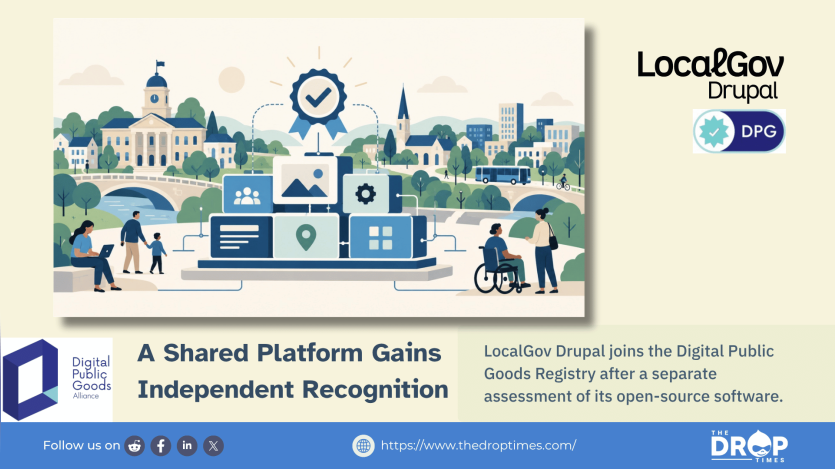
Following a review that began in January 2025, the Digital Public Goods Alliance (DPGA) recognised LocalGov Drupal as a Digital Public Good on 8 September 2026. The council-developed publishing platform announced its inclusion in the global Digital Public Goods Registry on 9 October, joining a register that currently lists 256 recognised digital solutions.
The designation confirms that LocalGov Drupal's assessed software meets the Digital Public Goods Standard, which evaluates open licensing, ownership, platform independence, documentation, data portability, privacy and safeguards against harmful content. For public-sector organisations considering shared website infrastructure, the recognition provides an independent reference for software evaluation and procurement discussions. It does not certify individual website implementations or their compliance with local regulations.
LocalGov Drupal provides an open-source content management system developed collaboratively by local authorities and suppliers, primarily in the United Kingdom. The platform allows councils to reuse website components and contribute improvements rather than independently developing similar functionality. Its registry submission reports more than 150 live websites and microsites, although this adoption figure is self-reported and not independently verified by the DPGA.
The registry identifies the Open Digital Cooperative, a not-for-profit organisation, as the software owner. LocalGov Drupal uses the GPL-2.0 licence, while its submission states that the platform has no mandatory proprietary software dependencies. The assessment also records publicly available documentation and support for extracting non-personal data through CSV, JSON and SQL formats.
The recognition followed an application submitted by Will Callaghan on 13 January 2025. An initial assessment in August 2025 passed most requirements but identified two outstanding areas: data privacy and security, and mechanisms for managing inappropriate or illegal content. The project subsequently submitted additional documentation describing its existing safeguards.
According to LocalGov Drupal's announcement, the response documented Drupal's role-based permissions, security advisory process and cookie consent tools. It also detailed the LocalGov Workflows module, which supports content approval stages, revision histories and review dates. The registry's assessment log confirms that both outstanding requirements passed on 8 September 2026, completing the review process.
The project associates its shared-development model with three United Nations Sustainable Development Goals covering economic productivity, reduced inequalities and partnerships. LocalGov Drupal argues that reusing common publishing infrastructure allows councils to direct more resources towards content design, user research and additional functionality instead of repeatedly commissioning similar website systems.
LocalGov Drupal joins other Drupal-based and closely associated open-source projects recognised as Digital Public Goods. The Drupal-based agricultural management distribution farmOS received recognition in July 2022, before Drupal itself was added to the registry in April 2023. The DropTimes reported Drupal's recognition and later examined its wider significance. Mautic, an independent open-source marketing automation project with longstanding ties to the Drupal community, gained recognition in January 2024, as The DropTimes also reported. The designations apply to the software assessed, not to the security, accessibility or regulatory compliance of individual deployments. LocalGov Drupal's recognition is valid until 8 September 2027, after which reassessment is required.
Further information about the recognition, assessment requirements and supporting evidence is available through the LocalGov Drupal profile on the Digital Public Goods Alliance website.
References
ASK: Drupal Community Needs Your Support
View all →
Disclosure: This content is produced with the assistance of AI.
Note: The vision of this web portal is to help promote news and stories around the Drupal community and promote and celebrate the people and organizations in the community. We strive to create and distribute our content based on these content policy. If you see any omission/variation on this please reach out to us at #thedroptimes channel on Drupal Slack and we will try to address the issue as best we can.

Related Organizations

You may also like