



Open Source is Essential for Tomorrow's Digital Government

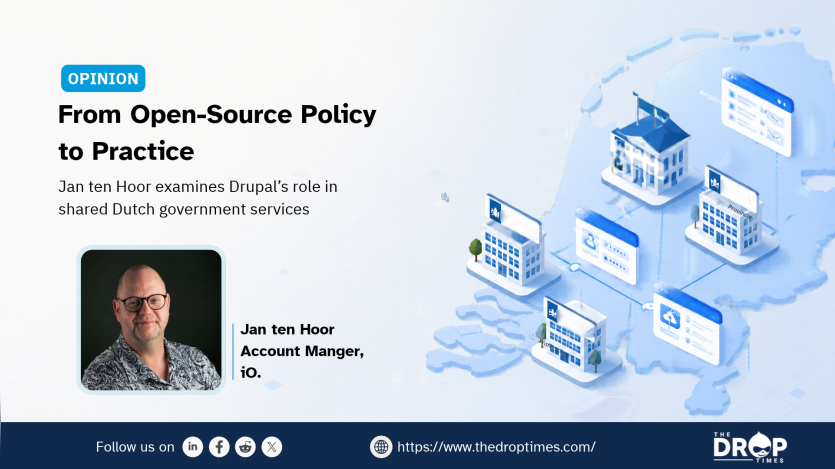
On 1 October 2026, the Dutch national government, provinces, municipalities and SURF signed a joint declaration of intent at the Open Source Leadership Summit: open source becomes a permanent part of how government works. State Secretary Aerdts put it well:
"Open source is not always the easiest or cheapest option. But it is a way to set up our systems the way we want. That makes us more independent."
I can only agree. And I don't say that as an outsider.
Ten Years of Building Something That Can Only Now Truly Begin
At iO, we have been working on Drupal for Government (Drupal voor Overheden, DVO) for more than ten years: a platform that helps over 100 government organisations deliver accessible, secure and manageable digital services. In that time, we have seen up close how great the need is for shared standards, joint development and less fragmentation in the government's digital landscape.
And that fragmentation needs to be tackled. From a customer journey perspective, citizens see "the government", but in practice it is a complex layer of chains and digital systems. This is the result of a system in which every municipality, every province and every implementing organisation makes its own choices, with all the duplicated costs, dependencies and integration problems that come with it.
Open source is the answer to that problem, because it makes collaboration structurally possible. That is exactly why we are now making Drupal for Government available as open source. It is a deliberate step in line with what the sector is asking for. Municipalities and government bodies can benefit even more from Drupal as an open standard, and from the ecosystem around it. iO will continue to offer the platform as a full-service product, but the open source movement allows more parties to build together, innovate together and benefit from each other's solutions.
Common Ground as a Requirement
The declaration of intent of 1 October talks about setting up OSPO roles within organisations: an Open Source Program Office that gives open source working a permanent place. That is a smart move. Open source only works if people are responsible for safeguarding, sharing and further developing it.
What strikes me in the government debate is that Common Ground has been named as a direction for years, but in practice it is still treated too much as an ideal rather than as a requirement. Open source is the technological infrastructure that makes Common Ground truly possible.
Where Open Source and AI Meet
There is another dimension I don't want to leave unmentioned: AI. The move towards open source also opens up a world of AI integrations that were simply not possible before. Municipalities increasingly ask us about connections with large language models, smart search functionality and automated content processing. As an open platform, Drupal offers the flexibility to build those integrations in a way that is secure, transparent and controllable.
That is exactly what governments need: AI that fits within an open, understandable system.
The Next Ten Years
The declaration of intent of 1 October is an important signal. The real question is: how do you make sure open source working truly lands in the day-to-day practice of government organisations? How do you build the knowledge, structures and partnerships needed to make it happen?
That calls for leadership from governments themselves, but also from technology partners who are willing to share knowledge, build together and invest in a digital government that truly belongs to everyone.
We are ready.
 Jan ten Hoor Jan ten Hoor works at iO, an AI-native partner in design, marketing and technology, with more than 2,000 experts across 12 campuses in Belgium, the Netherlands, Sweden, Denmark and Bulgaria.

ASK: Drupal Community Needs Your Support
View all →
Note: The vision of this web portal is to help promote news and stories around the Drupal community and promote and celebrate the people and organizations in the community. We strive to create and distribute our content based on these content policy. If you see any omission/variation on this please reach out to us at #thedroptimes channel on Drupal Slack and we will try to address the issue as best we can.

Related Organizations

Related People


You may also like