



AI-Assisted Drupal Module Built in Under Six Hours Highlights Review Challenges

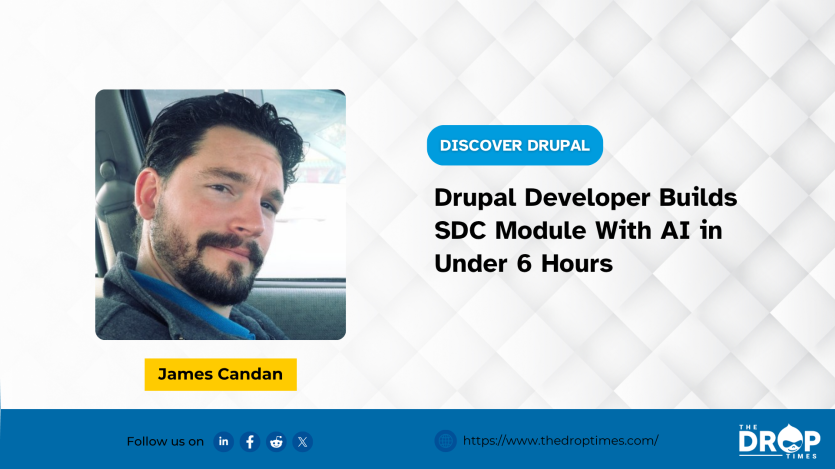
A new Drupal module demonstrates how AI can accelerate development timelines while still requiring standard review processes. SDC Entity Mapping, developed by James Candan, was built and released as a proof of concept in under six hours using AI-assisted workflows.
The module enables site builders to map Drupal entity data to Single Directory Component props using reusable configuration profiles. It introduces a Drupal-side mapping layer that resolves entity data into component properties before rendering, allowing components to remain stateless and reusable across contexts.
The idea emerged from a Drupal community discussion on supporting entity-backed content within components without making them dependent on Drupal. The resulting approach separates data handling from component logic, aligning with the design principles of Drupal’s SDC system.
AI played a role in accelerating early development stages, including architectural exploration, scaffolding, and documentation. However, the process still required manual validation, testing, and refinement to meet Drupal coding standards and project expectations.
The development workflow involved multiple iterations, including reviewing generated code, resolving architectural issues, running tests, and refining documentation. The module evolved through this process from an initial concept into a publishable dev release.
Key functionality includes configurable mapping profiles that define how entity fields such as titles, summaries, URLs, and images are passed into components. The module supports both static values and dynamic entity-based data, along with simple transformations.
Optional submodules extend functionality by enabling block-based placement of mapped components and providing demonstration setups. The module requires no external libraries and is designed for sites using Drupal core Single Directory Components.
The project complements Drupal Canvas by enabling flexible composition patterns while keeping components independent from backend data structures. It is currently marked as a proof of concept and is not covered by Drupal’s security advisory policy.
The module is available on Drupal.org.


ASK: Drupal Community Needs Your Support
View all →
Disclosure: This content is produced with the assistance of AI.
Note: The vision of this web portal is to help promote news and stories around the Drupal community and promote and celebrate the people and organizations in the community. We strive to create and distribute our content based on these content policy. If you see any omission/variation on this please reach out to us at #thedroptimes channel on Drupal Slack and we will try to address the issue as best we can.

Related Drupal Initiatives


Related People


You may also like