



PHPverse 2026 Programme Includes Drupal, Symfony, Composer and AI-Focused Sessions

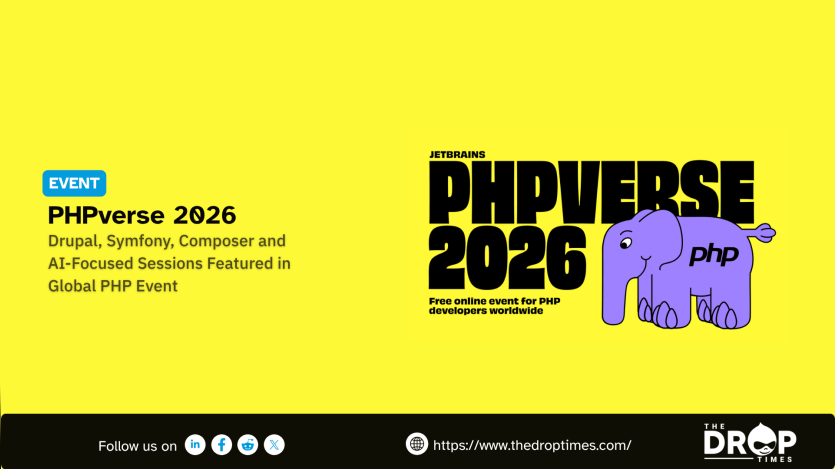
Developers from across the PHP ecosystem are scheduled to participate in PHPverse 2026, a free online event taking place on 9 June 2026. The published programme includes speakers from projects and organisations connected to PHP development, including Symfony, Drupal, Composer, Packagist, Laravel, WordPress, and The PHP Foundation. Sessions are scheduled between 11:00 UTC and 16:30 UTC.
The programme is relevant to Drupal audiences because several sessions address technologies, governance questions, and development practices that intersect with Drupal’s wider technical environment. According to the agenda, topics include open-source project maintenance, Composer and Packagist supply chain security, PHP language development through RFCs, and artificial intelligence-assisted programming. The event is organised as a free online programme for PHP developers worldwide.
Scheduled sessions include a presentation by Symfony founder Fabien Potencier on running a large open-source project and a talk by Packagist co-founder Nils Adermann on Composer and Packagist supply chain security. Elizabeth Barron, executive director of The PHP Foundation, is scheduled to discuss the foundation’s work and planned initiatives for 2026. Other sessions focus on WordPress, PHP RFCs, Laravel, and the use of artificial intelligence in software development.
The programme also includes a Drupal-focused session by Mike Herchel, Drupal core subsystem maintainer. His session, “This Isn’t the Drupal You Remember,” is scheduled for 14:25 UTC and will cover component-driven development, the Canvas page-building experience, Drupal CMS, marketplace activity, and AI-assisted workflows in Drupal projects. The session abstract frames these developments as part of Drupal’s effort to address long-standing perceptions around complexity and adoption.
JetBrains says PHPverse reached more than 55,000 developers in the previous edition, with a peak live audience of 2,500 viewers. The current programme provides session abstracts and speaker details rather than implementation material. The available descriptions outline planned discussion areas but do not include technical demonstrations or configuration examples.
ASK: Drupal Community Needs Your Support
View all →
Disclosure: This content is produced with the assistance of AI.
Note: The vision of this web portal is to help promote news and stories around the Drupal community and promote and celebrate the people and organizations in the community. We strive to create and distribute our content based on these content policy. If you see any omission/variation on this please reach out to us at #thedroptimes channel on Drupal Slack and we will try to address the issue as best we can.

Related Organizations

Related People


You may also like