



W3C Sustainable Web Interest Group Publishes First Impact Ratings Draft

The W3C Sustainable Web Interest Group announced the first Group Note Draft of the Web Sustainability Guidelines Impact Ratings on 18 August 2026. W3C's publication history records subsequent Draft Note revisions on 19 and 20 August, with the latest published version dated 20 August. The framework compares guidelines by expected impact across people, planet and prosperity and by the timeframe in which that impact is expected to appear.
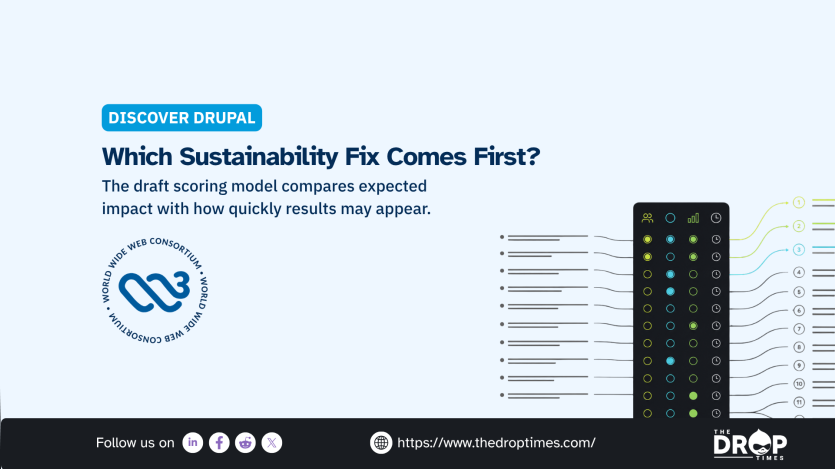
Each guideline receives separate ratings for people, planet and prosperity using indeterminate, low, medium or high categories. It also receives a short-, medium- or long-term timeframe indicating when the expected impact is likely to be observed. Point values from the three category ratings and the timeframe are added into a single impact score, with higher totals representing greater expected impact over a shorter period.
The scoring work predates the first standalone Group Note Draft. The 5 August 2026 Web Sustainability Guidelines draft already linked the Impact Measurement resource and described the scoring framework. Its July release notes record the launch of WSG Impact Measurement and an Impact JSON API dataset on 29 July 2026.
The current ratings show how the framework differentiates among technical and infrastructure guidelines. Assessing the impact and requirements of data processing receives an impact score of ten, while sustainable hosting scores nine and both caching and compression score eight. Reducing the number and complexity of database queries scores five. These totals combine expected effects across all three categories with the assigned timeframe rather than representing a direct measurement of environmental impact alone.
The draft does not treat every rating as a directly measured outcome. Where quantitative measurement is unavailable, the Sustainable Web Interest Group says ratings may draw on available research and expert input, with rationales and suggested metrics provided where appropriate. W3C also states that Group Note Drafts are not endorsed by W3C or its members and may be updated, replaced, or made obsolete.
Drupal sources show that the broader Web Sustainability Guidelines are already a reference point for sustainability work, but they do not show adoption of the new Impact Ratings. Drupal.org sustainability documentation, last updated on 14 January 2025 and marked as needing review, says a small volunteer team is working to help Drupal Core and Drupal CMS follow WSG best practices. DrupalCon Rotterdam 2026 has also scheduled a 30 September session by Cláudia Desidério on applying WSG to Drupal 10 and Drupal 11 projects through areas including cache strategy, asset libraries, frontend architecture, monitoring, and refactoring.
References
-
Web Sustainability Guidelines (WSG) Impact Ratings (20 August 2026)
-
Web Sustainability Guidelines (WSG) (5 August 2026)


ASK: Drupal Community Needs Your Support
View all →
Disclosure: This content is produced with the assistance of AI.
Note: The vision of this web portal is to help promote news and stories around the Drupal community and promote and celebrate the people and organizations in the community. We strive to create and distribute our content based on these content policy. If you see any omission/variation on this please reach out to us at #thedroptimes channel on Drupal Slack and we will try to address the issue as best we can.

You may also like