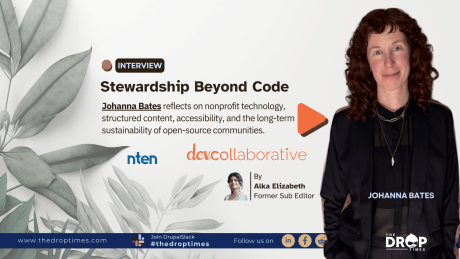


Johanna Bates on Drupal, Nonprofits, and the Problem of Stewardship

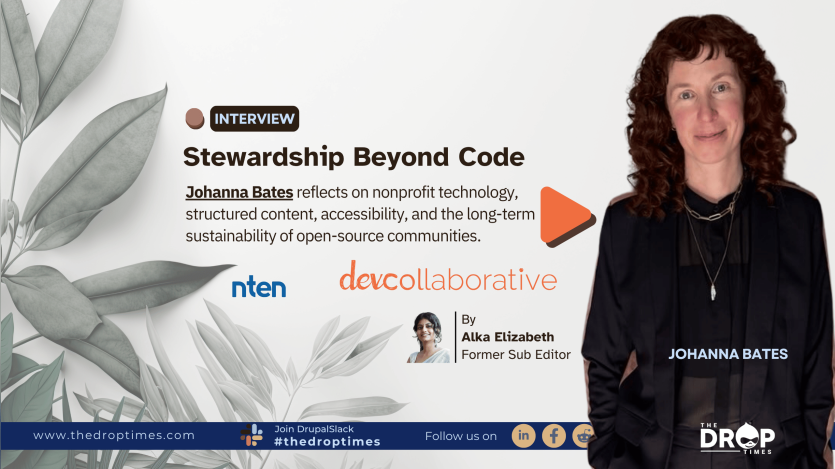
Questions around sustainability, accessibility, contributor pathways, and long-term community support are becoming increasingly visible across parts of the Drupal ecosystem in its 25th year. For the nonprofit sector—which has historically relied on open-source platforms to maintain technical independence and protect limited resources—these structural shifts introduce distinct operational challenges.
To understand how these broader ecosystem trends impact mission-driven organisations, The DropTimes spoke with Johanna Bates (they/them), Co-owner and Principal of DevCollaborative. Johanna has built accessible, sustainable open-source websites for nonprofit organisations since 1999.
In this conversation with Alka Elizabeth, former sub-editor at The DropTimes, Johanna discusses the operational realities of managing a mission-driven technology practice, the value of structured content for nonprofit organisations, the changing diversity of the contributor base, and the challenges of sustaining non-code labour in the modern open-source landscape.
This interview was conducted via a written questionnaire over email and edited lightly for clarity and formatting.
TDT [1]: You have been in the nonprofit technology space for over two decades. How did you first find your way into the sector, and when did Drupal come into the picture?
Johanna Bates: I built my first nonprofit website in 1999, just out of college. I majored in religious studies and thought that I was going to be a writer or an academic. But I found myself drawn to the new medium of the web and to front-end coding as something I could teach myself and learn from others informally. I loved that I could use HTML and CSS to quickly publish pages for sharing information and art. In 2000, I was hired to build websites at WGBH Public Broadcasting in Boston, where I was more formally trained in working with open-source code, content management systems, and web accessibility.
When I moved to a more rural part of New England, my comfort with information technology and writing got me a nonprofit many-hats job as a technology director, webmaster, and lead grant writer for an organization that did statewide health care advocacy work. I wanted to get their website onto a content management system, and I evaluated several of them. It was about 2004, and Drupal (version 4) was clearly the best CMS for many reasons. I built and maintained their site in Drupal until the organization closed about five years later.
TDT [2]: What specifically about Drupal resonated with you, and what has kept you coming back to it all these years?
Johanna Bates: In looking at Drupal back in the mid-aughts, I was drawn to the large, active community of users and contributors. I knew that the more people used a piece of open-source software, the more testing, attention, and support it would receive, and the easier it would be to teach myself how to use it. Many other nonprofit organizations at the time had also chosen Drupal for the same reasons.
Also, as a writer, I have always loved how Drupal excels at supporting structured content, and makes it easier to enforce web accessibility. Content and communications are central to most organizations’ mission work, and Drupal gives them a robust, organized, fielded, and migrateable (sic) database of their content that can be enhanced in any number of ways as they grow and evolve over time. And it’s open source, so they wholly own the content and the code for their sites and should never be locked into a vendor. In this way, a Drupal site can give a nonprofit more agency amid funding landscapes that often have unexpected terrain.
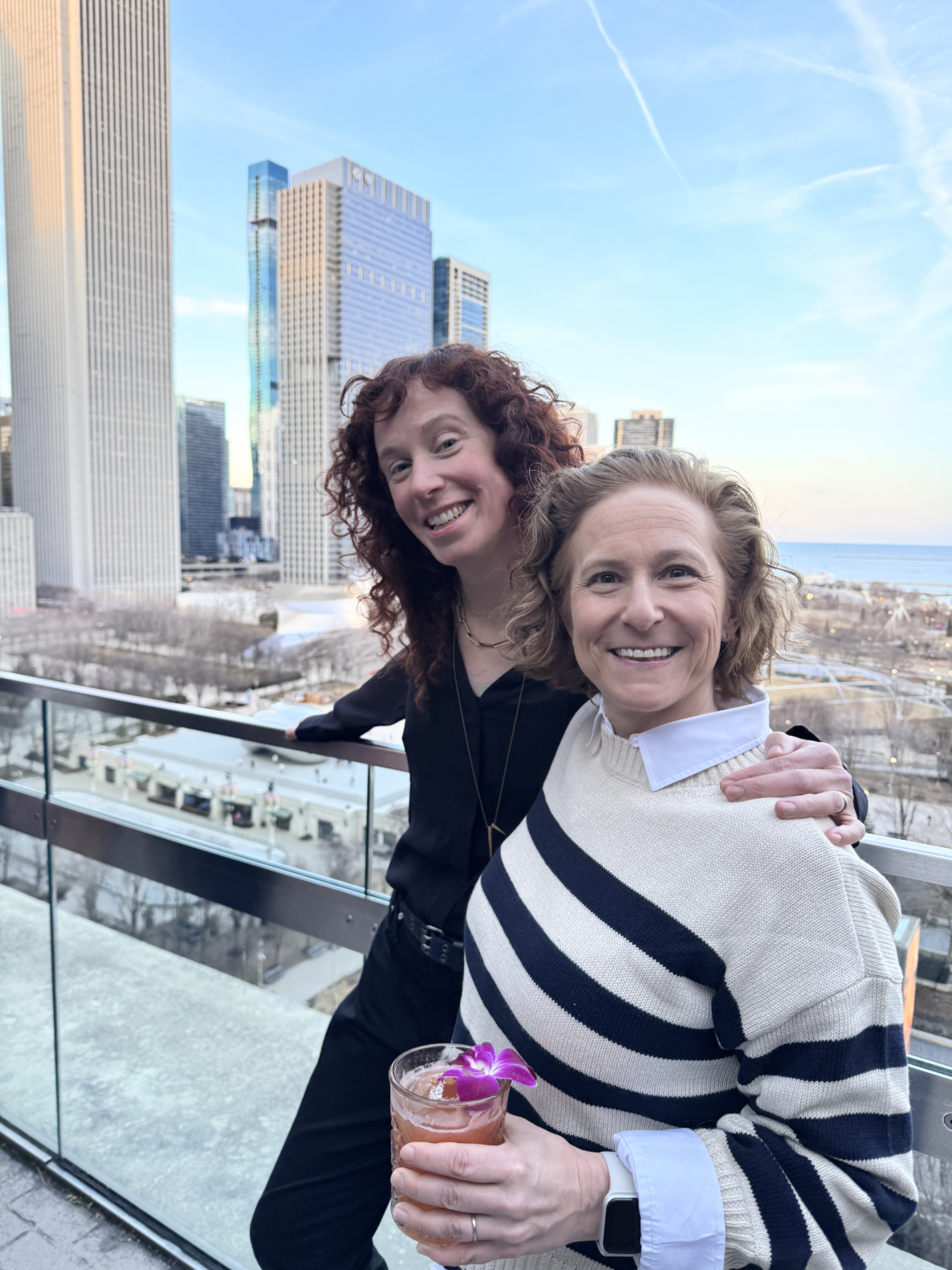
TDT [3]: DevCollaborative was founded in 2012 with a deliberate focus on progressive, social-justice, health-equity, educational, and arts organisations. What was the thinking behind co-founding a practice built exclusively around mission-driven work, and how did that vision take shape in the early days?
Johanna Bates: I had spent over a decade building websites in nonprofits when I co-founded DevCollab with Erin Fogel. She was a project manager who’d worked with a lot of nonprofit and governmental organizations. I was a front-end developer and nonprofit technologist. We met at NTEN’s Nonprofit Technology Conference and connected over frustrations we’d experienced in our work with nonprofits. We’d both seen organizations lose control of their sites in proprietary systems, or lose all their data entirely, when the proprietary company went under or changed hands. We’d seen organizations get sold expensive, flashy websites that were inaccessible and unusable, without any regard for their constrained resources and unreliable funding, and without any forward thinking about long-term stewardship. This kind of development draws energy and funds away from important mission work. It’s a needless waste of resources, and we believed we could do better.
Erin and I share a desire to work in the service of others. Many org staff who need to maintain web content are self-taught, like we are. They often devote their careers to lower-paying jobs because they care deeply about mission work. Our aim has always been to support those nonprofit workers. We want them to have sites that are easy to update so they can focus fully on their missions. We build websites that the organizations can own and control; that they can develop in iterative phases as needs, funding, and capacity allow; and that are accessible and built with best practices.
We make a point of building Drupal and WordPress sites that another good developer could take over and support, rather than with bespoke customization that only our team can fix. We also have a passion for translating tech speak for non-technical users, because web development can be complex, but it’s definitely not rocket science. We want our clients to feel they understand at least the basics of what they need in order to make sound decisions about their web communications.
TDT [4]: As a non-binary person who has been an active leader in the Drupal community for over a decade, what has your experience been navigating open-source spaces, and how do you think the community’s commitment to inclusion has evolved in recent years?
Johanna Bates: The overlap of the nonprofit tech and Drupal communities has always been a wonderful, nurturing place for me to learn and grow as a front-end developer and strategist. I like to work and learn collaboratively, and the community has given me a space to do that, to give back what I learn, and to foster opportunities for nonprofit Drupal users to support each other.
In my experience, the Drupal community, particularly the nonprofit Drupal community, has also always had more visible women, queer, and non-white developers than I saw in some other adjacent tech spaces in the U.S. This made it feel more welcoming and gave me the courage to participate more fully.
Since Drupal 8, the community has gotten smaller, in part due to the perceived inaccessibility of the codebase for self-taught developers and beginners. There are also fewer nonprofits using Drupal due to the misperception that Drupal is always more expensive than WordPress. This means there are fewer people and, to my eye, less diversity in age, income, race, LGBTQ+ status, and gender than there was during the peak of Drupal 7. This can make Drupal events and community participation less comfortable for me. It’s especially hard to see at a time when many nonprofits have been forced to remove “DEI” language from their websites to avoid losing federal funding.
This loss of diversity is a loss of vital energy and creativity from the Drupal ecosystem, and it’s something I hope we can get back somehow.
TDT [5]: As AI agents increasingly consume and interpret web content, some argue that we are heading toward a “bifurcation of the web” where content must be structured differently for humans than for machines. As someone deeply invested in accessibility, how do you see that shift affecting the way you approach web development for nonprofits?
Johanna Bates: This time reminds me of all of the snake oil I’ve seen in 25+ years around search and SEO. At the end of the day, humans need to search the web for information. Search and AI are human interfaces for finding information. Up to this point, writing clear, accessible, semantic, and helpful content is what has, over time, performed best in search results. Well-written, well-organized, well-structured content is what has served people best.
AI is here to serve humans, to give them human answers. AI is making search more interpretive, not just retrieval-based. Rather than using keywords to match pages, AI systems attempt to understand context and intent, and to return usable, trustworthy, reliable information. This means that, as we publish content, good AI systems are learning which information sources on the web are accurate, credible, performant, accessible, well-maintained, and well-organized. AI systems should trust sources that maintain these content characteristics over time.
Excellent content serves people directly, as well as the machines they’re using to find and digest it.
I believe that, when this hype dies down, many things will continue to shift about how we build sites, but accurate, well-written, accessible content will still be as important as ever.
TDT [6]: You have been part of the open-source community for over two decades, through its many shifts and seasons. Where do you see yourself in that space in the years ahead, and what is one lesson from the intersection of technology and social justice that you think open-source communities still struggle to understand in practice?
Johanna Bates: I don’t write code anymore, as I now spend my time running DevCollaborative with Erin. But I still contribute to the Drupal community by co-facilitating a longstanding monthly call for nonprofit Drupal users, co-organizing the annual Nonprofit Summit at DrupalCon North America, and by encouraging the DevCollab team to contribute back to Drupal when possible. I see myself continuing to participate in these ways.
I think that open source communities still prize contributions of coding over other forms of labor. Though that is acknowledged in the Drupal community, it’s still a source of tension today. Along with this, corporate sponsorship and enterprise use of Drupal are still the biggest drivers of its progress.
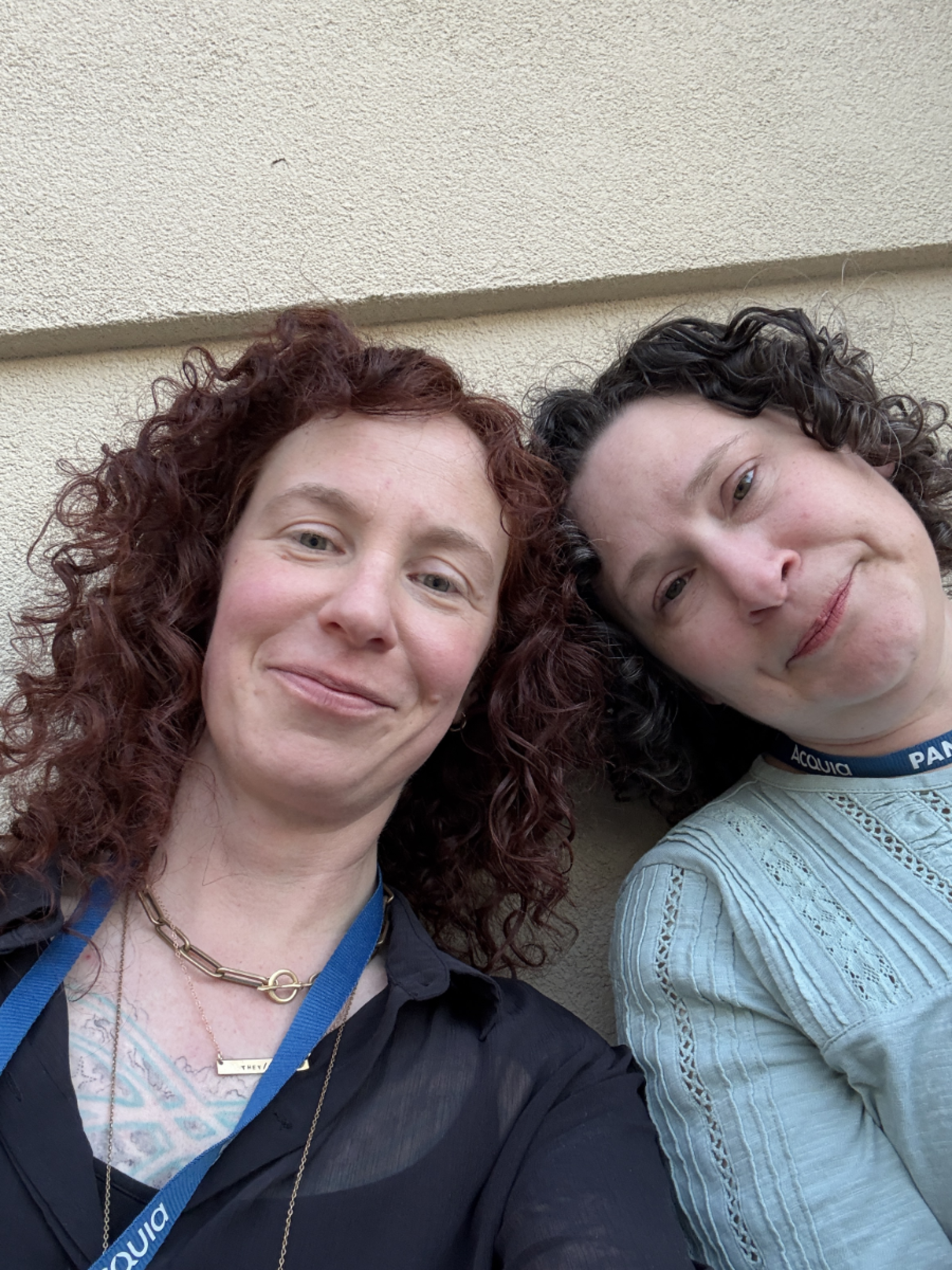
Open source projects must find ways to support their entire ecosystem of contributors and users, including non-coders, small companies and solo practitioners, and small and medium-sized nonprofits.
Advocates love to say that the open-source model is revolutionary and that the software it produces can help make our world a better place. I think this could be true, but that vision can’t be fully reached until and unless open source projects understand that to achieve this vision, they must find ways to support their entire ecosystem of contributors and users.
This is very hard to do in the current landscape of American capitalism. Holistic support of all the labor that goes into the Drupal community, and of the many under-resourced user groups that Drupal can serve well, requires committed, nuanced, creative stewardship. It disappoints me that we’re not even close. I strongly believe it would make a better product and community, and would lead to much wider adoption of Drupal.
 Alka ElizabethMy puns are intended.
Image Attribution Disclaimer: At The Drop Times (TDT), we are committed to properly crediting photographers whose images appear in our content. Many of the images we use come from event organizers, interviewees, or publicly shared galleries under CC BY-SA licenses. However, some images may come from personal collections where metadata is lost, making proper attribution challenging.
Our purpose in using these images is to highlight Drupal, its events, and its contributors—not for commercial gain. If you recognize an image on our platform that is uncredited or incorrectly attributed, we encourage you to reach out to us at #thedroptimes channel on Drupal Slack.
We value the work of visual storytellers and appreciate your help in ensuring fair attribution. Thank you for supporting open-source collaboration!


ASK: Drupal Community Needs Your Support
View all →
Disclaimer: The information provided about the interviewee has been gathered from publicly available resources. The responsibility for the responses shared in the interview solely rests with the featured individual.
Note: The vision of this web portal is to help promote news and stories around the Drupal community and promote and celebrate the people and organizations in the community. We strive to create and distribute our content based on these content policy. If you see any omission/variation on this please reach out to us at #thedroptimes channel on Drupal Slack and we will try to address the issue as best we can.
Related Organizations

Related People


You may also like