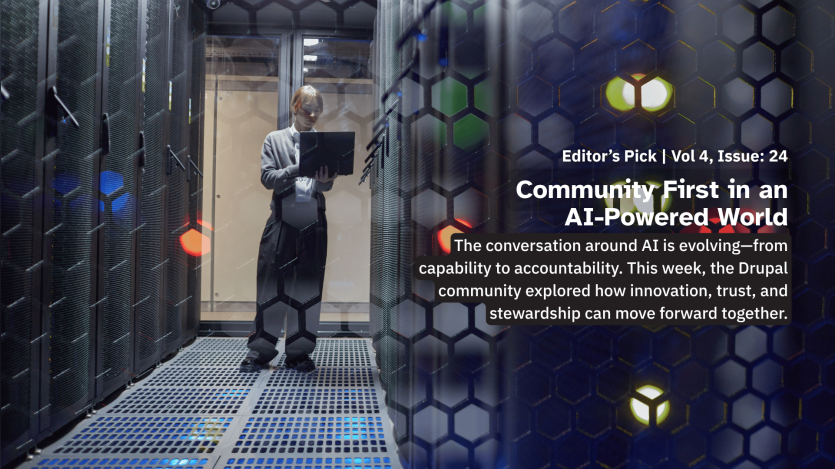
Hello, Drupal community. The first week of June showed Drupal moving from AI experimentation toward a more practical question: how AI-assisted work should be trusted, tested, and governed.
Several stories this week explored that shift. Amber Matz examined trust and expertise in AI-assisted open-source contributions, while a live experiment tested AI-assisted Drupal 7 migration. The discussion is no longer only about whether AI can be used in Drupal workflows. It is now about reliability, accountability, and the points where human expertise must remain in control.
That concern extends beyond Drupal. Recent coverage of Drupal AI 1.4.0, GitHub’s outcome-based validation framework for AI agents, and Carlos Ospina’s agentic recipes concept points to the same operational problem. AI systems now require governance, evaluation, and clear boundaries alongside technical experimentation.
Sustainability formed the second major thread. The Drupal Association’s support for Acquia’s Fair Trade Initiative reopened a familiar question about how open-source projects fund shared infrastructure while remaining community-driven. As more digital services depend on open-source software, stewardship, contribution, and long-term maintenance are becoming increasingly inseparable from technical progress.
Community activity also remained visible. Reflections from DrupalSouth 2026 highlighted collaboration and local momentum, while preparations for DrupalCon Rotterdam 2026 and the return of DrupalCamp Italy showed continued investment in face-to-face knowledge sharing.
Practical site management stories rounded out the week. Coverage included new approaches to file management through the Drupal Form File Usage module and fresh security guidance from Acquia. These updates show how Drupal’s surrounding tools continue to mature while supporting day-to-day operational needs.
The coming weeks are likely to bring more examples of AI entering Drupal development workflows. The stronger test will be how clearly those workflows are evaluated, explained, and governed. Open-source projects can adopt automation without losing transparency only when human responsibility remains visible.
Additional developments from across the Drupal ecosystem were published during the week. Readers can follow The Drop Times on LinkedIn, Twitter, Bluesky, and Facebook for ongoing updates. The publication is also active on Drupal Slack in the #thedroptimes channel.
Allen Jason
Junior sub-editor
The Drop Times