



Blog Article Compares Drupal and microCMS

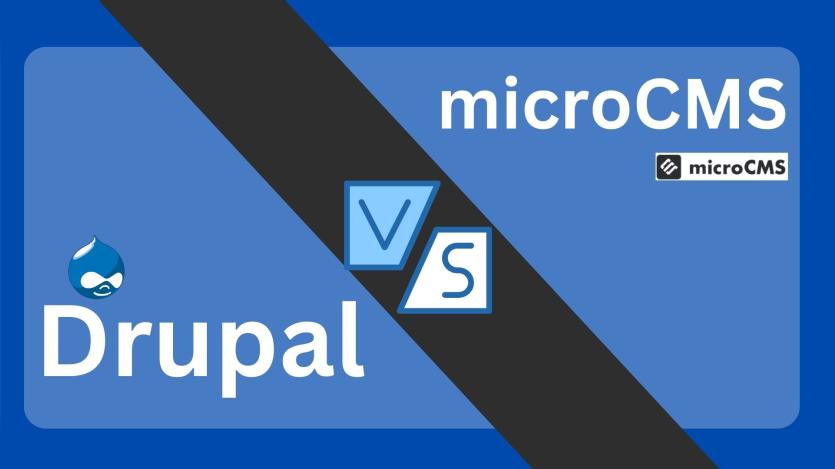
Drupal Service Provider Studio Umi's recent blog post by Drupal Engineer and author Keisuke Ikedais compares Drupal and microCMS. The blog article 'Comparing Drupal and microCMS' was published on April 5, 2023.
Drupal is an open-source Content Management System (CMS) known for its high extensibility. Some consider it more like a web framework than a CMS due to its ability to easily add modules and customize functions. With over 1 million installations worldwide, Drupal offers flexibility in managing both the back-end and front-end of websites, making it suitable for large-scale sites and complex requirements. The blog article discusses Drupal features, including its seamless integration with external systems, easy export/import of CMS settings, and robust multilingual support.
On the other hand, microCMS is a popular API-based headless CMS from Japan. As a headless CMS, it lacks a front-end display function and instead delivers content data through an API. This allows content to be shared across multiple channels, including websites and mobile applications, ensuring scalability across devices. microCMS offers the advantage of being a cloud service, eliminating the need for infrastructure setup and allowing quick site deployment. It also provides flexibility in implementing the front end using various tech stacks and supports multi-channel content delivery.
In summary, Drupal's strengths lie in its extensibility, robustness in managing complex requirements, and multilingual support. It requires advanced skills for implementation. On the other hand, microCMS offers advantages such as cloud-based infrastructure, flexibility in front-end implementation, and multi-channel content delivery. The choice between the two CMS platforms should be based on factors like project scale, requirements, development system, and timeline, recommends the article.
ASK: Drupal Community Needs Your Support
View all →
Disclaimer: The opinions expressed in this story do not necessarily represent that of TheDropTimes. We regularly share third-party blog posts that feature Drupal in good faith. TDT recommends Reader's discretion while consuming such content, as the veracity/authenticity of the story depends on the blogger and their motives.
Note: The vision of this web portal is to help promote news and stories around the Drupal community and promote and celebrate the people and organizations in the community. We strive to create and distribute our content based on these content policy. If you see any omission/variation on this please reach out to us at #thedroptimes channel on Drupal Slack and we will try to address the issue as best we can.
Related Organizations

You may also like