


Dries Buytaert Says AI Is Unbundling CMS Creation from Control

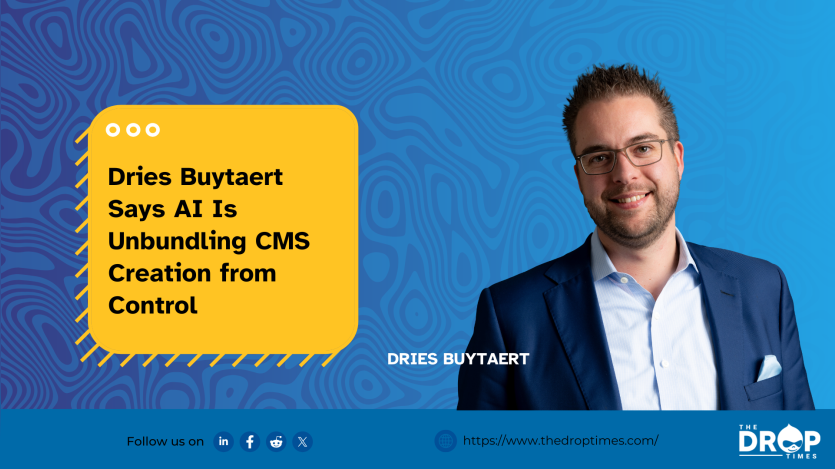
Separating content creation from content control is how Dries Buytaert frames AI’s effect on the content management system market in AI and the Great CMS Unbundling, published on 16 June 2026. He argues that AI can now generate copy, design pages, write code, translate content, and assemble websites, making some simple publishing work less dependent on a traditional CMS. The article says that shift affects only one part of the market, while increasing the need for systems that manage structured, approved, reusable, and trusted content.
Dries separates CMS functionality into two areas: the control plane and the execution plane. The control plane governs roles, approvals, revisions, translations, publishing states, and reuse rules, while the execution plane creates, assembles, and delivers content across websites, mobile apps, feeds, and other digital experiences. According to the article, AI is commoditising the execution plane by lowering the cost of drafting, designing, translating, and assembling content, which makes the control plane more important for organisations that need to decide what is correct, compliant, approved, and safe to publish.
The article proposes two questions for assessing whether a CMS is still necessary: how many people or agents create, review, and publish content, and how many systems need to use, update, or trust that content. Dries maps the answers into four scenarios: Assist, Relay, Delegate, and Orchestrate, with the strongest case for a CMS appearing when many people and many systems are involved. He describes the market as moving from unbundling to rebundling, where AI-powered creation will need to be combined with trusted control layers for teams and organisations.
ASK: Drupal Community Needs Your Support
View all →
Disclosure: This content is produced with the assistance of AI.
Disclaimer: The opinions expressed in this story do not necessarily represent that of TheDropTimes. We regularly share third-party blog posts that feature Drupal in good faith. TDT recommends Reader's discretion while consuming such content, as the veracity/authenticity of the story depends on the blogger and their motives.
Note: The vision of this web portal is to help promote news and stories around the Drupal community and promote and celebrate the people and organizations in the community. We strive to create and distribute our content based on these content policy. If you see any omission/variation on this please reach out to us at #thedroptimes channel on Drupal Slack and we will try to address the issue as best we can.
Related People


You may also like