



Why Drupal CMS Tracks Recipes After They Are Applied

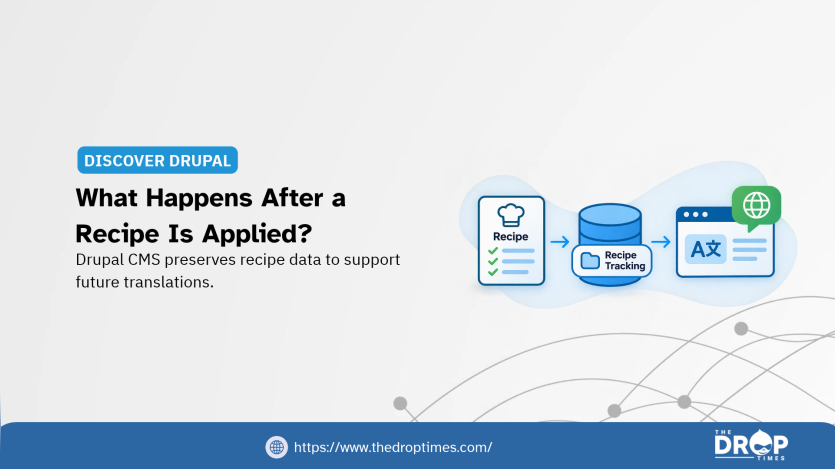
Drupal CMS 2.2 can retain the information needed to translate recipe-provided configuration even after the original recipe packages are no longer available. The Recipe Interface Translation Integration module makes this possible by recording applied recipes and their original translatable configuration values. Drupal contributor Gábor Hojtsy detailed the implementation in a technical blog published on 4 November 2026.
The implementation addresses a limitation in Drupal's recipe architecture. Recipes are designed to apply features and configuration once, leaving the site to manage the resulting changes independently. During Composer unpacking, recipe packages can be removed from Composer's records, and their directories may no longer be available. This becomes a problem when a site adds another language after installation because Drupal's Interface Translation module, known as Locale, needs the original recipe information to retrieve and apply available translations.
Before Drupal CMS 2.2, recipe-provided content types, Views, fields and roles could retain English labels on sites installed in other languages. The Drupal CMS 2.2 release announcement, published on 25 September 2026, introduced support for translating this configuration. The technical solution relies on preserving information that the normal recipe application process does not retain.
The contributed recipe_locale module, whose first stable 1.0.0 release Hojtsy dates to 25 September 2026, records the Drupal.org project name, Composer package name, version and recipe name whenever a recipe is applied. It also records recipes applied through that recipe and retains only the original translatable values from their configuration. Both sets of information are stored in Drupal configuration, allowing them to be included in configuration exports and deployed to other environments.
These records perform separate functions. Locale uses a project's identity and version to locate the appropriate translation file on localize.drupal.org. It also compares installed configuration against the original translatable values to determine which labels need translation. Without that original reference, importing a translation file may add translated strings to the database without changing the corresponding configuration labels displayed on the site.
Making those strings available required another change. The Translation Template Extractor, or potx, used by localize.drupal.org, previously examined configuration in conventional module directories but missed configuration stored directly under a recipe's config/ directory. Hojtsy addressed that extraction gap through issue #3583987, allowing configuration strings from recipes such as Haven and Byte to become available for community translation.
Drupal CMS installs recipe_locale even when Interface Translation has not yet been enabled. This allows the site to retain recipe information before additional languages are introduced. Once Locale is enabled, recorded recipes become part of its project list, and available translations can be retrieved when a language is added or scheduled translation-update checks run. The module also provides a Recipe translation updates tab under Reports > Available translation updates for managing the recorded recipe list.
The distinction between translation support and translation availability remains important. Testing published by The DropTimes on 2 November 2026 followed a Drupal CMS 2.2.7 installation through adding Malayalam and translating a Canvas home page. The dashboard heading "Announcements" and content type label "Utility page" remained in English because corresponding translations were unavailable. Those results demonstrate that a functioning translation mechanism cannot supply translations that have not been provided by the community. They do not establish a defect in recipe_locale.
Recording applied recipes also creates a deliberate exception to Drupal's apply-once approach. Hojtsy explains that existing tracking mechanisms do not provide everything Locale requires. Project Browser retains recipe paths in non-deployable state without version information, while Recipe Tracker does not preserve the original translatable configuration and is not used by Drupal CMS. Neither provides a direct replacement for the data retained by recipe_locale.
The storage cost was comparatively small in Hojtsy's reported measurements. Fresh Drupal CMS installations using the Haven and Dashi site templates retained approximately 90 KB of additional data, representing 6–7% of the configuration export and 0.20% of the database size. Hojtsy reports that the recorded information made roughly 900 recipe strings available for translation that would otherwise have been inaccessible. These figures describe the tested installations rather than a fixed requirement for all Drupal sites.
Drupal core is also examining how recipe version information should survive unpacking. Issue #3607162, opened on 30 June 2026, originally proposed writing the unpacked version into the recipe's composer.json file. During an October review, core contributor Nathaniel Catchpole questioned modifying that file and suggested storing the information under Composer-managed metadata instead. Adam G-H, who opened the issue, implemented a revised approach on 28 October. At the stage of the October discussion covered here, the issue had returned to Needs Review; the article does not establish a later core-commit decision.
Preserving recipe versions in core would address only part of Locale's requirements. Version information identifies which translation file should be retrieved, but does not provide the original configuration values against which translations must be applied. That distinction explains why recipe_locale retains both kinds of information rather than relying exclusively on Composer package metadata.
Other translation requirements remain outside the module's scope. Core issue #3313863 addresses translation of strings associated with recipe configuration actions and input forms. Its proposed !translate YAML mechanism has been developed initially around monolingual use cases. Discussion in the issue identifies additional complexity for multilingual sites, particularly when configuration actions affect values associated with different languages.
Language-specific configuration supplied directly by recipes is a separate problem. Core issue #3453331 concerns installing configuration translations stored in language-specific collections. The contributed Recipe config translation module, developed by drunomics, provides an alternative mechanism that applies per-language configuration overrides when recipes are installed. Unlike recipe_locale, it does not depend on retrieving community translation files through Locale. The project is also not covered by Drupal's security advisory policy.
These approaches solve different parts of recipe translation. Locale integration supports retrieving community translations for recipe-provided configuration over time. Language-specific overrides allow recipe authors to supply translated configuration directly. Translating input prompts and configuration action values introduces further requirements that neither mechanism completely resolves. The broader work is tracked through Drupal core issue #3488972.
For developers maintaining multilingual sites, the immediate considerations are whether recipe information was recorded when the recipes were applied, whether the required translations exist, and whether the recorded configuration is included in deployment exports. Adding another language does not guarantee that every recipe-provided label will be translated, and recipe configuration actions remain subject to separate limitations. Drupal CMS 2.2 addresses the loss of information needed by Locale, while the continuing core discussions concern how much of that support should become part of Drupal's recipe system itself.
References
-
Drupal CMS 2.2: Multilingual, out of the box | Drupal.org, Drupal CMS Initiative / Drupal.org (25 September 2026)


ASK: Drupal Community Needs Your Support
View all →
Disclosure: This content is produced with the assistance of AI.
Note: The vision of this web portal is to help promote news and stories around the Drupal community and promote and celebrate the people and organizations in the community. We strive to create and distribute our content based on these content policy. If you see any omission/variation on this please reach out to us at #thedroptimes channel on Drupal Slack and we will try to address the issue as best we can.

Related People


You may also like