

Modeler API Architecture Expands Drupal’s Visual Workflow Infrastructure Beyond ECA

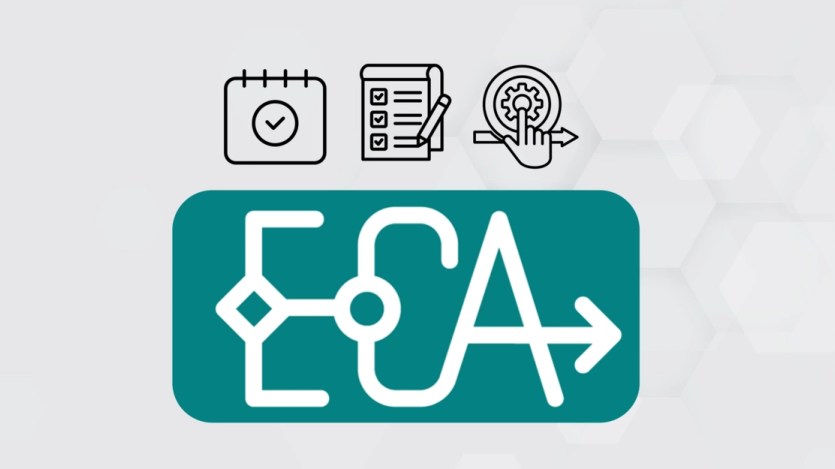
Longstanding limitations around workflow modelling flexibility prompted a major architectural redesign within the ECA ecosystem, according to a recent article by Jürgen Haas examining the new Modeler API. The post explains how earlier ECA implementations maintained partial coupling between workflow execution systems and visual modelers, making it difficult to reuse tooling across migrations, AI orchestration, commerce workflows, and other Drupal subsystems.
The redesigned architecture separates “model owners” from “modelers” through a shared API abstraction layer. Model owners represent systems responsible for executing workflows, such as ECA, migration pipelines, commerce processes, or AI agents, while modelers provide the visual editing interfaces used to build and manage those workflows. According to Jürgen, the API now automatically handles routing, permissions, save orchestration, import and export coordination, template management, testing infrastructure, and Drush integrations, allowing multiple workflow systems and visual modelers to interoperate without custom integration layers.
The article positions the Modeler API as reusable Drupal infrastructure rather than functionality limited to ECA alone. Jürgen argues that the architecture creates a broader pattern for visually configuring complex Drupal systems while supporting future AI orchestration, migration tooling, commerce automation, and composable workflow management. The post also highlights how plugin-based model owners can inherit testing tools, replay systems, template handling, and administrative integrations through the shared API, reducing the need for custom configuration interfaces across Drupal modules.

ASK: Drupal Community Needs Your Support
View all →
Disclosure: This content is produced with the assistance of AI.
Disclaimer: The opinions expressed in this story do not necessarily represent that of TheDropTimes. We regularly share third-party blog posts that feature Drupal in good faith. TDT recommends Reader's discretion while consuming such content, as the veracity/authenticity of the story depends on the blogger and their motives.
Note: The vision of this web portal is to help promote news and stories around the Drupal community and promote and celebrate the people and organizations in the community. We strive to create and distribute our content based on these content policy. If you see any omission/variation on this please reach out to us at #thedroptimes channel on Drupal Slack and we will try to address the issue as best we can.

Related Organizations

Related People


You may also like