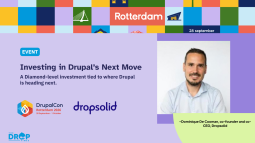




Dominique De Cooman Links AI-Driven CMS Unbundling to Open DXP Rebundling

Digital experience platforms are being recast as control planes for governance, context, and accountability in a blog post by Dominique De Cooman. Dominique builds on Dries Buytaert’s CMS unbundling thesis, extending it beyond content management to the broader digital experience layer. The post argues that identity, consent, customer data, campaigns, analytics, business rules, and AI agents now require coordination across multiple systems.
The post treats composable architecture as a necessary correction to earlier DXP suites, which Dominique says became too large, slow, and difficult to leave. It argues that composable systems shifted power back to customers and architects but left organisations with the work of connecting APIs, identity models, permissions, audit trails, release cycles, and support contracts. AI increases that burden because each agent becomes another actor, integration point, and policy surface that must be observed, explained, and reversed when needed.
Dominique describes the next DXP as “composable underneath” and “coherent above,” with CMS, marketing automation, CDP, commerce, CRM, analytics, and AI models remaining replaceable beneath a shared control layer. That layer would manage context, identity, consent, policy, decisioning, orchestration, observability, and governed access for people and agents. The post contrasts closed rebundling, where a proprietary cloud absorbs data, prompts, policies, decision logic, and operational history, with open rebundling, where integrated components preserve open APIs, model choice, portable data, and the customer’s freedom to leave.

ASK: Drupal Community Needs Your Support
View all →
Disclosure: This content is produced with the assistance of AI.
Disclaimer: The opinions expressed in this story do not necessarily represent that of TheDropTimes. We regularly share third-party blog posts that feature Drupal in good faith. TDT recommends Reader's discretion while consuming such content, as the veracity/authenticity of the story depends on the blogger and their motives.
Note: The vision of this web portal is to help promote news and stories around the Drupal community and promote and celebrate the people and organizations in the community. We strive to create and distribute our content based on these content policy. If you see any omission/variation on this please reach out to us at #thedroptimes channel on Drupal Slack and we will try to address the issue as best we can.

Related Organizations

Related People


You may also like