



Talish Khan Explains Why He Still Chooses Drupal

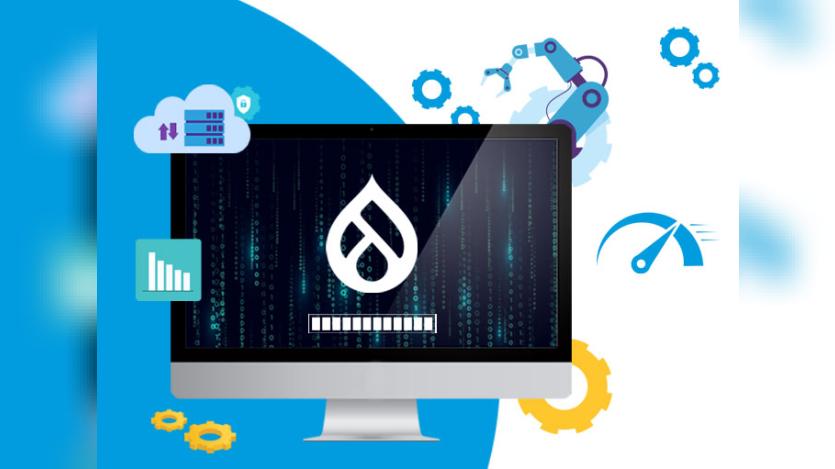
Evaluating Drupal against newer CMS and frontend options remains worthwhile, according to senior Drupal architect Talish Khan. In a blog post, Khan says he continues to assess alternatives such as Sanity, Payload, Strapi, and custom Next.js builds, but still chooses Drupal for projects with complex content models, enterprise requirements, long-term maintenance needs, and large migrations.
The post acknowledges that modern headless stacks can be stronger for some greenfield projects. Khan writes that tools such as Sanity and Payload can provide a smoother developer experience and faster setup when the content model is simple and the team is already centred on React. He also says custom Next.js builds can be appropriate when a team needs unusual frontend control and has the engineering capacity to maintain it.
Khan argues that the comparison changes when content models become more complex. He says newer headless tools can perform well in demos and early builds, but start to strain with deeply nested relationships, polymorphic references, conditional fields, revision workflows, translations, access control, and enterprise editorial requirements. Drupal’s entity and field system, by contrast, is presented as harder to learn but better suited to content that behaves as a relational graph rather than a set of simple documents.
The post identifies four reasons Khan continues to choose Drupal: content modelling, long-term maintenance, ecosystem depth, and migration capability. He points to Drupal’s support for arbitrary fields, entity references, view modes, revisions, translations, permissions, security updates, contributed modules, documentation, community knowledge, the Migrate API, multilingual features, workflows, content moderation, granular permissions, and multisite needs. Khan concludes that Drupal is not the right answer for every project, but remains his preferred choice for complex content models, long-lived platforms, enterprise requirements, and large legacy content migrations.
ASK: Drupal Community Needs Your Support
View all →
Disclosure: This content is produced with the assistance of AI.
Disclaimer: The opinions expressed in this story do not necessarily represent that of TheDropTimes. We regularly share third-party blog posts that feature Drupal in good faith. TDT recommends Reader's discretion while consuming such content, as the veracity/authenticity of the story depends on the blogger and their motives.
Note: The vision of this web portal is to help promote news and stories around the Drupal community and promote and celebrate the people and organizations in the community. We strive to create and distribute our content based on these content policy. If you see any omission/variation on this please reach out to us at #thedroptimes channel on Drupal Slack and we will try to address the issue as best we can.

Related People


You may also like