



UK College of Dentistry Rebuilds Website on Drupal 10 After Drupal 7 End-of-Life

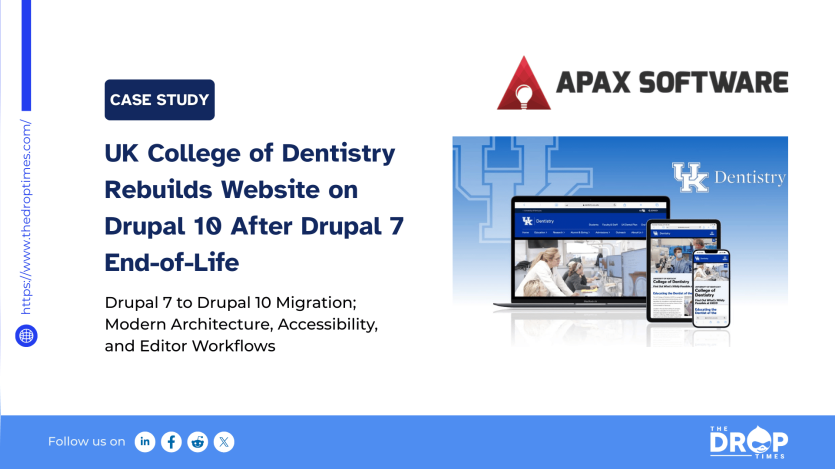
The University of Kentucky College of Dentistry completes a full rebuild of its website on Drupal 10, replacing a decade-old Drupal 7 platform with a modern, accessible, and maintainable system.
The project, led by APAX Software, moves the college’s website from its original 2012 Drupal 7 build to a modern Drupal 10 platform. Taylor Akin, who serves as product owner and lead developer, guides the migration from discovery through launch.
The legacy site carries more than a decade of technical debt. Editors face an outdated interface, payment processing relies on deprecated modules, and mobile responsiveness falls short despite most users accessing the site on smartphones and tablets. Over time, the information architecture becomes difficult for prospective students and patients to navigate.
The migration is not an upgrade but a full rebuild. Drupal 10 introduces a Symfony-based architecture, Twig templating, configuration management, improved media handling, CKEditor 5, layout builder enhancements, and stronger accessibility support.
The new platform integrates Drupal 10 CMS with the University of Kentucky’s Limestone design system to align with institutional branding. A reusable component library—covering carousels, accordions, event calendars, and faculty directories—gives editors flexibility while maintaining visual consistency.
One of the key technical tasks involves rebuilding the webform-based payment system used for continuing education registrations and alumni events. Deprecated integrations are replaced with modern Drupal 10 webform capabilities to improve security, reliability, and user experience. The team also audits more than 90 Drupal 7 modules to identify compatible or replacement solutions.
Authentication is modernised through LDAP integration with the university’s LinkBlue system, allowing faculty, staff, and students to access protected resources using institutional credentials. APAX Software works closely with the college’s communications and IT teams through regular review cycles to ensure the system meets the needs of students, faculty, alumni, and patients.
The rebuilt site delivers improved performance, accessibility, and mobile usability. Content editors gain greater control over academic programme information, clinic services, and continuing education content, reducing reliance on developer intervention and improving long-term maintainability.
Reference: Bringing UK College of Dentistry into the Modern Web: A Drupal 10 Transformation, APAX Software (18 February 2026)
ASK: Drupal Community Needs Your Support
View all →
Disclosure: This content is produced with the assistance of AI.
Note: The vision of this web portal is to help promote news and stories around the Drupal community and promote and celebrate the people and organizations in the community. We strive to create and distribute our content based on these content policy. If you see any omission/variation on this please reach out to us at #thedroptimes channel on Drupal Slack and we will try to address the issue as best we can.

Related Organizations