



Drupal Introduces Site Template Marketplace Pilot

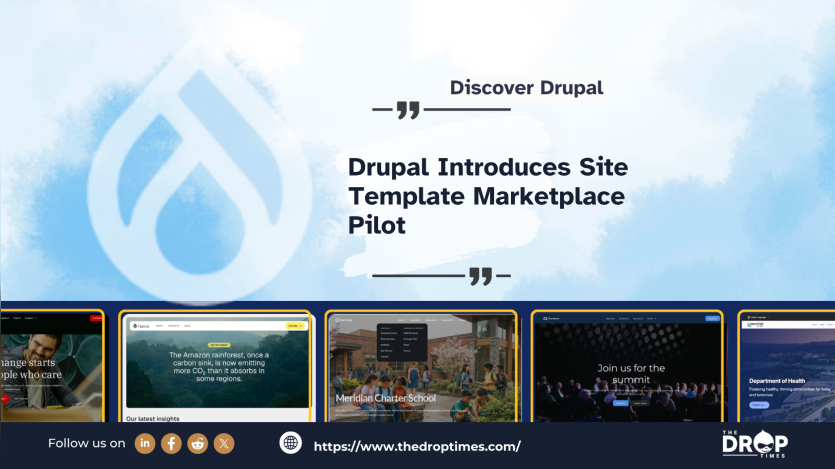
Drupal introduced a pilot Site Template Marketplace during DrupalCon Chicago 2026, giving organisations a new way to start from preconfigured websites instead of a blank installation. The launch extends Drupal’s recent effort to make site building more accessible through Drupal CMS, a ready-to-use distribution built on Drupal 11. The marketplace opens with templates aimed at sectors where Drupal already has an established presence, including government, higher education, healthcare, nonprofits, events, and software-as-a-service.
The distinction Drupal is making is architectural, not just visual. In the source post, Ryan Witcombe describes the templates as working site foundations with content models, editorial workflows, and configuration already in place, rather than as design overlays alone. That positioning aligns with the broader Marketplace Initiative, which has been framed as a curated space for reusable site templates that help organisations build with Drupal faster and with more confidence.
The pilot also fits into product work already underway around Drupal CMS. In January, Drupal said Drupal CMS 2.0 would introduce site templates as part of a broader push that also included visual page building and AI-assisted tools. A later Q&A on Drupal CMS 2.0 said Drupal was already working with agencies in a pilot to develop templates for the marketplace launch, suggesting this week’s debut is part of a longer rollout rather than a standalone announcement.
Public planning documents had already outlined the pilot’s intended structure. An MVP proposal published in 2025 described a curated marketplace on Drupal.org with free and paid templates, direct sales by makers, and initial participation limited to Drupal Certified Partners during the pilot phase. The launch copy itself does not restate all of those operational details, but it does confirm that both free and premium options are available and that template buyers can connect directly with the teams behind each listing for support or further customisation.
That matters because Drupal has long been strongest in projects that require structured content, permissions, multilingual support, accessibility, and governance. A template that includes those assumptions from the start could reduce the amount of architecture work organisations usually need before a site becomes usable. At the same time, the announcement provides little technical detail about how templates are packaged, installed, versioned, or maintained, so the practical impact of the marketplace will depend on how consistently those templates are built and supported as the pilot expands.
Browse the current templates at marketplace.drupal.org.


ASK: Drupal Community Needs Your Support
View all →
Note: The vision of this web portal is to help promote news and stories around the Drupal community and promote and celebrate the people and organizations in the community. We strive to create and distribute our content based on these content policy. If you see any omission/variation on this please reach out to us at #thedroptimes channel on Drupal Slack and we will try to address the issue as best we can.

Related People


You may also like