



Ten Heavily Used Drupal 11-Compatible Contributed Modules

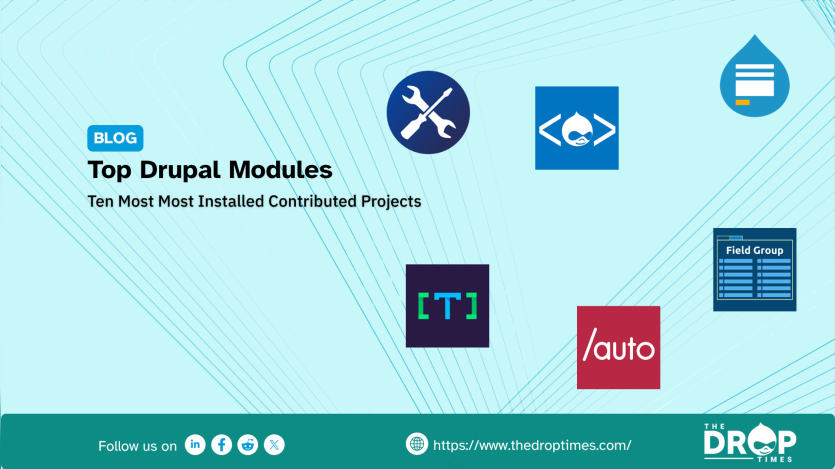
Usage data from Drupal.org lists ten full contributed projects with Drupal 11-compatible releases among the most-used modules in its filtered module search. The ranking includes long-running utilities, administration tools, metadata and redirect modules, structured-content dependencies, and compatibility-oriented projects that still appear in many Drupal stacks.
The list should be read as Drupal.org-reported usage data, not as a recommendation that every module belongs in a new Drupal 11 build. Some projects remain active site-building utilities, while others persist because they support older architectural patterns, compatibility layers, or widely used dependencies. That distinction matters for teams reviewing modules during Drupal 11 upgrades, audits, and new site builds.
Token
The Token module provides placeholder variables, such as [node:title] and [user:name], that are replaced with contextual values when content is displayed. Although Drupal core includes token-replacement infrastructure, the contributed module remains relevant because it provides a token browser and related utilities used by other contributed projects. Its continued usage reflects both direct site-builder use and its role as an enabling dependency.
Pathauto
The Pathauto module automatically generates URL aliases for content, taxonomy terms, and users based on configured patterns. This reduces manual alias entry for editors and helps maintain consistent URL structures. Its reliance on token-based patterns also helps explain why Token remains common in modern Drupal builds.
Entity Reference Revisions
The Entity Reference Revisions module adds a field type that can reference specific revisions of entities. This is important for structured-content models where a parent entity must preserve the exact version of a referenced child entity. The module is closely associated with component-based editorial systems, including Paragraphs-based builds.
Admin Toolbar
The Admin Toolbar module extends Drupal’s default administration toolbar with drop-down navigation. It gives administrators faster access to deeper configuration pages. The module remains mainly relevant to editorial, administrative, and site-management workflows.
Metatag
The Metatag module lets site builders manage metadata for content and pages. It supports metadata used by search engines and social platforms, including page descriptions and sharing information. The module reduces the need to handle these values directly in theme files.
Redirect
The Redirect module provides tools for creating and managing redirects inside Drupal. It helps preserve working links when paths change and can reduce avoidable 404 errors after content restructuring. The module is commonly reviewed during migrations, redesigns, and URL policy changes.
Field Group
The Field Group module lets site builders organise fields into interface groups such as fieldsets, tabs, accordions, and HTML wrappers. It remains Drupal 11-compatible, but Drupal.org marks the project as minimally maintained and limited to maintenance fixes. Teams can still use it for complex edit forms, but should review whether it remains the best fit for new builds.
jQuery UI
The jQuery UI module is the clearest caution in the list. The project provides jQuery UI asset libraries for modules that still depend on older interface behaviours, but Drupal core has moved away from jQuery UI and the upstream project is no longer an active modern dependency. Its presence in a Drupal 11 stack should prompt teams to identify which module still requires it and whether that dependency can be replaced.
Paragraphs
The Paragraphs module supports component-based content creation by allowing site builders to define reusable paragraph types. Editors can assemble structured sections such as galleries, calls to action, and layout components within defined boundaries. The module remains central to many structured editorial workflows.
Chaos Tool Suite
The Chaos Tool Suite module, commonly referred to as ctools, provides APIs and utilities used by other Drupal projects. Its features include plugin-related tools, form helpers, and context handling. The module is most relevant as an enabling dependency for more complex contributed and custom functionality.
Taken together, the ranking shows how Drupal 11-compatible sites still depend on a mix of current utilities, long-running ecosystem dependencies, structured-content tools, and compatibility modules. For site teams, the useful question is not only whether a module works with Drupal 11. It is also whether the module is actively maintained, still architecturally appropriate, and necessary for the site’s current build.
 Allen JasonAllen without organs


ASK: Drupal Community Needs Your Support
View all →
Disclosure: This content is produced with the assistance of AI.
Note: The vision of this web portal is to help promote news and stories around the Drupal community and promote and celebrate the people and organizations in the community. We strive to create and distribute our content based on these content policy. If you see any omission/variation on this please reach out to us at #thedroptimes channel on Drupal Slack and we will try to address the issue as best we can.