


Darren Oh Outlines Drupal Board Priorities on AI, Sovereignty, and Contributor Health


Longtime Drupal contributor Darren Oh says his candidacy for the Drupal Association Board is shaped by a practical concern: how Drupal can reach more users without placing more strain on the volunteers who maintain it.
In written answers to The DropTimes’ Allen Jason, Darren connects agentic AI, digital sovereignty, enterprise contribution, smaller-project access, and public issue queues through a common question: how the Association can widen participation while supporting the people who sustain Drupal.
Darren joined the Drupal community in 2005 and co-founded Drupal Forge in 2024, where he serves as volunteer project lead. He worked as a senior software engineer at Cognizant until February 2026 and, through the end of 2025, was part of the team maintaining the Estée Lauder Companies Drupal platform, which supported 21 brands in 68 countries. Drawing on that experience and his Community Health Team work, he argues for vendor-neutral AI, multilingual contribution and governance, simpler co-maintainer pathways, community-supported trial experiences, and easier ways for smaller projects to discover Drupal.
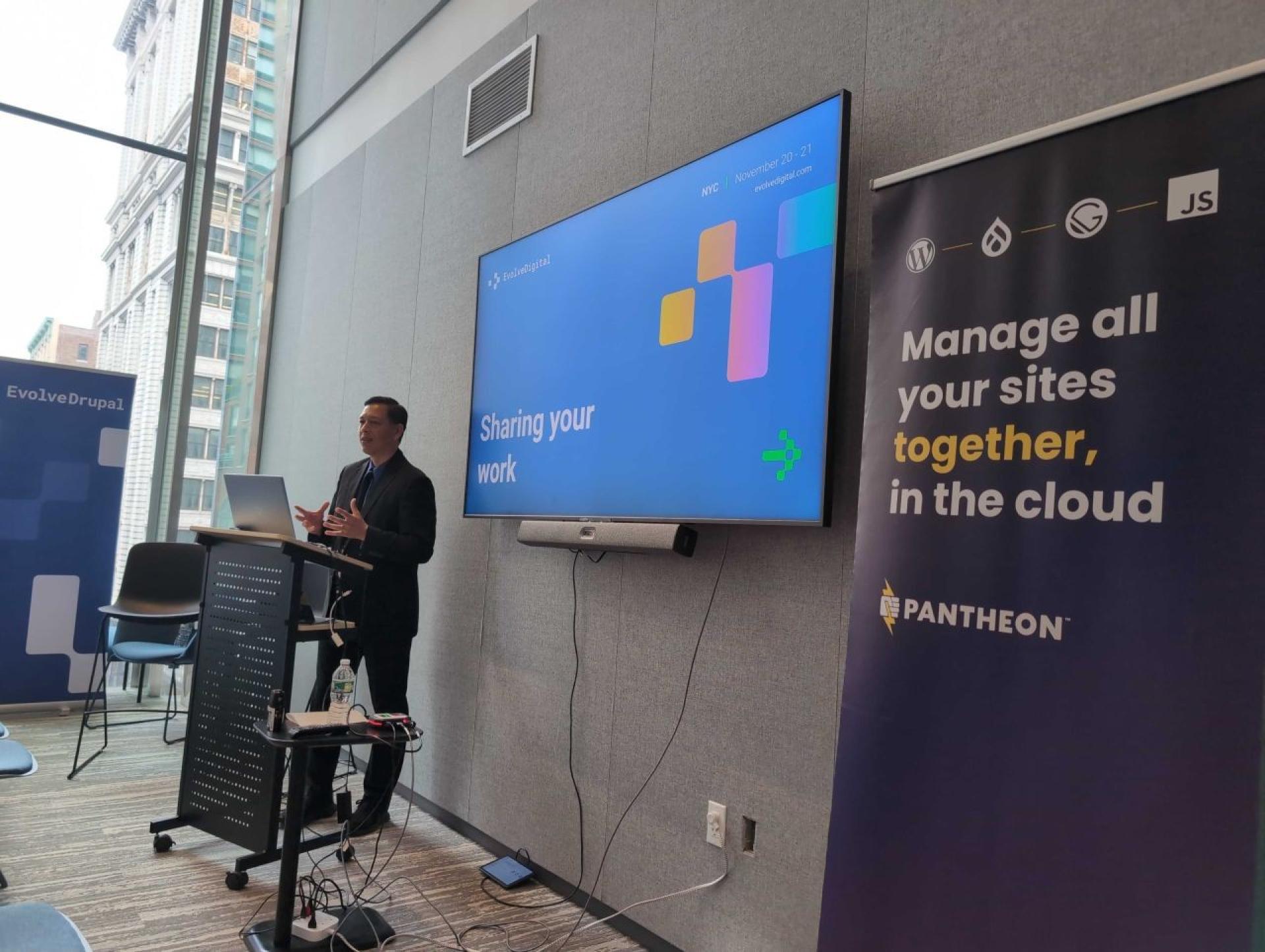
This interview is part of The DropTimes’ series with candidates for the at-large seat on the Drupal Association Board. The DropTimes sent each candidate five common questions and two candidate-specific questions to help readers compare their priorities, experience, and approach to the Association’s role.
Interviews in this series are being published as candidates return their completed responses.
TDT [1]: As AI-assisted and agentic site-building grows, what role should the Drupal Association play in protecting Drupal’s open-source values, data privacy, maintainer well-being, and freedom from vendor lock-in?
Darren Oh: The Drupal Association should continue to work with the Drupal AI Initiative, which is working intensely on all these issues.
A big issue with AI is that, without strict governance, it can produce low-quality output in quantities that overwhelm people. If AI tools were structured to favor quality over quantity, AI would help maintainers instead of frustrating them. Refining our contribution credit system can help move us there.
By keeping our AI tools vendor-neutral, we enable users to reward the vendors that behave most responsibly.
TDT [2]: Drupal benefits from enterprise users, agencies, and public institutions, but contributions are still uneven. What should the Drupal Association do to turn more of that use into visible support through developer time, code, documentation, infrastructure, or funding?
Darren Oh: We should encourage large organizations to name representatives to communicate their interests. Organizations contribute more when they understand they have a voice in the future of the platform.
TDT [3]: How should the Drupal Association balance investment in enterprise tooling with simpler entry points for junior developers, hobbyists, and new site builders?
Darren Oh: The Drupal Association has a very limited capacity to direct investment. Developers and sponsors choose what to invest in. The Drupal Association must prioritize maintaining the infrastructure for community contribution and channeling contributions into products that users can understand.
TDT [4]: If digital sovereignty is increasingly defined through national ownership, where does that leave a global open-source project like Drupal? How should the Drupal Association argue that distributed international stewardship can offer a credible form of sovereignty?
Darren Oh: The beauty of Drupal’s license is that it makes all of us owners. I am thrilled for countries to want national ownership over their software because Drupal gives that to them. When users behave as owners rather than customers, Drupal gets better for everyone. What we really need to convince countries of is the benefit of collaboration. We can present ourselves as allies and improve our processes for collaboration and project maintenance to make it easier for every country to contribute on an equal basis. Making the Drupal contribution and governance experience fully multilingual should be the first priority.
When users behave as owners rather than customers, Drupal gets better for everyone.
TDT [5]: How should the Drupal Association support zero-friction trial experiences, ready-made kits, or similar tools that help smaller projects discover Drupal without needing a large agency?
Darren Oh: The Drupal Association should take advantage of the opportunity to work with existing community projects. I will help community projects that represent the needs of smaller projects achieve alignment with the Drupal Association.
I have been leading the Drupal Forge project for two years to create instant trial experiences and ready-made business tools for developers. I created a token module to allow instant trial widgets to be embedded on drupal.org pages. The Drupal Association needs to install it so instant trial widgets can be used on documentation, marketing, and project pages.
TDT [6]: Drawing on your Community Health Team experience, what policy changes would better protect contributors from entitlement, conflict, and burnout in public issue queues?
Darren Oh: Project owners should seek co-maintainers immediately if they are having trouble keeping up with issues. I would like to see the process for applying to co-maintain projects be streamlined. It could be partially automated based on the time it takes for existing maintainers to respond to issues.
I have experienced burnout on many issues myself. Rather than volunteering to improve a contribution, some people demand that the original contributor do more and more work for the privilege of fixing something that will benefit everyone. The policy change I would like to see is that we accept fixes if they do not cause tests to fail. People are free to add tests, styling, and documentation, but fixes should not be blocked for years because there is no one to do that.
It is difficult to settle a conflict in a public conversation. We should encourage people to use the escalating emotions nudge template and try to mediate privately. If they need help they can contact the conflict resolution team. Adding another public response rarely works, even if you’re Dries. I remember one conflict about removing the PostgreSQL driver from core. Dries replied, “We’re not removing the PostgreSQL driver.” The conflict kept right on going.
People are free to add tests, styling, and documentation, but fixes should not be blocked for years because there is no one to do that.
TDT [7]: If elected to represent the community on the board, what is the single most important, measurable outcome you intend to deliver by the end of your term, and what specific metrics do you want the community to use to evaluate your success?
Darren Oh: The outcome that is most important to me is having more Drupal sites. I want to see an acceleration in the number of drupal.org accounts, because this represents people who are aware that they are using Drupal. And I want to see the site template marketplace generate sustainable businesses.
 Allen JasonAllen without organs
Image Attribution Disclaimer: At The Drop Times (TDT), we are committed to properly crediting photographers whose images appear in our content. Many of the images we use come from event organizers, interviewees, or publicly shared galleries under CC BY-SA licenses. However, some images may come from personal collections where metadata is lost, making proper attribution challenging.
Our purpose in using these images is to highlight Drupal, its events, and its contributors—not for commercial gain. If you recognize an image on our platform that is uncredited or incorrectly attributed, we encourage you to reach out to us at #thedroptimes channel on Drupal Slack.
We value the work of visual storytellers and appreciate your help in ensuring fair attribution. Thank you for supporting open-source collaboration!


ASK: Drupal Community Needs Your Support
View all →
Disclaimer: The information provided about the interviewee has been gathered from publicly available resources. The responsibility for the responses shared in the interview solely rests with the featured individual.
Note: The vision of this web portal is to help promote news and stories around the Drupal community and promote and celebrate the people and organizations in the community. We strive to create and distribute our content based on these content policy. If you see any omission/variation on this please reach out to us at #thedroptimes channel on Drupal Slack and we will try to address the issue as best we can.
Related Organizations