



European Digital Sovereignty Push Faces Open-Source Governance Gaps

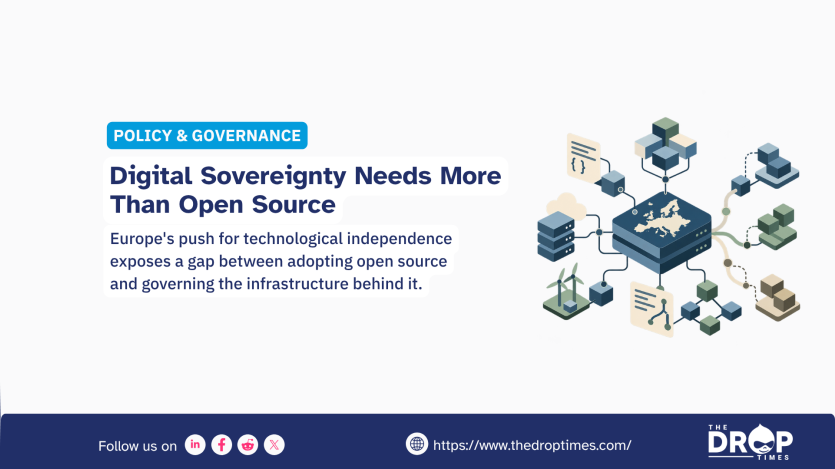
European organisations surveyed for the 2026 State of Open Source in Europe report overwhelmingly consider digital sovereignty important, but many have gaps in how they govern open-source software. Released by the Linux Foundation at Open Source Summit Europe in Prague on 7 October 2026, the study found that 94% of respondents considered digital sovereignty important to their technology strategy, including 61% who described it as very important.
The report highlights the distance between that priority and day-to-day software management. Of the surveyed organisations, 31% lack a formal open-source governance framework and 48% maintain private forks of open-source projects. Organisations maintaining forks reported spending an average of 311 hours per release cycle patching 9.5 forks, while 28% said they could not track the associated costs. Those figures describe the study's respondents and should not be read as a measurement of every European organisation.
Governance maturity is associated with differences in the reported value of open-source investment. Organisations with advanced governance reported an average benefit-to-cost ratio of 4.6 to 1, compared with 3.6 to 1 among organisations without formal governance. The comparison does not establish that governance practices alone caused the difference. Regulatory pressure is also shaping investment: 63% said they had increased spending on open-source dependency management.
Artificial intelligence adds another governance question. The report found that 94% of surveyed organisations were using or piloting generative AI coding tools, while 76% said those tools increased the value they gained from open source. Thierry Carrez, general manager of Linux Foundation Europe, argued in the 7 October announcement that greater technological autonomy requires upstream contribution and participation in open governance, rather than software consumption alone.
A separate policy effort provides context for the findings. The European Commission's 3 June 2026 announcement of an EU Open Source Strategy described plans to encourage open and interoperable digital ecosystems, including in public administration. The Commission's policy and the Linux Foundation's survey address related questions about technological dependence, but the survey does not evaluate the effects of that strategy.
The question of sustained participation also appeared on the DrupalCon Rotterdam Government Summit programme on 28 September 2026. One panel asked who should sustain the open-source ecosystems on which government digital sovereignty depends. The programme confirms that the question was scheduled for discussion; it does not establish the panel's conclusions. Although the Linux Foundation study does not specifically assess Drupal, the findings are relevant to organisations considering governance, maintenance and upstream involvement around Drupal-based public-sector systems.
The fifth annual study was authored by Mirko Boehm and Paula Grzegorzewska of Linux Foundation Europe and published by Linux Foundation Research and Linux Foundation Europe, with support from NeoNephos. Its findings identify a gap between interest in technological autonomy and the practices needed to maintain open-source dependencies over time. The report and its supporting material are available from the Linux Foundation.
References
-
-
Commission boosts open and interoperable digital ecosystems for public administrations, European Commission (3 June 2026)
-
ASK: Drupal Community Needs Your Support
View all →
Disclosure: This content is produced with the assistance of AI.
Note: The vision of this web portal is to help promote news and stories around the Drupal community and promote and celebrate the people and organizations in the community. We strive to create and distribute our content based on these content policy. If you see any omission/variation on this please reach out to us at #thedroptimes channel on Drupal Slack and we will try to address the issue as best we can.

Related Organizations

You may also like