



FlowDrop Moves Toward AI-Driven Workflow Orchestration in Drupal

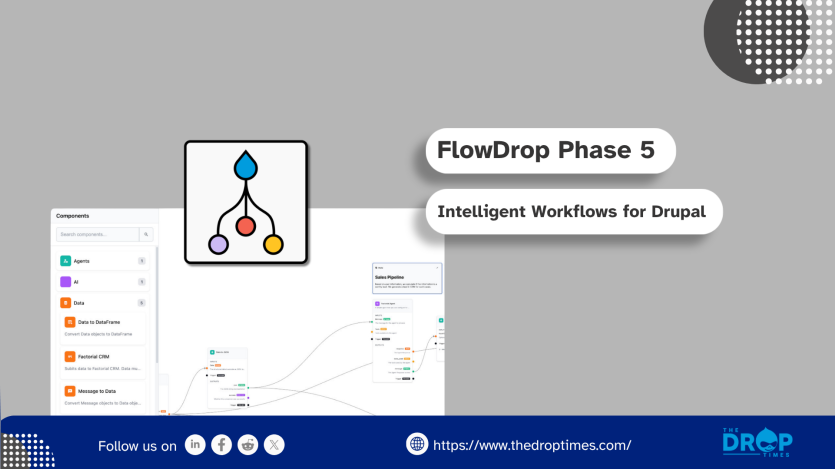
Development on FlowDrop is entering a new phase focused on AI integration, adaptive execution, and external system connectivity, according to a recent update from Shibin Das. The Drupal workflow orchestration project has already completed four earlier roadmap phases covering backend infrastructure, a visual editor, frontend integration, and an execution engine with real-time monitoring.
In a LinkedIn post reflecting on the project’s first ten months, Shibin described Phase 5 as the point at which FlowDrop begins to expand from workflow management toward broader orchestration capabilities, including AI-assisted systems and enterprise-scale integrations. The stated roadmap direction includes AI-powered nodes, hybrid workflows connecting external systems, and adaptive execution patterns designed to support more complex automation scenarios.
The update also credits several parts of the Drupal ecosystem for shaping the project’s development trajectory. Shibin highlighted early guidance from Jürgen Haas around the Modeler API, alongside support from the Drupal AI Initiative, discussions with Dries Buytaert, collaboration opportunities created through Oaisys 2025, organised by QED42, and workflow experimentation conducted during a European Commission hackathon.
According to the post, Factorial GmbH has so far been the project’s sole monetary sponsor, contributing more than €100,000 through development time, travel, UX work, research, testing, and community participation. Shibin also reflected on how AI-assisted development workflows freed up time to focus on architecture, UX refinement, and structural refactoring rather than repetitive implementation work.
The update does not include release timelines or implementation demonstrations for Phase 5 functionality, meaning the announcement should currently be viewed as roadmap direction rather than production-ready feature availability.


ASK: Drupal Community Needs Your Support
View all →
Disclosure: This content is produced with the assistance of AI.
Disclaimer: The opinions expressed in this story do not necessarily represent that of TheDropTimes. We regularly share third-party blog posts that feature Drupal in good faith. TDT recommends Reader's discretion while consuming such content, as the veracity/authenticity of the story depends on the blogger and their motives.
Note: The vision of this web portal is to help promote news and stories around the Drupal community and promote and celebrate the people and organizations in the community. We strive to create and distribute our content based on these content policy. If you see any omission/variation on this please reach out to us at #thedroptimes channel on Drupal Slack and we will try to address the issue as best we can.

Related Drupal Initiatives

Related Organizations

Related People


You may also like