



The Future of Drupal and the DXP Debate: Diverging Visions from Key Community Voices

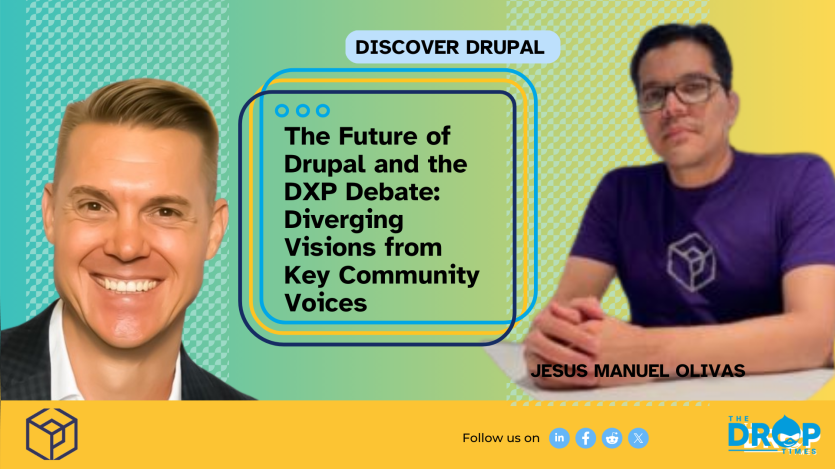
As Drupal approaches a pivotal stage with the end of Drupal 7 and the emergence of DrupalCMS, members of the community are stepping forward with different visions for its future. Among the most engaged are Matt Krebsbach, a former strategy and marketing lead at Acquia and Sitecore, and Jesus Manuel Olivas, co-founder of Octahedroid and a long-time advocate for modernizing Drupal development. Both responded to a recent post by Pantheon CEO Josh Koenig, who initiated the conversation with a critique of the Digital Experience Platform (DXP) model and a call for Drupal to embrace its core strengths.
Matt has a long history of working with analyst firms such as Gartner and Forrester. His background positions him to assess both the strategic and market-level forces influencing Drupal’s trajectory. Despite being recently affected by a reorganization at Acquia, Matt’s comments are forward-looking and focused on what he sees as a viable path for the platform.
Reevaluating the DXP Model
Josh opened the discussion a week back by declaring, “R.I.P. DXP,” arguing that the concept of a unified vendor platform for all digital needs has failed. He points to the rise of highly specialized marketing tools as evidence that organizations prefer to build their own solutions rather than rely on bundled suites.
Jesus supports this view and highlights a related issue: the shift in how modern developers work. He agrees that DXP as a category is weakening and adds that many developers entering the field expect JavaScript-first workflows, cleaner APIs, and fewer Drupal-specific conventions that can slow down frontend development.
Matt, however, offers a different interpretation. While he recognizes changes in the market, he does not believe DXP is obsolete. “The digital experience market is not a zero-sum game,” he writes. He argues that DXP is evolving and that companies like Acquia are adapting by focusing on content capabilities within a more flexible, composable approach.
Defining What Drupal Should Be
There is shared agreement that Drupal needs a clearer identity, though each contributor approaches this issue from a different angle.
Matt stresses that Drupal cannot continue to mean different things to different audiences.
“It’s not sustainable for Drupal to mean something different to everyone,”
he states. He believes the platform must become a clearly defined product aimed at specific users and use cases, with consistent messaging and alignment between development and marketing.
Josh echoes this concern and warns against stretching Drupal across too many market segments. He suggests that Drupal should focus on where it already performs well, such as powering complex digital platforms that require modularity, governance, and integration with existing systems.
Jesus approaches the question from a technical perspective. Rather than focusing on positioning or messaging, he emphasizes the need to modernize how developers interact with Drupal. He highlights the complexity of Drupal’s API responses and the challenges this creates for frontend developers using frameworks like React or Next.js. For him, defining Drupal’s future means making it accessible and appealing to modern developers without losing its content management strengths.
"That is why we've focused on Drupal Decoupled, not as a competing vision, but as a complementary approach that bridges the gap between Drupal's content management strengths, modern development practices, and editorial workflows. This approach has another significant benefit: it helps attract a younger talent pool."
notes Jesus
Acquia’s Role in Drupal’s Direction
The strongest disagreement emerges around the role of Acquia.
Josh sees Acquia’s adherence to the analyst-driven DXP model as a liability. He argues that this strategy, once popular among enterprise software vendors, has not delivered sustainable results and now poses a risk to Drupal’s evolution.
"Stating that Acquia’s DXP strategy is a “risk factor” for Drupal totally misses the mark. "
Matt disagrees. He defends Acquia’s repositioning as essential to Drupal’s future.
“Acquia’s strategy to meet the demands of an evolving DXP market is the strongest pathway to a revitalized Drupal,”
he writes. He believes Acquia is making the platform more usable and relevant by focusing on real customer needs and streamlining the overall experience.
Jesus does not comment directly on Acquia, but his focus on implementation and developer experience points toward a broader vision that is less tied to any one vendor. He advocates for a model where Drupal works alongside a range of modern tools, giving developers and content teams the flexibility they need to succeed.
Different Priorities, Shared Urgency
Matt centers his argument on strategic alignment and market clarity. He sees product definition and unified messaging as critical to Drupal’s long-term health.
Josh prioritizes positioning based on proven use cases, particularly where Drupal’s architecture provides an advantage. His message is to move away from failed enterprise narratives and embrace a more targeted role.
Jesus focuses on execution. He calls for improvements to the developer experience through better APIs, support for decoupled architectures, and workflows that match the expectations of today’s front-end teams.
“The future isn't about choosing between serving content editors or developers. It's about creating an ecosystem where both can thrive,”
he writes.
Matt, Jesus, and Josh each offer distinct visions for Drupal’s future. Matt calls for clarity, focus, and alignment. Jesus pushes for modernization and technical flexibility. Josh encourages a departure from legacy strategies in favor of a Drupal that excels through integration and adaptability. Their perspectives differ in emphasis and approach, but all recognize that Drupal must adapt if it is to remain relevant. As DrupalCon Atlanta approaches, this discussion sets the stage for deeper conversations about what the next chapter should look like. Join the conversation and spread the word.
ASK: Drupal Community Needs Your Support
View all →
Note: The vision of this web portal is to help promote news and stories around the Drupal community and promote and celebrate the people and organizations in the community. We strive to create and distribute our content based on these content policy. If you see any omission/variation on this please reach out to us at #thedroptimes channel on Drupal Slack and we will try to address the issue as best we can.

Related Organizations



Related People


You may also like