


Ship Faster, Catch Bugs Earlier: How Georgia Rebuilt QA and UAT for 80+ Drupal Sites

Anyone who has watched a release grind to a halt because “everything is waiting on staging” knows the frustration. Staging-server bottlenecks can feel inevitable—especially in government and enterprise environments where approvals, security, and multiple stakeholders are part of the reality.
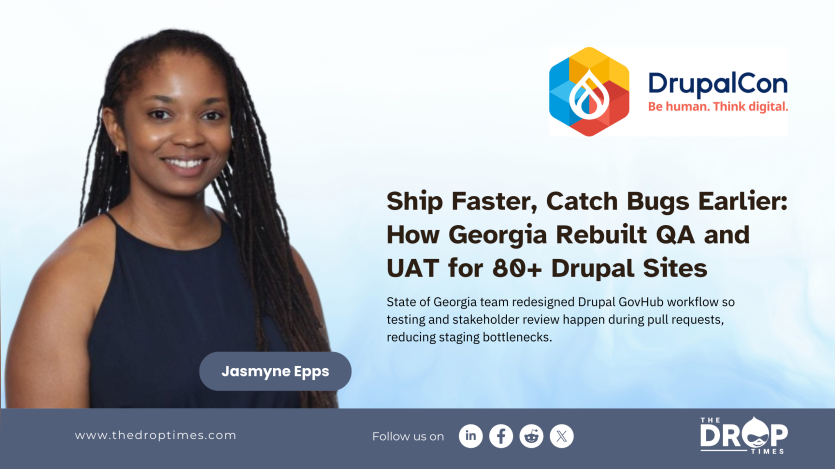
In our conference session, Jasmyne Epps (Unit Director, Digital Services Georgia) and James Sansbury (CEO, Tugboat) will share the behind-the-scenes story of how the State of Georgia transformed the way they build and ship software for GovHub, their Drupal CMS that powers 80+ state agency websites.
The short version: Georgia faced the classic end-of-sprint “QA crunch”—delayed releases, burnout, and costly rework. With a large-scale migration ahead, the existing workflow simply couldn’t scale. The solution wasn’t “work harder” or “add more meetings.” It was a shift in when testing and sign-off happens.
The big idea: “Shift left” QA and UAT—right into pull requests
Traditionally, teams depend on shared staging servers for QA and stakeholder review. That setup often turns into a single choke point:
- multiple teams competing for time on the same environment
- QA compressed into the final days of the sprint
- last-minute surprises that are expensive (and stressful) to fix
- stakeholders seeing work too late to give meaningful feedback
Georgia’s approach flipped that model by implementing “shift left” testing, moving QA, testing, and stakeholder sign-off to pull request time. Instead of waiting until the end, feedback happens continuously throughout the sprint when changes are fresh, context is clear, and fixes are easiest.
The result: faster delivery, earlier bug detection, smoother collaboration—and a workflow that made migrating 80+ sites feasible.
Why you should attend this session
You’ll leave with a practical blueprint, not just theory
This session isn’t a feel-good story about process change. It’s a real-world walkthrough of how a large government digital team redesigned their SDLC to remove friction and deliver confidently at scale. You’ll hear what worked, what didn’t, and what they had to consider to make “shift left” viable in a government environment.
It’s relevant whether you’re in government, higher ed, enterprise, or agencies
Even if you’re not shipping 80+ Drupal sites, the underlying constraints will sound familiar:
- limited shared environments
- compliance and security requirements
- complex stakeholder review cycles
- teams stretched thin
- high cost of defects discovered late
The techniques you’ll see—distributed QA, ephemeral preview environments, automation, and visual regression—apply across a wide range of organisation sizes and maturity levels.
You’ll get strategies for scaling QA without scaling stress
This session is for anyone who wants to ship faster without sacrificing quality or their team’s sanity. Developers, QA testers, product managers, and stakeholders all benefit when feedback loops are shorter and more consistent.
What we’ll cover
In the session, we’ll walk through key topics including:
- Identifying and eliminating SDLC bottlenecks that create release delays and burnout
- Implementing “shift left” testing in a government and enterprise context
- Reliable preview environments using tools like Docker, CircleCI, and Tugboat
- Parallel testing workflows that support complex multi-site migrations
- Visual regression testing and how it fits into automated QA
- Secure data handling strategies to keep test environments realistic and responsible
This isn’t just a tooling discussion. It’s about designing a workflow that makes quality the default, not the final hurdle.
Key takeaways you can apply right away
1) A clear way to spot your team’s real bottleneck
Sometimes the loudest pain—end-of-sprint chaos—isn’t the root cause. Shared staging constraints, late stakeholder review, and unclear acceptance criteria often slow delivery more than teams realise.
2) Practical “shift left” patterns you can adapt
You’ll learn concrete strategies for moving testing and approvals earlier without overloading your team, including how to distribute QA throughout sprints so it becomes routine instead of a sprint-ending emergency.
3) A framework for creating preview environments stakeholders actually use
Preview environments only help if they’re easy, reliable, and built into the workflow. Pull-request previews changed the way developers, QA, and stakeholders collaborate by turning feedback into a continuous loop rather than a final gate.
4) Approaches to multi-site migrations that don’t require heroics
Migrating 80+ websites magnifies every inefficiency. Parallel testing and review workflows help keep momentum high while reducing risk when multiple sites move forward at once.
5) How to build quality checks into your pipeline
From automated QA integration to visual regression testing, the session will explore how Georgia built repeatable guardrails that catch issues earlier before they become expensive to fix.
6) Better testing realism without compromising security
Realistic testing often runs into data-sensitivity concerns. The session will cover strategies that help teams test responsibly while still receiving meaningful feedback.
What we’re most excited about at the event
Events like DrupalCon are where practical ideas spread quickly because teams solving similar problems can compare experiences directly.
- Comparing notes with teams modernising QA and release processes
- Hearing how others manage stakeholder review and approvals
- Connecting with teams navigating complex multi-site migrations
And honestly, the hallway conversations are often just as valuable as the sessions themselves. Those “we’re dealing with that too” moments frequently lead to new approaches and new momentum.
If your releases feel harder than they should, this session is for you
If your team is stuck in staging traffic jams, dealing with end-of-sprint QA pileups, or trying to scale delivery to more sites without increasing burnout, this session shares lessons from Georgia’s experience supporting a Drupal platform powering more than 80 state agency websites.
You’ll leave with ideas you can apply immediately, whether you’re improving a single team’s workflow or redesigning delivery across an entire organisation.
 Jasmyne EppsDrupal, gov-tech, and shifting quality left—one digital service at a time.
ASK: Drupal Community Needs Your Support
View all →
Note: The vision of this web portal is to help promote news and stories around the Drupal community and promote and celebrate the people and organizations in the community. We strive to create and distribute our content based on these content policy. If you see any omission/variation on this please reach out to us at #thedroptimes channel on Drupal Slack and we will try to address the issue as best we can.
Related Events



Related People


You may also like