

Dries Buytaert Reframes Drupal’s Role as AI Reshapes the CMS Ecosystem


Drupal founder Dries Buytaert used his State of Drupal keynote at DrupalCon North America 2026 in Chicago to outline how artificial intelligence is reshaping the platform’s ecosystem, placing pressure on its long-standing balance between product, agencies, and community.
The keynote marked Drupal’s 25th anniversary but moved quickly from celebration to structural concerns. Buytaert opened with an example from Chicago’s history, describing how the city was physically raised by engineers while daily life continued, using it as a parallel for large-scale change under pressure. He then described Drupal’s long-standing stability as a “triangle” consisting of the software, the ecosystem of agencies and organisations, and the open source community, noting that artificial intelligence is now affecting all three simultaneously.
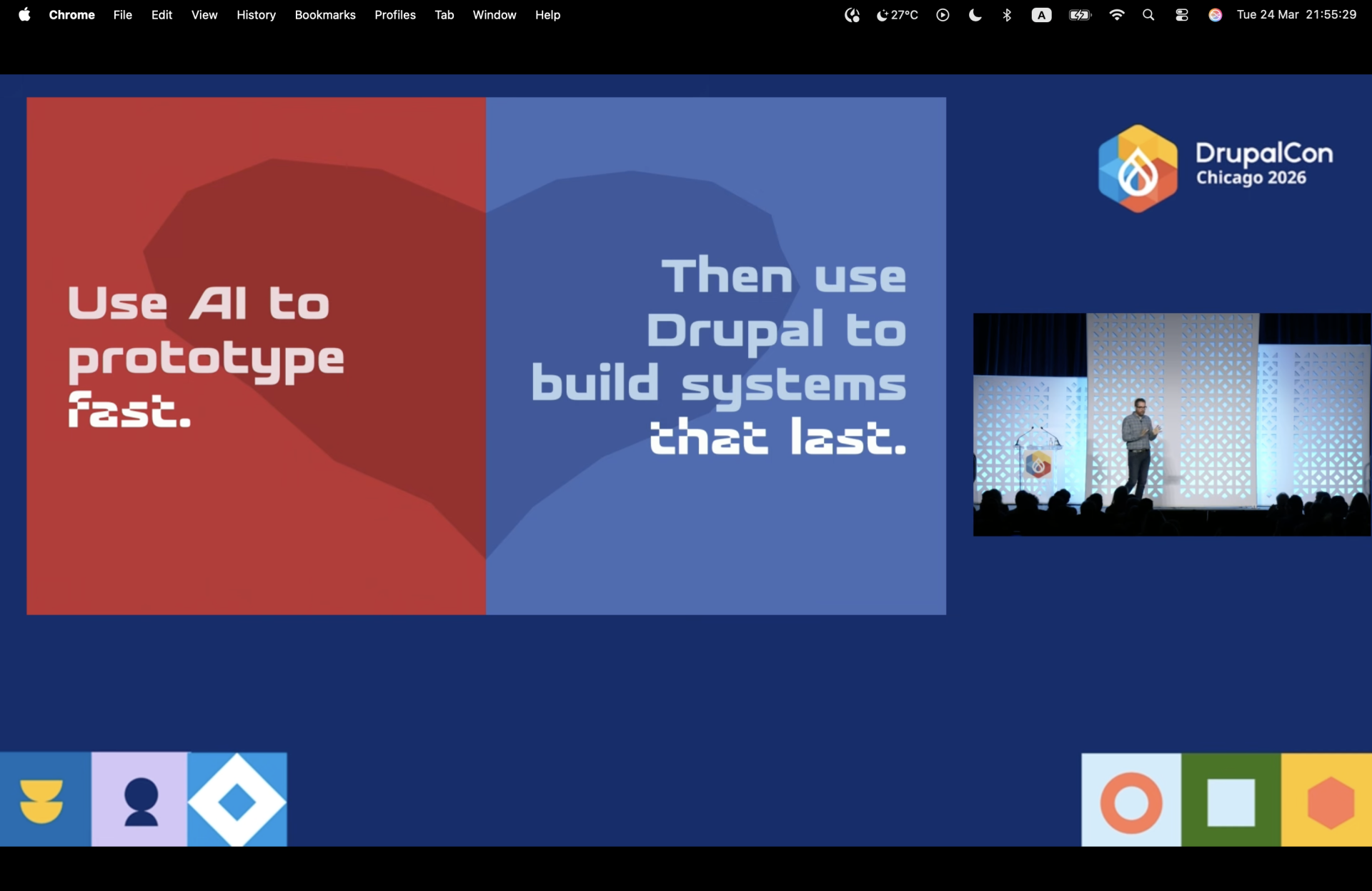
This framing established the keynote’s central position: the challenge is systemic rather than incremental. Buytaert pointed to a difficult market environment, reduced project opportunities, and growing uncertainty among developers and agencies. He summarised the shift in practical terms: use AI to prototype fast, then use Drupal to build systems that last.
At the product level, Buytaert announced Drupal CMS 2.1, built on Drupal Core 11.3, and highlighted ongoing work to improve adoption. A key part of this effort is the introduction of a marketplace and preconfigured site templates, which now include multiple use-case-specific starting points. These are intended to lower entry barriers while allowing agencies and developers to extend and customise implementations.
The keynote introduced a clear distinction between rapid AI-generated interfaces and production-ready systems. Demonstrations showed how external AI tools can generate front-end prototypes within minutes, but Buytaert positioned Drupal’s role as providing the structured content, workflows, permissions, and integrations required to turn those prototypes into durable systems.
This distinction reflects a broader shift in value. As AI reduces the cost of producing baseline output, the emphasis moves toward expertise, judgment, and domain knowledge. Referencing work by Jürgen Haas on modernising the ECA module interface, the keynote illustrated how AI can accelerate development while still relying on human expertise to guide architecture and implementation decisions.
Buytaert reinforced this point explicitly, noting that AI amplifies expertise rather than replacing it. The keynote positioned AI as a tool that extends human capability, while the responsibility for quality, correctness, and design remains with developers and contributors.

A significant portion of the keynote focused on Drupal’s evolving AI capabilities. These include the Context Control Center, which has progressed toward beta status and is designed to store organisational knowledge such as brand guidelines, content strategies, and audience definitions. This allows AI-assisted workflows to operate within defined constraints rather than generating generic output.
Demonstrations showed how AI can convert unstructured content into structured pages, apply design systems, generate metadata, and introduce cross-linking based on semantic relationships. Additional examples included the use of analytics data to identify underperforming content and propose updates aligned with current organisational context.
Buytaert framed these developments as an extension of Drupal’s existing strengths in structured content and workflow management. Rather than competing directly with rapidly evolving developer-focused AI tools, he positioned Drupal as a system for content governance and collaboration, where multiple roles contribute to producing and maintaining high-quality content.
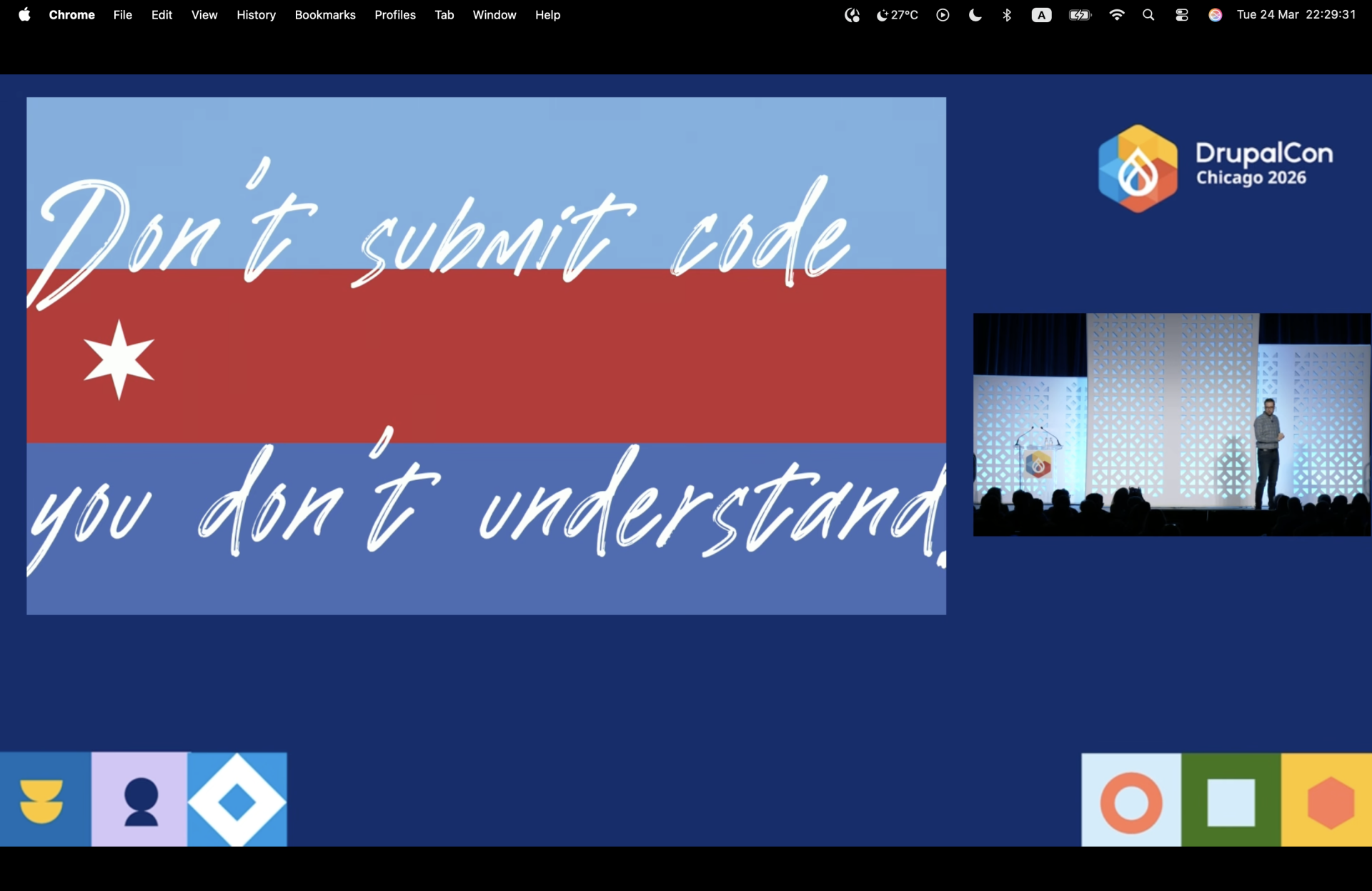
The keynote also addressed the implications for the open source community. Buytaert noted that while AI can make contributing easier, it also increases the risk of low-quality submissions. He cautioned contributors against submitting code they do not understand, emphasising that such contributions shift the burden onto maintainers and create additional friction in the review process.
Reflecting on his own experience building Drupal, Buytaert highlighted the importance of deliberate leadership and seeking support from the community. He framed the current moment as one requiring similar collective effort, with contributors, agencies, and organisations adapting their roles to maintain Drupal’s relevance.
The presentation concluded with a forward-looking assessment. While many of the demonstrated features remain in alpha or beta stages, Buytaert indicated that further stabilisation is expected ahead of DrupalCon Europe in Rotterdam. He characterised Drupal’s position as grounded in its architectural foundations, which are suited to integrating with AI-driven workflows while maintaining system integrity.
Watch the full Driesnote here:
Image Attribution Disclaimer: At The Drop Times (TDT), we are committed to properly crediting photographers whose images appear in our content. Many of the images we use come from event organizers, interviewees, or publicly shared galleries under CC BY-SA licenses. However, some images may come from personal collections where metadata is lost, making proper attribution challenging.
Our purpose in using these images is to highlight Drupal, its events, and its contributors—not for commercial gain. If you recognize an image on our platform that is uncredited or incorrectly attributed, we encourage you to reach out to us at #thedroptimes channel on Drupal Slack.
We value the work of visual storytellers and appreciate your help in ensuring fair attribution. Thank you for supporting open-source collaboration!

ASK: Drupal Community Needs Your Support
View all →
Note: The vision of this web portal is to help promote news and stories around the Drupal community and promote and celebrate the people and organizations in the community. We strive to create and distribute our content based on these content policy. If you see any omission/variation on this please reach out to us at #thedroptimes channel on Drupal Slack and we will try to address the issue as best we can.

Related Drupal Initiatives

Related Events



Related Organizations

Related People


You may also like